When you think about solar panels, you might picture bright summer sunshine and long days. This can make autumn and winter seem like the wrong time of year to invest in solar PV.
But solar panels don’t need hot, sunny weather to generate electricity. They need daylight.
While solar PV systems will generally produce more electricity during the longer, brighter days of spring and summer, they continue to generate energy throughout autumn and winter. In fact, installing your system before winter can mean you are already generating your own electricity as the heating season begins and household energy consumption increases.
So, is autumn or winter a good time to install solar panels? In many cases, yes.
How Do Solar Panels Work?
Solar panels convert light from the sun into electricity using photovoltaic cells. They don’t rely on heat, which means cold weather doesn’t prevent them from working.
When sunlight reaches the photovoltaic cells, it creates an electrical current. This electricity is then passed through an inverter, which converts it into usable electricity for your home.
The amount of electricity your system generates depends on several factors, including:
- The amount of daylight available
- The intensity of the sunlight
- The orientation and pitch of your roof
- Shading from trees or nearby buildings
- The size and efficiency of your solar PV system
- Weather conditions
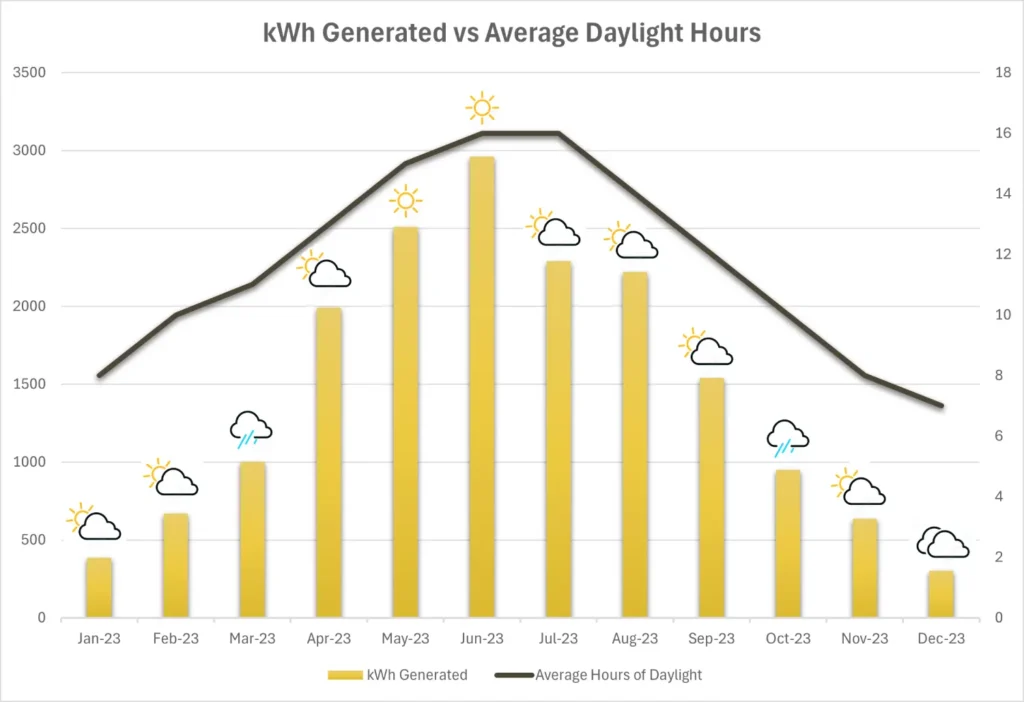
During autumn and winter, there are fewer daylight hours and the sun sits lower in the sky. As a result, generation is generally lower than during the spring and summer months.
However, lower generation doesn’t mean no generation.
Can Solar Panels Generate Electricity on Cloudy Days?
Yes. Solar panels can still generate electricity when the sky is cloudy.
Clouds reduce the amount of sunlight reaching the panels, so electricity generation will usually be lower than on a clear day. However, daylight still reaches the photovoltaic cells, allowing the system to continue producing electricity.
This is particularly important in the UK, where overcast weather is common throughout the year. A well-designed solar PV system is therefore designed around annual generation, rather than relying solely on peak summer production.
Modern solar panels are also considerably more efficient than many older systems, allowing them to make good use of available daylight even when conditions aren’t ideal.
Will Solar Panels Work in Winter?
Yes. Solar panels continue to operate during winter.
The main difference is that winter generation is typically lower because there are fewer daylight hours and the sun is lower in the sky. December and January are generally among the lowest-generation months of the year, while spring and summer provide significantly more solar energy.
This doesn’t mean winter solar is insignificant.
Your system can still generate electricity during daylight hours, helping to reduce the amount of electricity you need to purchase from the grid.
And because household electricity consumption can increase during the colder months, even the electricity your panels generate in winter can be valuable.
What About Cold Temperatures?
Interestingly, cold temperatures themselves aren’t a problem for solar panels.
Photovoltaic panels can actually operate efficiently in cooler temperatures. The bigger limitation during winter is the amount and intensity of available daylight, rather than the cold.
Snow can temporarily reduce generation if it completely covers the panels, but this is relatively uncommon in much of the South East of England. Panels are normally installed at an angle, which can also help snow slide off naturally.
Does Rain Affect Solar Panels?
Rain itself doesn’t stop solar panels from working. As long as there is daylight, the panels can continue generating electricity.
Rain can also help wash away dust, pollen and other surface debris that may have accumulated during the drier months.
However, heavy cloud cover associated with prolonged periods of poor weather will reduce generation because less sunlight reaches the panels.
Is Autumn a Good Time to Install Solar Panels?
There are several reasons why autumn can be a sensible time to install solar panels.
1. You can start generating electricity before winter
Installing your system in autumn means you don’t have to wait until spring to begin generating your own electricity.
Although generation will be lower through the winter, your system can still contribute towards your household’s electricity requirements.
2. You can prepare for higher winter energy consumption
Many households use more electricity during autumn and winter because of increased lighting, heating-related electricity use and spending more time at home.
A solar PV system can help reduce the amount of electricity you need to buy from your energy supplier.
Adding a battery can make this even more useful by allowing you to store surplus solar electricity generated during the day for use later.
3. You don’t lose the winter months
If you wait until spring to install your system, you will miss several months of potential solar generation.
Installing earlier means your system is already operational when the days begin getting longer again.
4. You can make use of surplus generation
During periods when your solar panels generate more electricity than your home is using, a compatible battery can store the excess for later.
If your battery is full and there is still surplus electricity available, eligible homeowners can also potentially receive payments for exported electricity through an energy tariff or the Smart Export Guarantee (SEG).
Is It Worth Installing a Solar Battery With Solar Panels in Winter?
For many households, a battery can be a valuable addition to a solar PV system all year round.
Without a battery, electricity generated by your panels generally needs to be used at the time it is produced or exported to the grid. A battery allows you to store some of your surplus generation and use it later when your solar panels aren’t producing electricity — for example, during the evening.
This can be particularly useful during the shorter winter days, when your household may be using electricity before sunrise or after sunset.
However, battery storage shouldn’t be viewed as a way of creating more solar energy. The battery stores electricity that has already been generated; it doesn’t increase the amount of sunlight available.
The right battery size depends on your electricity consumption, solar PV system size, expected generation and how you use electricity throughout the day.
When Is the Best Time of Year to Install Solar Panels?
There isn’t one universally “best” month to install solar panels.
Spring and summer typically provide the highest solar generation, but that doesn’t necessarily mean they are the best time to have a system installed.
The most important factors are the design of the system, your property’s suitability, your electricity consumption and how quickly you want to start generating your own electricity.
Installing in autumn or winter means your system can be ready for the stronger generation months ahead, rather than waiting until spring to begin the installation process.
It can also be a quieter time to arrange installation before the busier spring and summer period.
How Much Electricity Will Solar Panels Generate in Winter?
The exact amount varies considerably from property to property.
A system’s winter generation depends on its size, roof orientation and pitch, shading, location and weather conditions.
For example, a south-facing roof with little shading will generally receive more useful sunlight than a heavily shaded roof. A larger system will also have greater generation potential than a smaller system.
This is why we don’t recommend judging the potential of a solar PV system simply by looking at how much electricity it produces on a particular winter day.
Instead, a professional solar assessment should estimate annual generation and savings, taking the characteristics of your property and your expected electricity consumption into account.
So, Is It Worth Installing Solar Panels in Autumn or Winter?
Yes — solar panels can be worthwhile to install at any time of year.
Autumn and winter may provide less solar generation than the longer days of spring and summer, but your system can still produce electricity from available daylight.
Installing during the colder months also means you can start reducing your reliance on grid electricity sooner and have your system ready to take advantage of increasing solar generation as spring approaches.
For homeowners in Essex, Kent, Suffolk, Hertfordshire and across the South East and East Anglia, a properly designed solar PV system can generate useful electricity throughout the year.
Adding battery storage can further increase the amount of your solar electricity you are able to use in your home, helping you make better use of the energy your panels generate.
Thinking About Solar Panels for Your Home?
At SolarTherm UK, we can assess your property and design a solar PV and battery storage system around your roof, electricity consumption and energy requirements.
We’ll explain how much electricity your new system could generate, whether battery storage could benefit you and what your potential savings could look like.
Contact SolarTherm UK today for a free, no obligation quote and design, tailored to your property, usage and future energy needs. No hard sell, just honest, expert advice – and the time you need to make an informed decision.
Your home. Your energy. Your future.
Frequently Asked Questions
Yes. Solar panels generate electricity from daylight, so they continue to work throughout winter. Generation is usually lower because there are fewer daylight hours and the sun is lower in the sky.
Yes. Installing in autumn means you can start generating electricity before winter and have your system ready for the higher generation months of spring and summer.
Yes. Solar panels can still generate electricity in cloudy weather, although their output will be lower than on a clear, sunny day.
Yes. A solar battery can store surplus electricity generated by your panels and make it available when your panels aren’t producing, such as during the evening. However, winter’s lower solar generation means there may be less surplus energy available to charge the battery.
They can still make a useful contribution to your home’s electricity needs, but winter generation is significantly lower than in spring and summer. The amount depends on factors such as your system size, roof orientation, shading and local weather conditions.
There isn’t a single best time. Solar panels can be installed throughout the year, and installing in autumn or winter means you can begin generating electricity sooner rather than waiting until spring.