Distribution Network Operator (DNO) Approval for Solar Panels
Many homeowners ask why there can sometimes be a delay in installing their solar panels due to the certifications and approvals required by SolarTherm UK, while other companies may offer immediate installation. One of the main reasons is obtaining permission from your local Distribution Network Operator (DNO) before connecting your solar PV system to the electricity grid.
Some installers bypass the DNO application process altogether, which can leave homeowners at risk of penalties, rejected export tariff applications, or even being instructed to disconnect their solar system from the grid in the future. At SolarTherm UK, we ensure every installation is fully compliant with UK regulations, giving you complete peace of mind.
Why Does My Solar System Need to Be Connected to the Grid?
Connecting your solar panel system to the grid allows you to benefit from the Smart Export Guarantee (SEG) tariff, which pays you for any unused electricity exported back to the national grid.
Many homeowners choose to install battery storage systems or hot water immersion devices to maximise self-consumption of their solar energy. However, depending on your system size, household energy usage, and the time of year, excess electricity may still be exported to the grid.
Under UK regulations, any solar installation over 3.68kW (16A per phase) requires a G99 application to be submitted to the DNO before installation can proceed.
This requirement still applies even if:
- A larger inverter is installed
- The inverter output is limited using a G100 export limitation device
- The system export is restricted to 3.68kW
For example, if a 5kW inverter is installed and limited to 3.68kW using a G100 device, a G99 application is still mandatory.
The DNO does not only assess how much electricity can be exported back to the grid. They also carry out a detailed network study to ensure the local electricity network can safely support the additional generation capacity. This includes checks on:
- Voltage rise on the network
- Local grid capacity
- Network stability and safety tolerances
Who Are the DNOs?
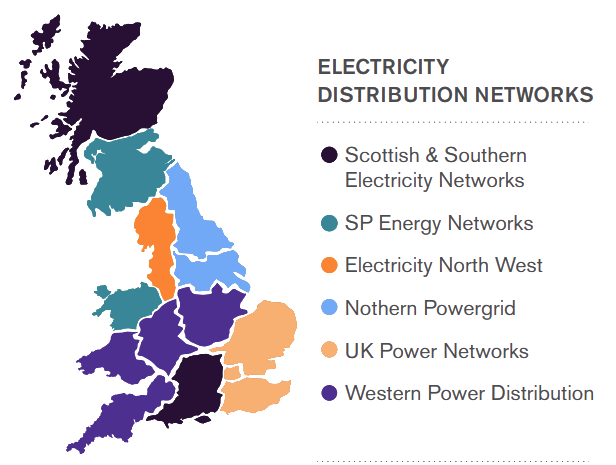
A Distribution Network Operator (DNO) is responsible for managing and maintaining the electricity distribution network in your area. Rather than being a single organisation, there are several regional DNO companies covering different parts of the UK.
Your local DNO oversees grid connections, network safety, and approval for renewable energy systems such as solar PV and battery storage installations.
You can check which DNO covers your area using the official UK DNO map.
How Long Does DNO Approval Take?
One of the most common questions we hear from customers at SolarTherm UK is: “How long does the DNO approval process take?”
When we first began installing solar PV systems back in 2010, notifying the Distribution Network Operator (DNO) was a relatively simple and fast process. Applications were submitted using straightforward forms, and approvals were often returned quickly.
However, as solar energy has become increasingly popular across the UK, the application process has become more detailed and, in some cases, more expensive. Certain DNO applications now involve administration fees, and approval times can vary significantly depending on the region and network demand.
Some DNOs state that applications can be processed within as little as 10 working days, while others can take up to 70 days for approval. Based on our experience at SolarTherm UK, the average turnaround time for a G99 application is currently around 30–35 days at the time of writing.
Your Smart Export Guarantee (SEG) Tariff
Energy suppliers such as Octopus Energy now require formal confirmation from the DNO that your solar PV system has been correctly notified before approving your Smart Export Guarantee (SEG) tariff application.
Historically, this was not always required. Unfortunately, this additional step can create delays between your solar installation being completed and you receiving payments for exported electricity.
During this period, homeowners are often waiting for:
- Their SMETS2 smart meter installation
- Their MCS certificate
- Their G99 approval confirmation from the DNO
Until these documents are in place, exported electricity may not qualify for SEG payments. We understand how frustrating this can be — particularly when your solar PV system is already generating excess electricity and exporting it back to the grid.
That said, if your system includes battery storage or a solar hot water immersion device, and your system has been correctly sized for your property, much of your generated electricity is likely being used within the home rather than exported. This can help minimise lost export revenue while awaiting approval.
SolarTherm UK Handles the Process for You
At SolarTherm UK, we actively monitor and chase DNO applications on behalf of our customers to help keep the process moving as quickly as possible.
Our goal is to ensure your solar panel installation is fully compliant, correctly registered, and ready for SEG payments without unnecessary delays or complications.
If you would like more information about DNO approvals, G99 applications, or SEG tariffs, please contact SolarTherm UK via email: [email protected]
Award Winning Solar Installers