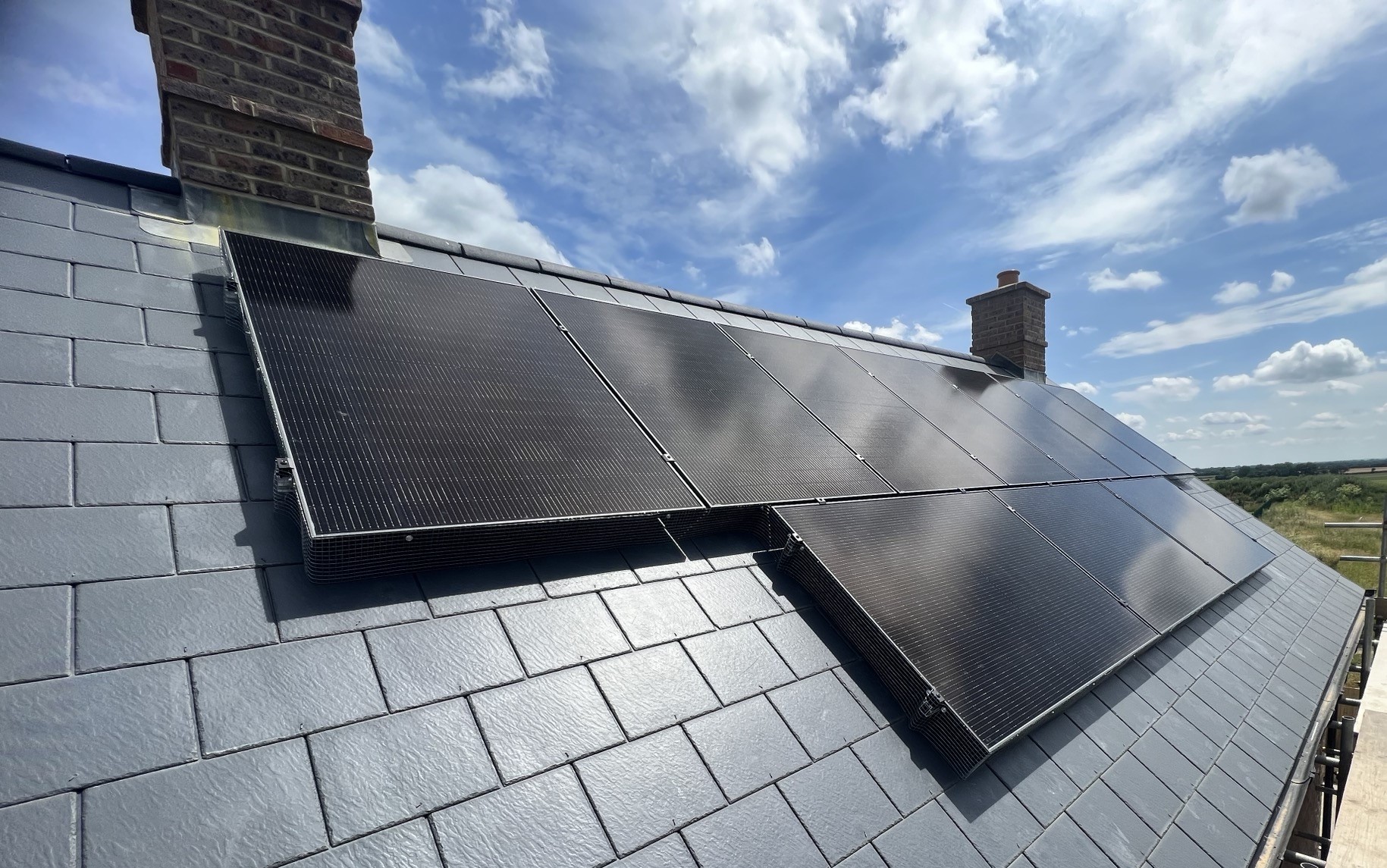
Understanding the correct orientation of solar panels is one of the most important steps in maximising your system’s energy output. For most South East homes, the ideal orientation for solar panels is south facing, but even if your roof isn’t perfectly aligned, modern solar technology means you can still achieve excellent results on other roof orientations.
At SolarTherm UK, we’re experienced in helping homeowners across Essex, Kent, Suffolk and Hertfordshire optimise both the angle and orientation of their solar panels to ensure the highest return on investment, no matter the roof layout.
What Direction Should Solar Panels Face in the South East?
The best orientation of solar panels is due south. This orientation captures the most sunlight throughout the day as the sun travels east to west on a southern arc. Homes across the South East and East Anglia – especially those in Essex, Kent, Suffolk and Hertfordshire – benefit from south facing installations as the region receives some of the highest annual sunlight hours in the country, up to 1,700 hours in some areas.
Even if your property doesn’t have a perfectly south facing roof, developments in solar technology mean that even south-east or south-west facing roofs still achieve strong generation results. East and west facing roofs can often produce 80-90% of a south facing roof.
If your home doesn’t have a south facing roof, the expert design team at SolarTherm UK will look at alternative options and mounting systems to optimise your solar PV system for maximum results. Most roof orientations can provide strong performance with clever planning and optimal design.
Why the Orientation of Solar Panels Matters
The orientation of your solar panels determine how directly sunlight hits the solar cells. The closer to south facing your solar panels are equals higher electricity generation, which results in greater savings on electricity bills and a faster return on investment.
At SolarTherm UK, we take into consideration the orientation of your roof when calculating your returns and performance estimates, so the predictions you receive are accurate for your system, not for a system that is perfectly south facing.
Do Solar Panels Need to Face South?
No, but south facing generates the highest returns. If your roof faces east or west, you can still see significant savings on your energy bills. These orientations work well with split arrays with panels on either side, capturing the sun’s energy throughout the day.
At SolarTherm UK, we avoid installing solar panels on north facing roofs and look for alternatives such as ground mounted arrays or flat roof installations to generate efficiently.
The Best Angle for Solar Panels
The direction of your solar panels is only half the picture; the tilt angle also determines how much sunlight your solar panels absorb. Most UK homes have a roof pitch of 20° to 50° which is perfect for solar panels. In Essex, Kent and Hertfordshire, the ideal pitch is 30°, but anywhere in the range works well for optimal solar generation. For flat roofs, we install angled mounting systems to achieve optimum tilt and orientation.
4 Key Factors That Affect Solar Power Generation
Knowing the best orientation and tilt for your solar panels is helpful, but your home’s unique conditions also play a major role in determining solar power generation.
Roof Direction and Pitch
Your roof’s natural angle often determines the tilt. Luckily, most homes in Essex, Kent and Hertfordshire already have pitches close to optimal range.
Shading
Trees, chimneys and nearby buildings can cause shading, even small shadows can reduce output, so a site assessment is essential.
Local Climate
The South East enjoys strong sunlight exposure, but microclimates differ. Coastal Kent and rural Hertfordshire, for example, can experience varying cloud cover.
Seasonal Sunlight
The sun’s position changes throughout the year. A well designed system will account for the winter’s lower sun angle as well as summer’s high arc.
Does Direction Really Make a Big Difference?
The orientation of solar panels is one of the biggest contributors to overall system performance. Even small changes can lead to higher daily yield, better winter performance and improved long term reliability and performance. Thanks to modern solar technology such as power optimisers, microinverters and high efficiency panels, even non-south facing roofs can now deliver excellent results.
Get Expert Guidance on the Best Orientation of Solar Panels
Your roof’s orientation, pitch, shading and location all play a role in system performance. At SolarTherm UK, we specialise in designing and installing high efficiency solar PV systems using local knowledge and experience. Whether you have a south facing roof or a more complex layout our expert team of solar designers can help your Essex, Kent, Suffolk or Hertfordshire home become a source of clean energy generation.
Contact SolarTherm UK today for a free, no obligation quote and design, tailored to your property, usage and future energy needs. No hard sell, just honest, expert advice – and the time you need to make an informed decision.
Your home. Your energy. Your future.
Frequently Asked Questions
South-facing solar panels generally provide the highest annual electricity generation because they receive strong sunlight throughout the day. However, south-east, south-west, east and west-facing roofs can also be highly suitable for solar PV.
Yes. East-facing panels can produce excellent results, particularly for homes that use more electricity during the morning. A well-designed system can make good use of the available roof space and help reduce electricity imports.
Yes. West-facing panels generate more electricity during the afternoon and early evening, which can be particularly useful for households with higher energy consumption later in the day.
No. Although south-facing is generally considered the optimum orientation, solar panels can still perform well on many east, west, south-east and south-west-facing roofs. The overall system design, shading, roof pitch and household energy use all need to be considered.
A roof pitch of around 30° is often considered ideal in the South East, although most UK roofs between approximately 20° and 50° can work well for solar panels. Flat roofs can also use angled mounting systems to optimise panel orientation and tilt.
Yes. An east-west solar PV system can spread electricity generation more evenly throughout the day, producing energy in the morning from the east-facing panels and later in the day from the west-facing panels. This can be particularly effective when combined with battery storage.
Roof orientation is important, but shading can have a significant impact on solar generation too. Trees, chimneys and nearby buildings can reduce the amount of sunlight reaching your panels, which is why a professional site assessment is important when designing a solar PV system.
North-facing roofs generally receive less direct sunlight in the UK and are therefore less favourable for solar PV. Where possible, alternative roof areas or mounting options may provide better performance.