At SolarTherm UK, we’ve been installing solar PV systems and battery storage for over 15 years—so believe us when we say, there’s no such thing as a silly question. Whether you’re just starting to explore solar or ready to make the switch, we know you’ll have questions. That’s why we’ve pulled together the most common ones we hear, with clear, honest answers. And if you can’t find your question here, just ask—we’re always happy to help.
Q. What is solar electricity?
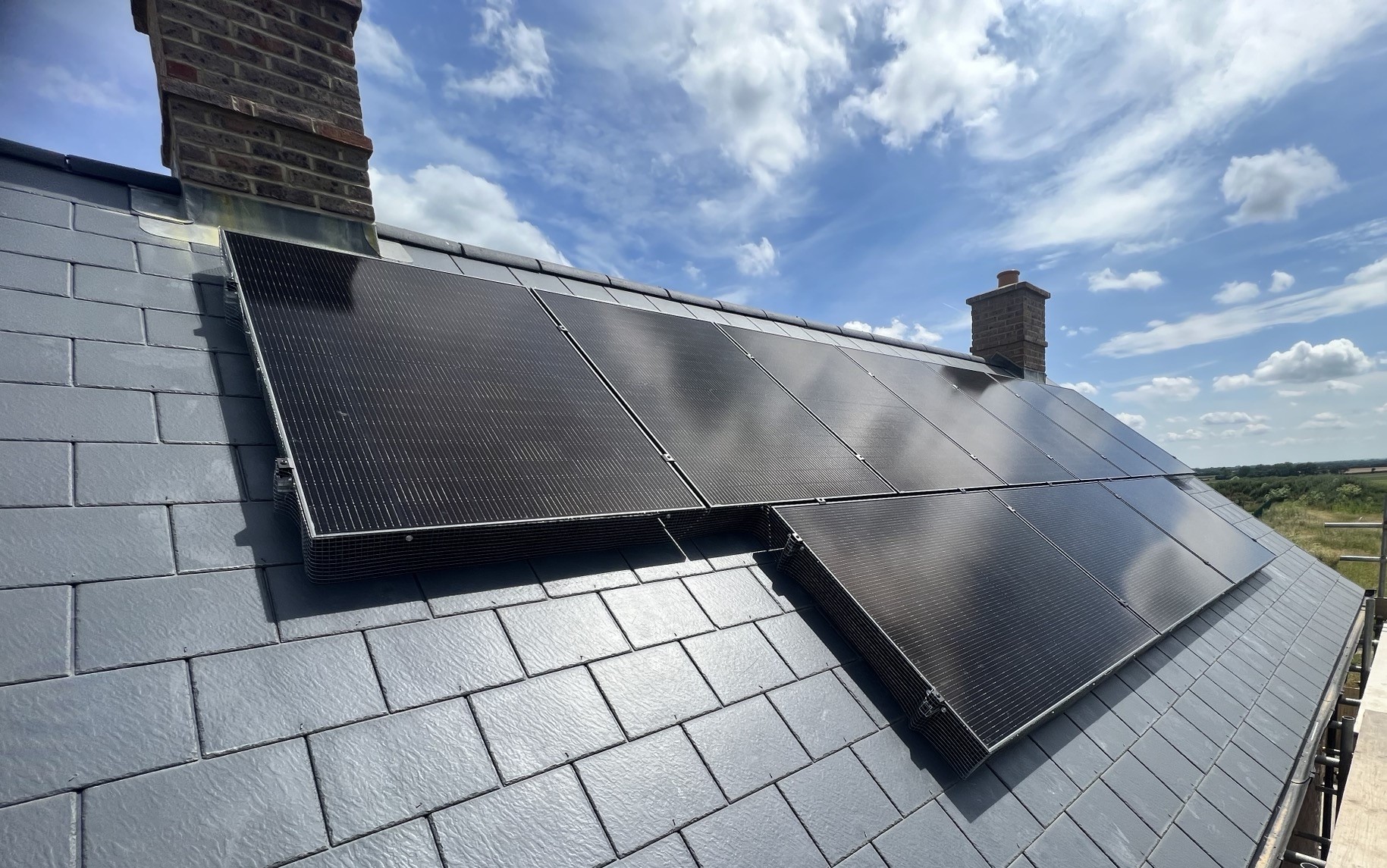
A. Solar electricity is electricity generated from sunlight using solar photovoltaic (PV) panels. These panels contain photovoltaic cells that convert daylight into direct current (DC) electricity, which a solar inverter then converts into alternating current (AC) electricity suitable for use in your home.
Solar electricity can power everyday household appliances, lighting, televisions, washing machines and other electrical equipment. Any electricity you generate and use directly can reduce the amount you need to buy from your energy supplier.
With a suitable solar battery, you can also store surplus electricity generated during the day for use in the evening or at other times when your panels are producing less power.
At SolarTherm UK, we design solar PV systems around each property’s roof space, electricity consumption and future energy requirements.
Q. How do solar panels work?
A. Solar power works by converting daylight into usable electricity through a series of stages:
- Sunlight reaches your solar panels. Photovoltaic cells absorb light and generate DC electricity.
- The inverter converts the electricity. A solar inverter converts DC electricity into AC electricity that your home can use.
- Your home uses the electricity. Solar-generated electricity supplies compatible household appliances and electrical circuits, reducing the need to import electricity from the grid.
- Surplus electricity can be stored or exported. If your panels generate more electricity than you need, a compatible battery can store the excess, or the surplus can be exported to the electricity grid.
- The grid supplies any shortfall. When your home needs more electricity than your solar system can provide, you import the remainder from your energy supplier.
The amount of electricity your system generates depends on factors such as panel capacity, roof orientation, shading, daylight hours and the time of year.
Q. How do solar panels work in the UK?
A. Solar panels work in the UK because they generate electricity from daylight rather than relying on hot weather. They can produce electricity on cloudy days, although their output is generally lower than in strong sunshine.
Generation varies throughout the year. Longer daylight hours usually mean greater production in spring and summer, while shorter days and lower sunlight levels typically reduce generation in autumn and winter.
A properly designed solar PV system takes your roof characteristics and expected annual generation into account, helping you understand how much electricity your property could produce.
Q. What are the benefits of solar power?
A. In its simplest form – savings!
- Reduce your electricity bill by up to 70%
- Lower your carbon footprint
- Increase your energy independence, reducing reliance on the grid
- And in some cases it may even increase your property value
Q. Is solar electricity free?
A. The electricity generated by your solar panels does not have a per-unit fuel cost, because sunlight is free. However, installing a solar PV system involves an upfront investment, and the system may also require maintenance or replacement components over its lifetime.
The more solar electricity you use directly in your home, the less electricity you may need to purchase from your supplier. A battery can help you use more of your surplus generation later in the day.
You may also be able to receive payments for eligible electricity exported to the grid through the Smart Export Guarantee (SEG), depending on your supplier and tariff.
Your actual savings depend on your installation cost, electricity consumption, generation, import tariff and export payments.
Q. Is solar power really worth it?
A. With the rise in energy costs and the uncertainty of fluctuating prices, solar power for most properties is worth it. Solar can produce long-term savings and environmental benefits. Government incentives such as the Smart Export Guarantee (SEG) also allow you to be paid for unused power exported back to the grid.
Q. Is my home suitable for solar panels?
A. The ideal property has a south-facing roof, with minimal shade and plenty of space. If you don’t have this, there is still a solar solution for you, at SolarTherm UK we have completed thousands of installs without a south-facing roof.
Q. Can I install solar panels on a flat roof?
A. Yes, at SolarTherm UK we install solar panels on a flat roof using a specialised mounting system, that is angled to ensure maximum efficiency.
Q. How much do solar panels cost?
A. The cost of solar panels depends on the size of the system, the equipment installed, the complexity of the installation and whether you include battery storage. Every property is different, so the best way to establish the cost is to obtain a tailored quotation.
Q. How much can I save with solar panels?
A. Solar panel savings depend on how much electricity your system generates and how much you use in your home. Households that use more solar electricity directly can reduce their reliance on the grid, while battery storage can help them use surplus generation in the evening. Your savings estimate should account for your electricity tariff, usage patterns, system size and any export payments..
Q. Are there any government grants or incentives available?
A. The government introduced the Smart Export Guarantee in 2020, meaning energy suppliers have to pay you for any electricity you export back to the grid. There are currently no nationwide grant schemes available for solar panels. Some local authorities may run grant schemes under the Warm Homes Plan but these usually have limited availability and are difficult to qualify for. The majority of homeowners who cannot pay for a solar installation upfront use Green Energy Loans or Green Finance to pay a set monthly amount over a longer time period, usually 5-15 years.
Q. Do I need a battery with my solar system?
A. Not necessarily, at SolarTherm UK we will assess your energy usage and patterns. Battery storage is useful if you use most of your energy at peak times in the evening and less during the day while it’s being generated as they will store the excess energy for use later in the day.
Q. How much do solar batteries cost?
A. Dependant on size and brand, most batteries cost £2,000-£6,000 and come with a 10 year warranty.
Q. Do solar panels work in cloudy weather?
A. Solar panels require light to generate electricity, so even in cloudy conditions, they still generate electricity. Output will be lower on cloudy or low light days.
Q. How long do solar panels last?
A. Most modern solar panels last around 30 years before any noticeable drop in efficiency. Warranties on solar panels are 25 years as standard, at SolarTherm UK we install Bovill.tech panels which come with a 99 year manufacturer warranty.
Q. What maintenance is required?
A. Solar panels require minimal maintenance. Monitoring your app and generation meter for consistent, unexplained drops in production can help identify issues early. You can also schedule cleaning of your panels to reduce dust and debris build up.
Q. What happens if there’s a power cut?
A. If you don’t have EPS (Emergency Power Supply) installed, your solar PV system will shut down in the event of a power cut, allowing engineers to work safely on the grid to restore power.
Q. Can I go completely off-grid with solar?
A. It is possible but can be costly and requires battery storage or back-up generators.
Q. How much energy will my system produce?
A. It is impossible to answer this, as at SolarTherm UK, every system we install is bespoke for the property. As an example though, a 4kW system can generate anything between 3,400 and 4,200 kWh per year.
Q. Is solar panel installation dangerous?
A. Faulty wiring and low-quality installations can make solar panel installation dangerous. By choosing the correct company to manage your installation, you can reduce these risks. At SolarTherm UK we are MCS and NICEIC accredited, meaning our work has been assessed and certified to be of highest standard and meets current UK safety guidelines.
Q. Can solar panels overheat?
A. Yes – but this is highly unlikely in the UK. UK weather, although unpredictable, is the perfect conditions for solar panels, solar panels work most efficiently in sunlight, not heat.
Q. Do I need a smart meter for solar panels?
A. No however, if you wish to benefit from the Smart Export Guarantee (SEG) or use off-peak tariffs such as Economy 7 to charge your batteries or electric car, you do require a smart meter that records import and export data at half-hourly rates.
Q. Do solar panels affect my home insurance?
A. Essentially, having solar panels doesn’t affect your home insurance but as like all building work being carried out on your property you need to inform your buildings cover of the work being carried out.
Q. Do solar panel companies own your roof?
A. No – with new solar installations, the company installing your solar panels do not own your roof. In the past, there was a scheme called ‘Rent-A’Roof’ where a third-party would install solar panels onto your roof to benefit from the FiT (Feed-in Tariff) in return to you benefiting from reduced energy bills. These were scrapped when the FiT scheme closed for new applications in 2019.
Q. Can solar panels power my hot tub?
A. Solar panels can be used to power anything that runs off electricity in your home – including your hot tub!
Q. How do I get solar panels?
A. You start by reaching out to us at SolarTherm UK for your free design and quote. We’re the longest running solar installer in the South East and have over 15 years experience in the solar industry. If you have any questions or want to find out more, call us today for honest, expert advice – no hard-sell sales techniques needed – the figures speak for themselves.
Your home. Your energy. Your future.