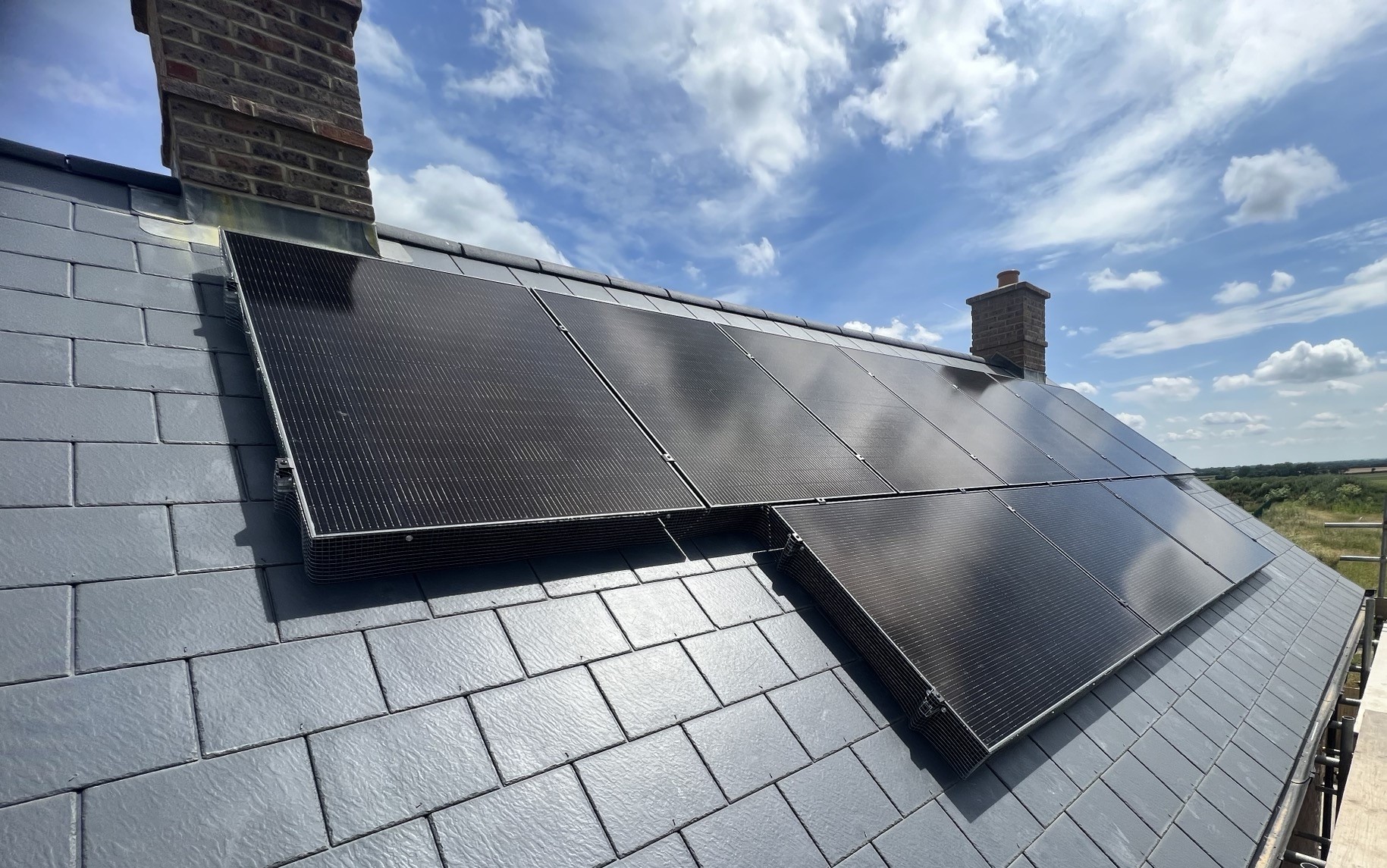
With energy prices continuing to fluctuate and long term forecasts pointing upwards, more homeowners across Essex, Kent, Suffolk and the wider South East are turning to solar as a way to reduce bills and gain energy independence.
But one of the biggest decisions you’ll face isn’t whether to go solar – it’s who installs it.
Should you choose a large national solar company, or work with a trusted local installer?
This guide breaks down the real differences, helping you make an informed decision that protects your home, your investment and your long term savings.
Understanding the Difference
National Solar Companies
National installers operate across the UK, often with large sales teams, centralised operations and high volume installations.
They typically offer:
- Standardised system packages
- National advertising and branding
- Central call centres for support
- Subcontracted installation teams
Local Solar Installers
Local companies like SolarTherm UK are regionally focused, working directly with homeowners in the South East.
They typically offer:
- Bespoke system design
- Direct communication with engineers
- Local knowledge of properties and planning rules
- In-house installation teams
- Personalised service
National Solar Companies vs Local Installers: At a Glance
Both national solar companies and independent local installers can deliver a high-quality solar PV installation. The important differences often come down to how each company designs its systems, organises installations, communicates with customers and provides support after the work is complete.
| What to compare | National solar company | Local solar installer |
|---|---|---|
| Coverage | May operate across multiple regions or nationwide | Usually focuses on a defined geographical area |
| System design | May offer standard packages alongside bespoke designs | May offer a more locally focused, property-specific service |
| Installation teams | May use employed teams, subcontractors or a combination | May use employed teams, subcontractors or a combination |
| Engineer availability | Larger operations may have greater overall capacity, depending on demand and location | A smaller service area may make local visits easier to arrange, depending on workload |
| Pricing | May benefit from purchasing power and standardised processes | May offer competitive pricing and flexible system specifications |
| Communication | May use centralised sales and customer service teams | May provide direct contact with a smaller, consistent team |
| Aftercare | Support arrangements and response times vary by provider | Local access may be convenient, but capacity and service commitments still need checking |
| Battery storage | May offer packaged solar and battery systems | May offer tailored battery sizing and integration, depending on expertise |
| Best suited to | Customers who value the company’s particular package, scale or service offering | Customers who value local knowledge, direct communication or a regional service relationship |
These are general tendencies, not guarantees. Some national providers offer excellent bespoke design and aftercare, while some local installers have limited capacity or rely on third parties. Always compare the individual company’s actual service, credentials and written commitments rather than making a decision based on its size alone.
System Design: One Size Fits All vs Tailored Solutions
National providers often rely on templated designs to streamline operations. While efficient, this can lead to systems that aren’t fully optimised for your roof, usage or future needs.
A local installer will assess your exact roof orientation and shading and design a system around your energy usage habits and lifestyle. A local installer will also discuss future plans, like addition of an EV or heat pump to your household and design a system that can be expanded in the future.
Why it matters:
A well designed system can significantly increase your return on investment and long term savings.
National vs Local Installers for Solar Battery Storage
Choosing a solar installer becomes even more important if you want to combine solar panels with battery storage. The right system needs to reflect your electricity usage, when you use the most energy, your available roof space and whether you plan to add an electric vehicle or heat pump in the future.
National solar companies may offer convenient solar and battery packages, with established product ranges and standardised installation processes. These can be a good option when the recommended equipment and system configuration suit your household.
A local installer may offer greater flexibility in selecting equipment and tailoring the system to your property’s requirements. However, you should assess the installer’s battery expertise and the products it supports rather than assuming every local company offers the same level of flexibility.
What should you compare?
Before choosing a solar and battery installer, check:
- Battery capacity: Is the proposed storage capacity appropriate for your evening electricity use and overnight demand?
- Compatibility: Will the battery work with the proposed inverter and solar panels?
- Future expansion: Can additional battery capacity be added if your needs change?
- Monitoring: Can you see your generation, consumption, battery charge and grid imports?
- Warranty and support: Who handles faults, manufacturer warranty claims and technical support?
- System design: Has the installer explained why the proposed battery size and configuration suit your household?
Do not choose a battery solely because it offers the largest capacity or the lowest quoted price. The best solution is one that fits your usage patterns, provides a realistic financial benefit and comes with reliable installation and aftercare.
Whether you choose a national provider or a local solar specialist, request a detailed design and compare the complete system rather than just the headline cost.
Installation Quality and Accountability
With national firms, installations are frequently subcontracted to third party crews. This can lead to variability in workmanship and communication gaps.
Local installers use dedicated, in-house experienced teams to maintain consistent installation standards across all installations. They are directly accountable for the outcome of your project.
SolarTherm UK installs systems using MCS qualified engineers with proven experience across residential and commercial properties in the South East.
Customer Experience and Communication
One of the most common frustrations with national companies is the lack of communication. You may deal with:
- Sales teams based elsewhere
- Different departments for each stage
- Delayed responses via call centres
With a local installer:
- You speak directly to the team handling your project
- Site surveys are carried out in person
- Support is faster and more personal
Result: A smoother, less stressful installation process.
Engineer Availability: Who Can Install and Service Your Solar Panels Sooner?
When comparing national solar companies with local solar installers, engineer availability can make a real difference to your experience. You may want your solar panels installed quickly, need an engineer to investigate a fault, or want reassurance that support will be available if your system stops performing as expected.
However, a company’s size alone does not determine how quickly it can respond.
Do national solar companies have more engineers?
Large national providers may have access to a wider network of installation teams and service engineers. This can be an advantage where the company has sufficient capacity in your area.
However, high demand, regional scheduling and reliance on third-party contractors can affect appointment availability. A large workforce does not automatically mean a shorter wait for your particular property.
Can a local solar installer offer faster support?
A local installer may be able to arrange site visits conveniently within its operating area and provide direct communication with the team responsible for your installation.
Availability still depends on the size of the team, existing commitments, seasonal demand and whether the company handles repairs for systems it did not install.
How to compare engineer availability before signing
Ask each installer the same questions:
- How soon can you carry out a site survey?
- What is your current estimated installation lead time?
- Who will actually carry out the installation?
- Do you have your own service engineers or use third-party contractors?
- What happens if my inverter, battery or monitoring system develops a fault?
- What are your usual response times for urgent and routine support?
- Will you service systems you did not originally install?
- Is any response-time commitment included in the contract?
Ask for realistic estimates rather than relying on a sales representative’s promise of a quick installation.
The bottom line: Choose the installer that can demonstrate suitable capacity, a clear installation schedule and a credible aftercare process. A dependable service arrangement is more valuable than a national brand name or a local address alone.
Aftercare and Long Term Support
Solar is a 30-year or more investment – aftercare matters just as much as installation.
National Companies may have slower response times, can be harder to reach post install and often rely on ticketing systems. You are a faceless installation amongst a number of installations.
Local installers provide ongoing support from a known team, can visit your property if needed and build long term personalised relationships with customers.
If something goes wrong in 5-10 years, who do you trust to respond quickly?
Local Knowledge Matters
Homes across Essex, Kent and Suffolk vary significantly – from modern estates to listed building and rural properties. A local installer understands:
- Regional planning considerations
- Common roof types and structures
- Weather patterns and solar yield expectations
This results in more accurate system performance forecasts, better installation planning and fewer delays and surprises. Making your installation smoother and stress free.
Pricing: Is Cheaper Always Better?
National companies may appear cheaper upfront due to economies of scale. However:
- Lower prices can mean lower quality components
- Systems may not be optimised
- Aftercare may be limited
Local installers focus on:
- Long term value, not just upfront costs
- High quality components and long warranties
- Maximising savings over the system lifetime
A properly designed system can deliver tens of thousands more in savings over 30+ years compared to a poorly optimised one.
How to Choose Between a National and Local Solar Installer
Before deciding, compare at least two or three quotations and evaluate what each company is actually offering.
Use this checklist to make a fair comparison:
- Verify credentials: Check the installer’s current MCS certification and any relevant electrical qualifications or consumer protection memberships.
- Compare like-for-like quotations: Check the system size, panel and inverter specifications, battery capacity where applicable, estimated generation and total installed price.
- Check the installation arrangements: Confirm who will carry out the work and who is responsible for quality control.
- Understand the warranties: Separate manufacturer product warranties from installation workmanship guarantees and any insurance-backed protection.
- Ask about aftercare: Find out who handles faults, how to report a problem and whether any service commitments are documented.
- Check local experience: Ask for recent installations and customer references relevant to your property type.
- Review the contract: Understand the payment schedule, cancellation terms, installation timescale and what happens if the company cannot complete the work as planned.
A reputable installer should be willing to explain its recommendations, answer questions clearly and give you time to compare your options.
The best choice is not necessarily the biggest company or the nearest installer. It is the provider that offers the right system, demonstrates its competence and gives you confidence in the installation and long-term support.
Why Many Homeowners Are Choosing Local
Across the South East, more homeowners are opting for local installers because they value:
- Personal service
- Higher accountability
- Better system performance
- Long term support
Solar isn’t just a product – it’s a long term partnership.
Final Thoughts
Choosing between a national solar company and a local installer ultimately comes down to what you prioritise. If you’re looking for a quick, standard installation, a national provider may suffice. However, if you want a tailored system, expert guidance and long term support, a local installer is usually the better choice.
For homeowners in Essex, Kent, Suffolk, Hertfordshire and the wider South East and East Anglia, working with a trusted local company like SolarTherm UK ensures your system is designed and installed with your specific property – and future – in mind.
Contact SolarTherm UK today for a free, no obligation quote and design, tailored to your property, usage and future energy needs. No hard sell, just honest, expert advice – and the time you need to make an informed decision.
Your home. Your energy. Your future.
Frequently Asked Questions
Neither is automatically better. A local installer may offer direct communication, regional knowledge and a more personal service, while a national company may offer wider coverage or a larger installation network. Compare the company’s credentials, system design, installation arrangements, warranties and aftercare before deciding.
Advantages can include local knowledge, direct communication, flexible system design and convenient access to support. Potential disadvantages include limited installation capacity during busy periods and a smaller service network. These factors vary between companies, so check availability, references and aftercare arrangements before committing.
Not necessarily. National companies may have larger installation networks, but demand, regional coverage and scheduling can affect appointment times. Local installers may be able to arrange visits conveniently within their service area. Ask both providers for their current survey, installation and repair lead times before choosing.
Not always. Prices depend on the system specification, equipment, installation complexity, labour, warranties and aftercare. Compare detailed quotations for equivalent systems rather than assuming a local company will be cheaper or that a national provider will offer better value.
Either can be suitable. Compare battery capacity, inverter compatibility, monitoring, future expansion options, warranties and technical support. Choose an installer that can explain why its proposed system fits your electricity consumption and future energy requirements.
The quality of a solar installation depends on the equipment, system design, workmanship and compliance with relevant standards. A national brand does not automatically guarantee better quality, just as a local address does not guarantee superior workmanship. Check the specific installer’s credentials, references and installation process.
If your installer ceases trading, you may still have rights under applicable manufacturer warranties, but the availability of workmanship support and other protections will depend on the terms of your agreements. Check whether any workmanship guarantee is insurance-backed, what the policy covers and how to make a claim. You may need another qualified installer to diagnose or repair the system.
Obtaining two or three detailed quotations is a sensible starting point. Compare system design, equipment, expected generation, total cost, warranties, installation timescales and aftercare. The cheapest quotation is not necessarily the best value.
Check its current MCS certification where applicable, relevant electrical qualifications, consumer protection arrangements, independent customer reviews and evidence of completed installations. Ask who will carry out the work, how problems are handled and what protection is available if the company ceases trading.
A local installer may offer convenient access to site visits and direct contact with its team. However, response times depend on staffing, workload and service arrangements. Ask for clear details of how faults are reported, typical response times and whether the company supports systems it did not originally install.