The Complete Homeowner’s Guide
Discover the best solar panel installation methods for every roof type across Essex, Kent, Suffolk, Hertfordshire and the wider South East and East Anglia.
Not every home is built the same, and neither is every solar panel installation. Whether you own a traditional tiled roof, a modern flat roof or you’re considering a ground mounted system, choosing the right installation method is one of the most important decisions when investing in renewable energy.
At SolarTherm UK, we’ve spent more than 16 years designing and installing bespoke solar PV systems for homeownewrs across Essex, Kent, Suffolk and Hertfordshire. As an MCS certified, NICEIC approved and EPVS Gold Standard installer, we understand how roof design affects system performance, aesthetics, lifespan and return on investment.
This guide explains the most common roof types, installation methods and what homeowners should consider before installing solar panels.
Why Roof Type Matters for Solar Panel Installation
Your roof provides the foundation for your entire solar PV system. The roof structure influences:
- Installation method
- Number of solar panels
- System efficiency
- Wind loading
- Drainage
- Maintenance access
- Overall installation cost
The good news is that most UK homes are suitable for solar panels. During every SolarTherm UK survey, our engineers assess:
- Roof orientation
- Pitch angle
- Structural integrity
- Roof covering
- Available space
- Potential shading
- Existing electrical infrastructure
Rather than offering a one size fits all solution, we design every system specifically for your property.
Solar Panels on Pitched Roofs
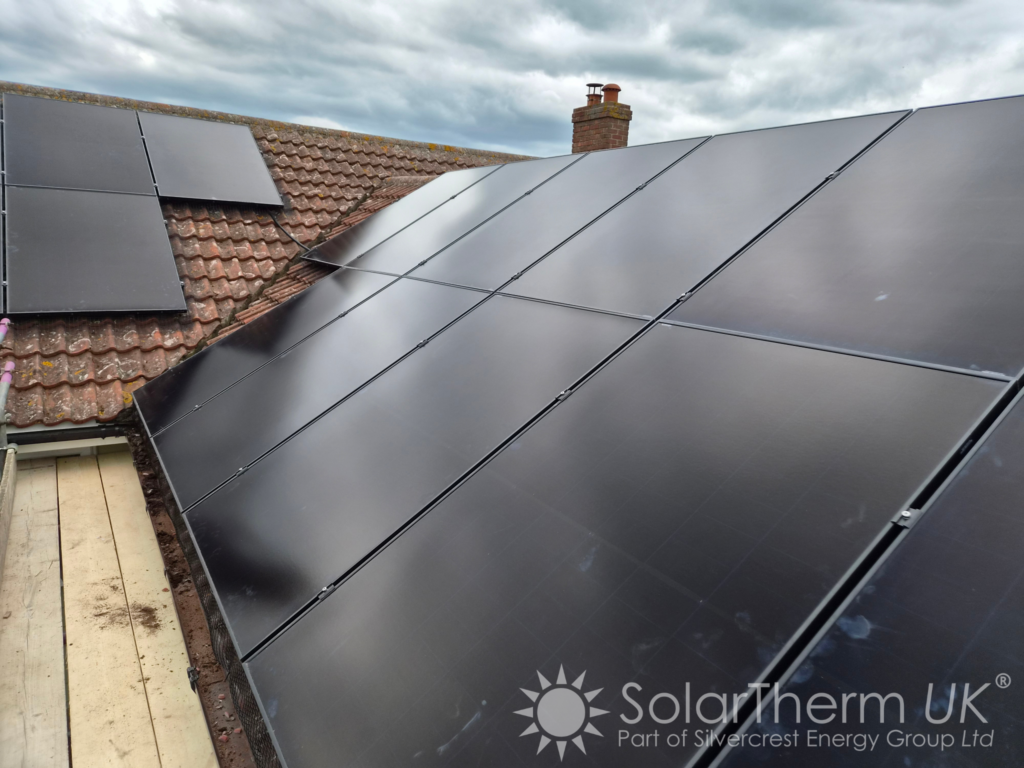
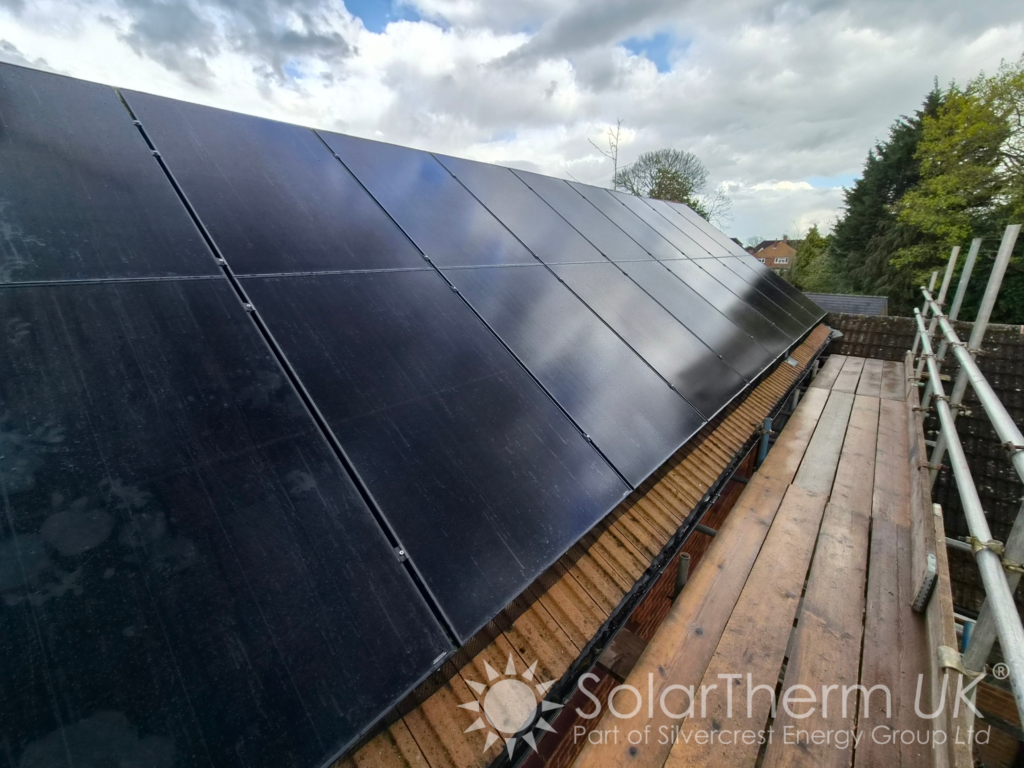
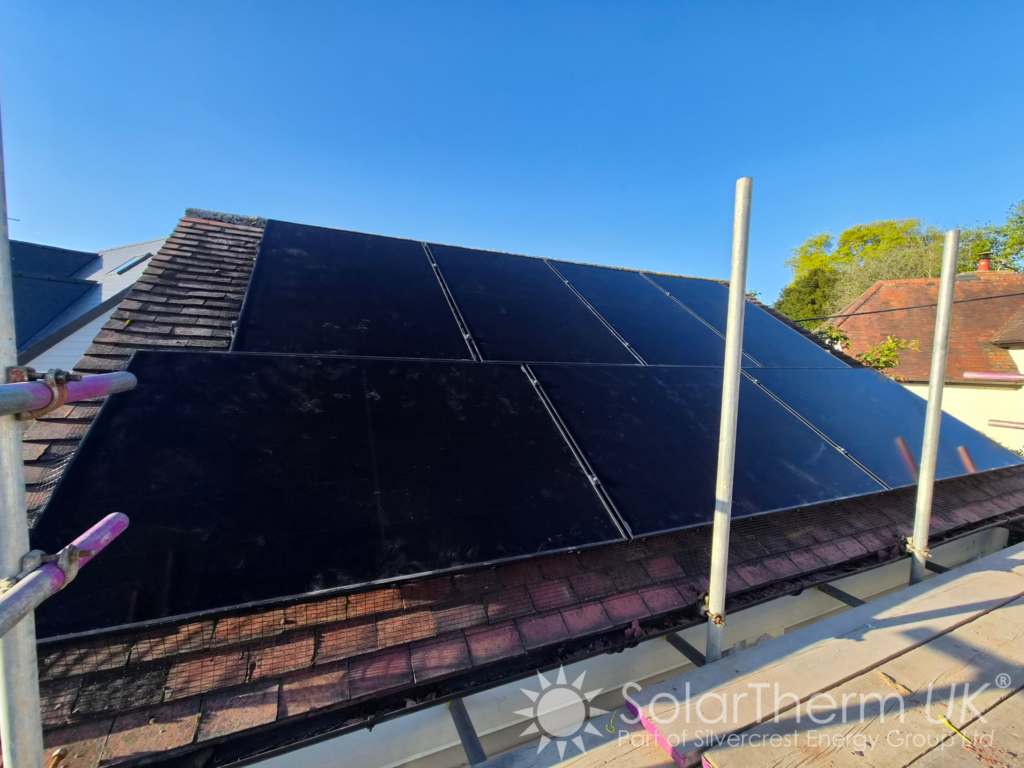
Pitched roofs remain the most common installation type throughout the South East and East Anglia. Whether your property have concrete, clay, slate, plain or interlocking tiles, solar panels can usually be installed using an above roof mounting system.
The mounting rails are securely fixed into the roof structure beneath the tiles before weatherproof flashing and brackets are installed.
Installations on pitched roofs are popular due to faster and simpler installation, excellent ventilation behind the panels and minimal disruption. They are the most cost effective form of installation and are usually easy for future maintenance if required.
Flat Roof Solar Panels
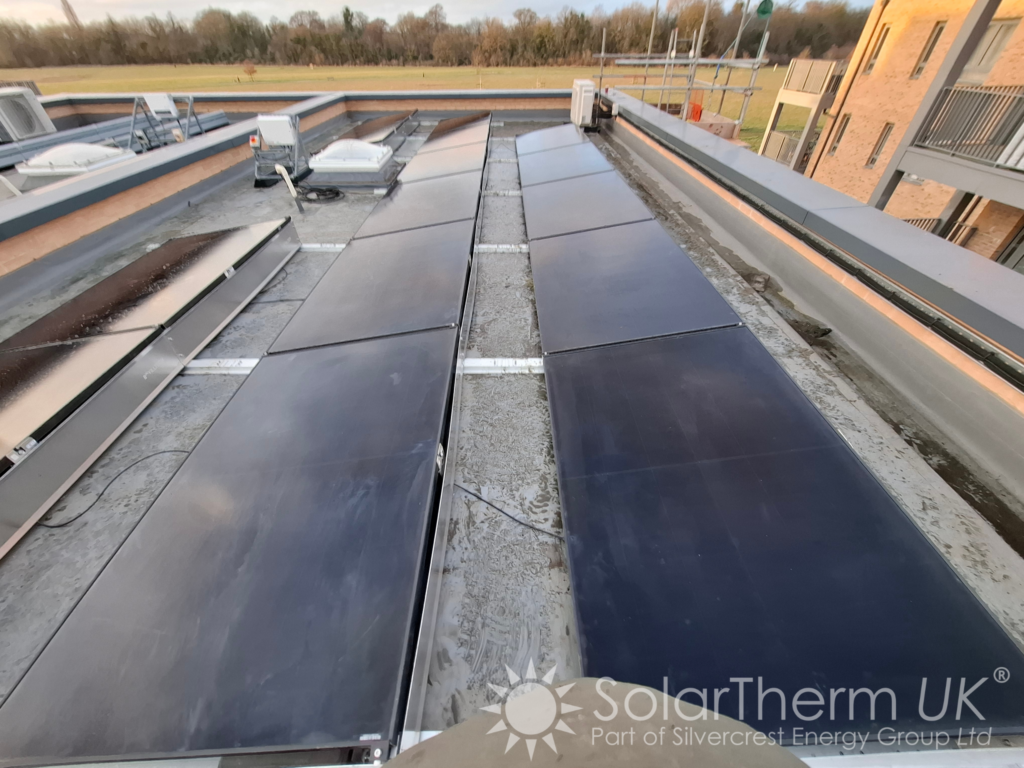
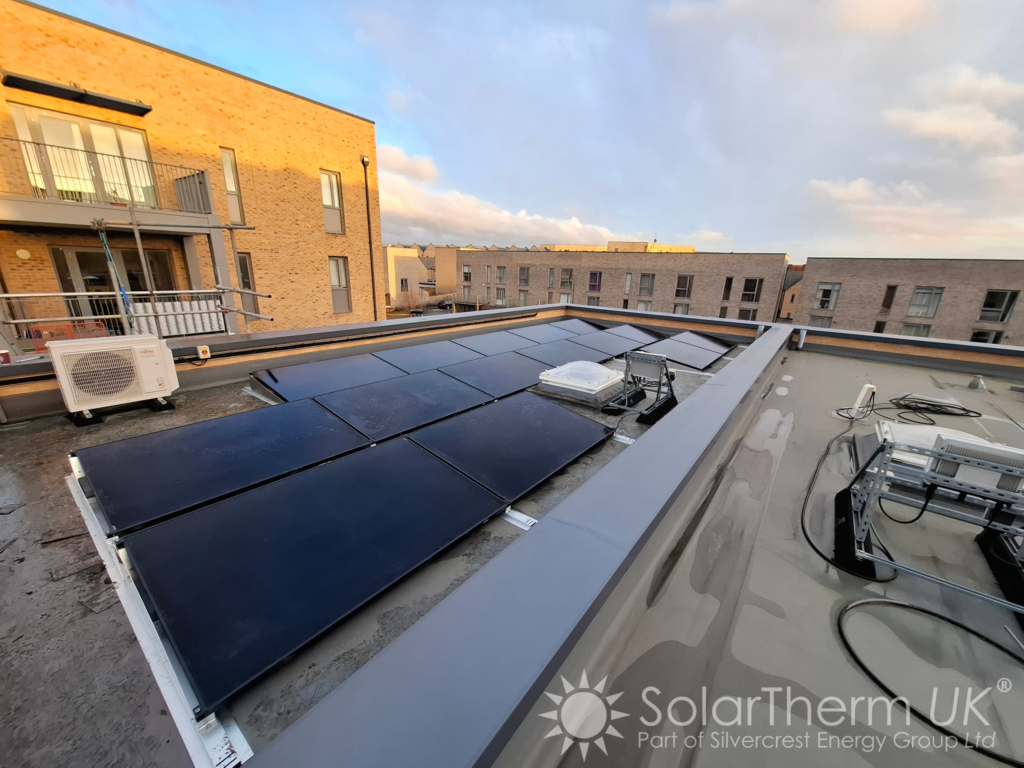
One of the fastest growing installation types is flat roof solar panels. Many homeowners assume flat roofs aren’t suitable for solar – but that’s simply not true.
Flat roof systems use specially designed mounting frames that angle the solar panels towards the sun to maximise energy generation. These frames are typically installed using ballast weighted systems, mechanically fixed systems or hybrid mounting methods, usually without the need for penetrating mounting systems, protecting the integrity of your flat roof. The correct approach will depend on the roof construction, wind exposure, building height and structural loading.
Flat roof solar panels offer several benefits:
- Excellent flexibility in panel positioning
- Easy maintenance access
- Hidden from street level on many homes
- Optimised panel angle and orientation
- Reduced shading between rows
As flat roofs require careful consideration of wind uplift and loading, professional design is essential. At SolarTherm UK, every flat roof installation includes detailed structural assessments before installation begins.
In Roof Solar Panels
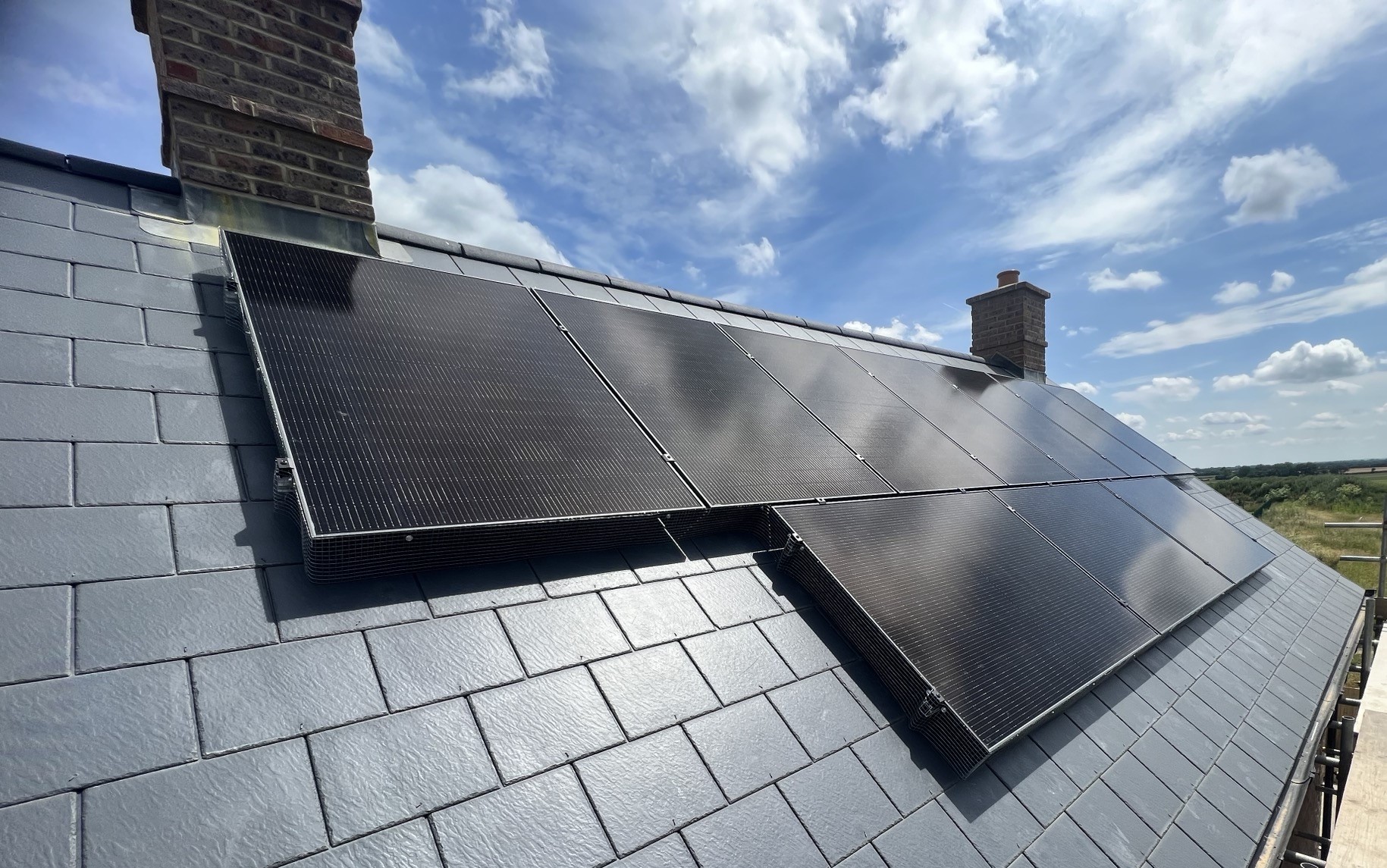
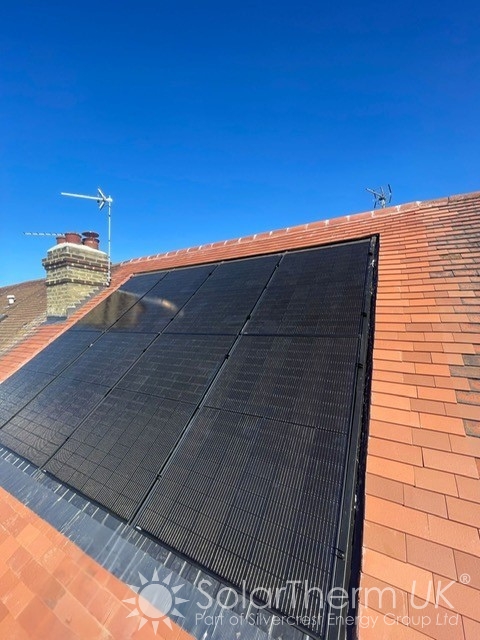
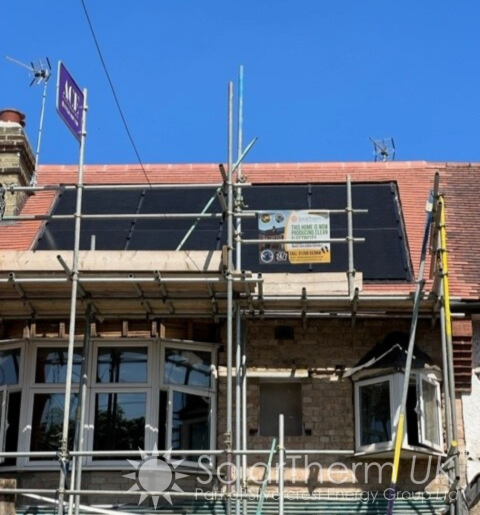
Many homeowners are looking for a cleaner, more contemporary appearance. That’s where in roof (also known as integrated) solar panels become an excellent option.
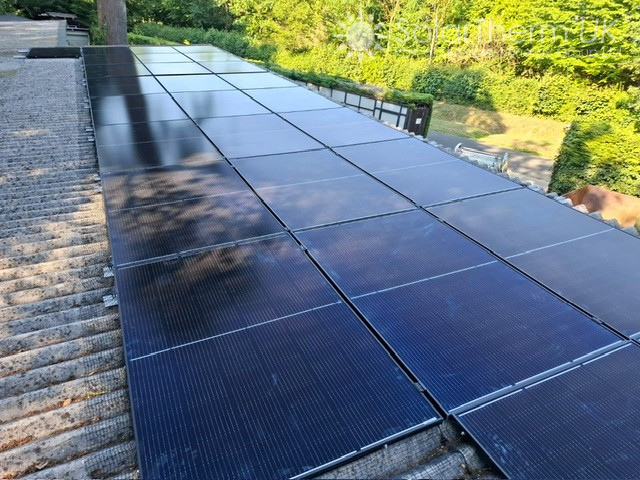
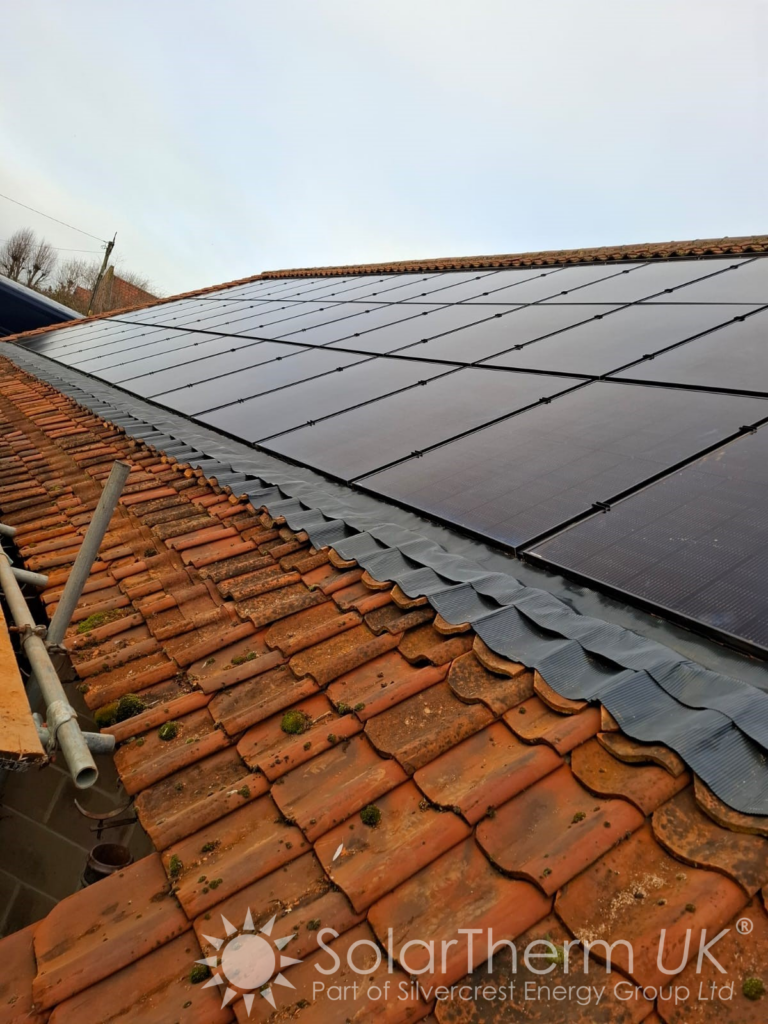
Instead of sitting above your existing roof covering, these systems replace part of the roof itself. The solar panels sit flush with the surrounding roof tiles, creating a seamless finish. This installation is especially popular for new builds and roof replacements.
Integrated solar panels give a modern appearance, flush finish and reduced visual impact, making them suitable for homes in conservation areas or on listed buildings. With excellent weather protection and the potential to save when replacing an existing roof, in roof solar panels are becoming more popular.
However, as the panels become part of the roof structure, careful planning and experienced installation are critical. SolarTherm UK’s installation teams are experienced in designing integrated systems that maintain weatherproofing while delivering excellent energy performance.
While integrated solar panels may cost slightly more to install than traditional above roof systems, many homeowners feel the improved appearance makes them worthwhile.
Ground Mounted Solar Panels
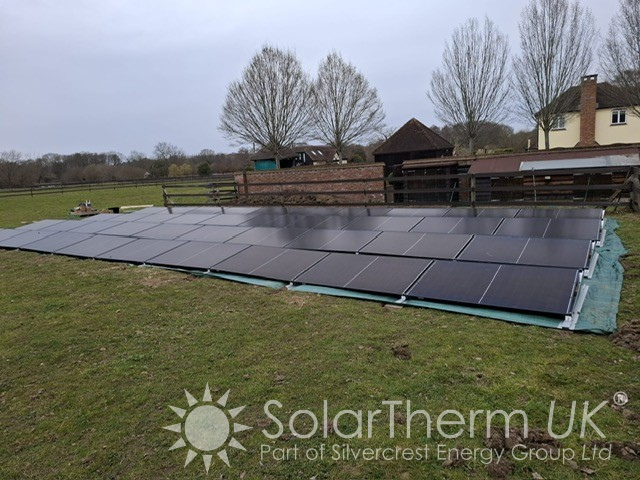
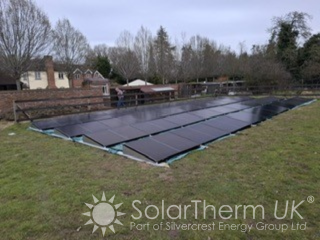
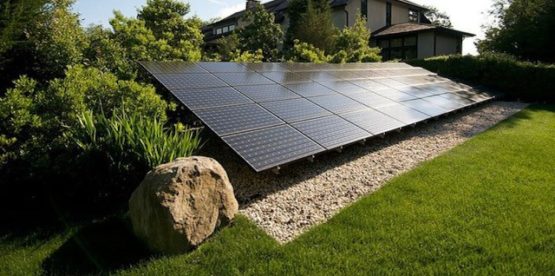
Not every home has an ideal roof. Fortunately, ground mounted solar panels now provide an excellent alternative for residential properties. Instead of using the roof, panels are installed on steel frameworks anchored into the ground – similar to those seen in solar farms but on a smaller scale.
Ground mounted systems are ideal for properties with large gardens, paddocks, rural land, poor roof orientation and significant roof shading. Ground mounted solar panels can be installed at the perfect orientation and tilt angle for maximum energy generation. With them being at ground level, maintenance is easier and the system can be easily expanded if energy needs change.
Ground mounted systems do sometimes require planning permission, which can increase costs and delay installation. Our design team advises every homeowner individually based on local planning guidance.
Can Solar Panels Be Installed on Older Roofs?
Yes – but only if the roof remains structurally sound. Before installation SolarTherm UK carries out a comprehensive solar survey, checking the age of the roof, timber condition, tile integrity, roof movement and any existing defects.
If repairs are recommended, it’s often more cost effective to complete them before installation rather than having to remove solar panels in the future. Our goals is to ensure your roof lasts just as long as your solar PV system.
Which Roof Direction Is Best?
South-facing roofs generally produce the highest annual energy output. However, modern solar panels also perform exceptionally well on south east, south west, east and west-facing roofs. Even north-facing roofs may be suitable depending on roof pitch, surrounding shading and your energy usage patterns.
During every consultation, SolarTherm UK uses professional solar design software to model expected generation and financial returns based on your property’s exact location.
Roof Pitch and Solar Performance
Panel angle affects energy generation throughout the year. Most UK installations perform well between approximately 30° and 40°, although many roofs outside this range still generate excellent returns. Rather than changing your roof angle, our designers optimise panel layout, inverter selection and system configuration to maximise generation.
Choosing the Right Installation Method
The best installation depends on several factors:
- Above Roof Systems: these are best for existing homes that don’t need the roof replaced, they are cost effective and easy maintenance.
- In Roof (Integrated) Solar Panels: these are best for new builds, roof replacements and contemporary homes looking for a modern, aesthetic look.
- Flat Roof Solar Panels: these are best if you are installing solar panels where you don’t have available space on your main roof so are using a garage roof, extension or outbuilding to maximise space.
- Ground Mounted Solar Panels: if you have large outdoor space such as a garden, paddock or live in a rural property with land, ground mounted solar panels allow you to increase your system size.
Every property is different, which is why a professional site survey is essential before choosing the right installation method.
Why Homeowners Across the South East and East Anglia Are Choosing SolarTherm UK
Choosing a reputable installer with experience is just as important as choosing the right equipment. Homeowners across Essex, Kent, Suffolk, Hertfordshire and the surrounding areas choose SolarTherm UK because we provide:
- Over 16 years of solar experience
- MCS certified
- NICEIC approved electricians
- EPVS Gold Standard membership
- Bespoke system design
- High performance solar panels and battery storage
- Professional aftercare and customer support
Our experienced surveyors don’t simply recommend the same solution for every property. Every installation is designed around your roof, your energy usage and your long term goals.
This tailored approach helps maximise energy generation, improve return on investment and ensure every installation performs reliably for decades.
Speak to SolarTherm UK
Whether you’re considering on roof solar panels, flat roof solar panels, in roof solar panels or ground mounted solar panels, our experienced team can help you choose the right solution for your home.
We provide expert surveys, bespoke system designs and professional installations for homeowners across Essex, Kent, Suffolk, Hertfordshire and the surrounding South East and East Anglia.
Contact SolarTherm UK today for a free, no obligation quote and design, tailored to your property, usage and future energy needs. No hard sell, just honest, expert advice – and the time you need to make an informed decision.
Your home. Your energy. Your future.
Frequently Asked Questions
Yes. When installed correctly using angled mounting frames, flat roof solar panels can achieve performance comparable to pitched roof installations.
Neither option is universally better. In roof solar panels offer a more streamlined appearance, while above-roof systems are generally easier to install and maintain.
Integrated solar panels are an excellent choice for homeowners prioritising aesthetics, particularly during new builds or roof replacement projects.
Most homes are suitable for solar, although structural condition, shading, orientation and available roof space all influence the final design.
Ground mounted solar panels usually require additional groundwork and mounting structures, making them more expensive initially. However, they can deliver excellent performance where roof installations aren’t suitable.