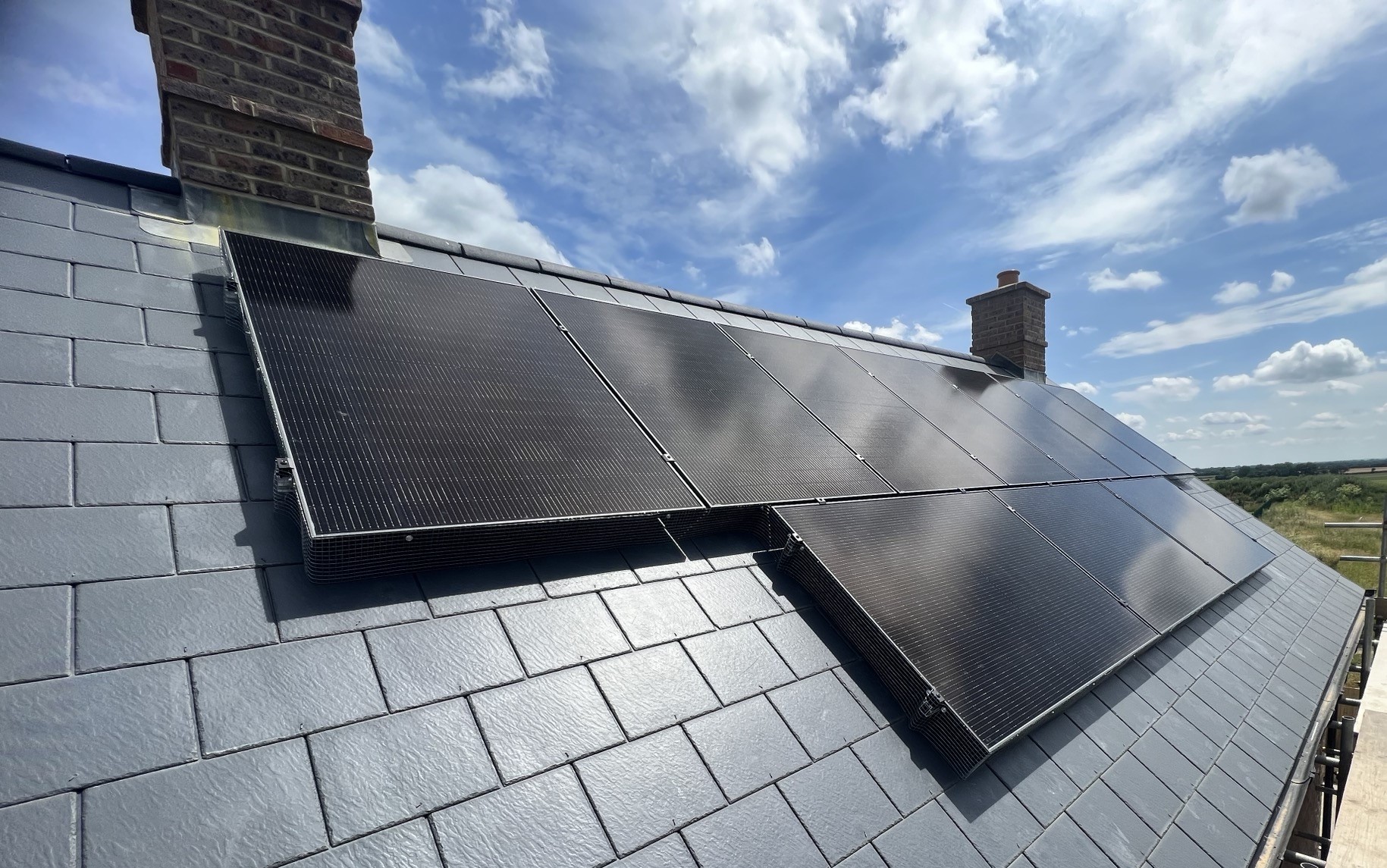
If you’re considering solar panels for your home, your main roof isn’t your only option. Many homeowners across Essex, Kent, Suffolk, Hertfordshire and the wider South East and East Anglia are discovering that garages, sheds and other outbuildings can provide an excellent location for solar panel installation.
Whether your home roof isn’t suitable due to shading, orientation or planning restrictions, or you’re simply looking to maximise your available space, installing solar panels on alternative structures could be the ideal solution.
At SolarTherm UK, we’ve spent over 16 years designing and installing bespoke solar PV systems across the region, helping homeowners make the most of every available roof space while ensuring installations remain safe, efficient and fully compliant with UK regulations.
Can Solar Panels Be Installed on Garages, Sheds and Outbuildings?
Absolutely, as long as the building is structurally sound and receives sufficient sunlight throughout the day, garages, sheds, workshops, garden rooms, barns and other outbuildings can all support a solar PV system.
In many cases these structures actually provide better installation opportunities than the main house because they may offer:
- Better south-facing roof orientation
- Less shading from neighbouring buildings
- Easier cable routing to batteries or consumer units
- Simpler installation access
- Greater flexibility for future expansion
Many homeowners are surprised to learn that an unused garage roof can generate a significant proportion of their household electricity.
Why Install Solar Panels on a Garage?
Garages are among the most popular alternative installation locations. Whether attached or detached, garages often provide ideal roof angles while keeping the main house visually unchanged.
Benefits include:
- Maximising otherwise unused roof space
- Keeping the main property’s appearance intact
- Powering EV chargers located inside garages
- Supporting battery storage systems installed nearby
- Potentially reducing cable runs for electric vehicle charging
Garage roofs can accommodate both traditional on-roof systems and integrated solar panels where roof replacement is planned.
Solar Panels on a Garage Roof: What Homeowners Need to Know
Installing solar panels on a garage roof can be an effective way to generate renewable electricity without using the roof of your main home. Both attached and detached garages may be suitable, provided the roof is structurally sound and receives sufficient sunlight.
Before installation, several factors need to be considered.
Attached vs Detached Garage Roofs
An attached garage may offer a relatively straightforward route for connecting the solar PV system to your home’s electrical installation. A detached garage can provide equally useful roof space, but the distance between the buildings may affect cable routing, installation costs and electrical design.
Roof Size and Orientation
The number of panels that can be installed depends on the usable roof area, the dimensions of the panels and any obstructions. South-facing roofs often provide strong annual generation, although east- and west-facing roofs can also be suitable.
Shading and Roof Condition
Trees, neighbouring buildings and the main house can shade a garage roof at different times of day. The roof covering, supporting structure and waterproofing must also be assessed before panels are installed.
A professional survey will establish whether the roof can accommodate a solar PV system safely and which layout is likely to make the best use of the available space.
How Many Solar Panels Can You Fit on a Garage or Shed?
The number of solar panels that will fit on a garage or shed depends on the roof’s usable dimensions, the size of the panels and the mounting arrangement. Roof windows, vents, surrounding trees and access requirements can all reduce the available space.
A larger garage may accommodate a more substantial solar array, while a small shed may only have room for a few panels. However, roof area alone does not determine the final system size: the structure must also be able to support the installation safely.
The best system size will depend on how you intend to use the electricity. For example, a garage used for lighting and occasional tool charging may have different requirements from a workshop with machinery, an electric vehicle charger or a battery storage system.
At SolarTherm UK, we assess the available roof space, structural condition, shading and electricity requirements before recommending a suitable solar PV system.
Can Garage Solar Panels Power Your Home?
Yes. Solar panels installed on a garage roof can potentially supply electricity to your home, provided the system is designed and connected appropriately.
For an attached garage, the electrical connection may be relatively straightforward, depending on the property’s existing wiring and equipment. A detached garage may require a longer cable route, additional electrical infrastructure or other installation work.
A grid-connected solar PV system can supply electricity to your property, with surplus generation potentially exported to the grid. Adding a compatible battery can help store excess electricity for use when solar generation is lower, such as in the evening.
A standalone system designed to power an isolated shed or outbuilding is different: it may not supply electricity to the main house without the appropriate system design and connections.
The right approach depends on the distance between buildings, your existing electrical installation, expected electricity consumption and whether you want battery storage or electric vehicle charging.
A qualified installer can assess these requirements and design a safe, compliant system for your property.
Are Shed Roofs Suitable for Solar Panels?
Many modern sheds and workshops are perfectly capable of supporting a small solar PV array. This can be particularly useful if you:
- Work from a home office or garden room
- Charge garden equipment
- Power lighting and security systems
- Run workshop machinery
- Charge electric bikes
Large timber buildings can also provide excellent locations for battery storage equipment when designed with adequate ventilation. Before installation, SolarTherm UK’s surveyors assess structural integrity, roof condition and loading capacity to ensure the building is suitable.
Flat Roof Solar Panels for Garages and Outbuildings
Many garages feature flat roofs, leading homeowners to wonder whether solar is possible. The answer is yes. Modern flat roof solar panels are installed using specially engineered mounting systems that position the panels at the optimum angle for maximum energy production.
Benefits include:
- Excellent performance
- Flexible orientation
- Minimal roof penetration
- Reduced visual impact
- Easy maintenance access
Ballasted mounting systems are commonly used where appropriate, helping protect roof membranes while maintaining structural integrity. Every installation is designed individually based on roof construction, wind loading, building height, local weather exposure and structural calculations.
How Much Do Solar Panels for Garages and Sheds Cost?
The cost of installing solar panels on a garage or shed depends on the size of the system, the roof structure, the mounting equipment and the complexity of the electrical connection.
Key factors include:
- Number of panels: Larger systems generally require more equipment and installation work.
- Roof type: Flat and pitched roofs can require different mounting solutions.
- Roof condition: Repairs or structural reinforcement may be needed before installation.
- Distance from the house: Detached garages may require longer cable routes and additional electrical work.
- Battery storage: Adding a battery increases the initial investment but can help you use more of the electricity your panels generate.
- Existing equipment: An existing solar PV system may affect the most appropriate way to expand your installation.
The cheapest system is not necessarily the best value. The aim is to install a system that suits the building, generates useful electricity and offers a reasonable return over its lifetime.
For a wider breakdown of the factors affecting installation prices, see our solar panel costs guide.
Structural Considerations
Every installation begins with a professional structural assessment. Our experienced surveyors evaluate:
- Roof age
- Timber condition
- Roof coverings
- Load bearing capacity
- Wind exposure
- Existing damage
- Waterproofing
Installing solar onto a weak roof can cause problems later, so ensuring structural suitability is an essential part of every SolarTherm UK project.
Electrical Connections
Outbuilding installations require careful electrical design. DNO requirements, export limitations, cable sizing and routes, voltage drop, earthing arrangements and distance to the consumer unit are all factors that need to be considered. Our qualified installers design each system to maximise efficiency while remaining fully compliant with current electrical regulations.
Battery Storage for Outbuilding Installations
Many homeowners choose to install battery storage alongside garage or outbuilding solar. This offers several advantages:
- Greater self-consumption
- Backup power capability
- Lower evening electricity bills
- Better use of exported energy
- Reduced reliance on the National Grid
Battery systems can often be located inside garages where environmental conditions are suitable.
Planning Permission
In many cases, solar panels installed on garages, sheds and outbuildings fall under Permitted Development Rights. However, additional permissions may be required for listed buildings or properties within a conservation area.
Additional planning considerations may apply to listed buildings, scheduled monuments, conservation areas and other designated locations. Flat-roof installations and ground-mounted systems can also have different requirements.
Planning permission is separate from building regulations. Regardless of the planning position, the roof’s structural capacity, mounting system and electrical installation must be assessed to ensure the system is safe and compliant.
Before proceeding, check the requirements for your property with your local planning authority and use a suitably qualified installer who can advise on the relevant technical requirements.
Why Choose SolarTherm UK?
Choosing the right installer is just as important as choosing the right equipment. With more than 16 years of experience, SolarTherm UK has helped thousands of homeowners across the South East and East Anglia generate their own renewable electricity.
When you choose SolarTherm UK, you benefit from:
- MCS certified installations
- NICEIC approved electrical work
- EPVS Gold Standard membership
- Experienced in-house surveyors
- High quality solar panels and battery storage solutions
- Honest, tailored advice based on your property
- Full system design and aftercare
Every installation is designed specifically for your property, ensuring maximum generation, long term reliability and compliance with current UK regulations.
Speak to SolarTherm UK
Whatever system you’re considering, SolarTherm UK can help, whether it’s a flat roof system on your extension, in roof panels on your main roof or a traditional on-roof system on your garage, we can help you identify the best solution for your property.
Our experienced in-house team provides professional surveys, bespoke system designs and fully accredited installations across Essex, Kent, Suffolk, Hertfordshire and the wider South East and East Anglia, helping homeowners make the most of every available space while reducing energy bills and carbon emissions.
Contact SolarTherm UK today for a free, no obligation quote and design, tailored to your property, usage and future energy needs. No hard sell, just honest, expert advice – and the time you need to make an informed decision.
Your home. Your energy. Your future.
Frequently Asked Questions
Yes. Solar panels can be installed on many garage roofs, provided the structure can support the additional weight and the roof receives sufficient sunlight. A professional survey will assess the roof condition, available space, shading and electrical requirements before installation.
Yes. Solar panels can be installed on suitable shed roofs, including those on workshops and garden offices. The roof must be structurally sound, appropriately positioned and capable of supporting the proposed system.
They can be worthwhile if the roof has sufficient usable space, receives good sunlight and can be connected to an appropriate electrical system. The potential savings depend on how much electricity the system generates, how much you use directly and the cost of installation.
Yes. Flat garage roofs can accommodate solar panels using suitable mounting systems. The installer must consider roof loading, wind uplift, waterproofing, drainage, panel spacing and the roof’s structural condition.
Yes. A detached garage can be a suitable location for solar panels. However, the distance from the house may affect cable routing, electrical design and installation costs. Your installer should assess whether the system will connect to the house or supply a separate installation.
The number depends on the roof’s usable dimensions, panel size, obstructions, mounting arrangement and structural capacity. A survey is the best way to establish how many panels can be installed safely and what size of system would suit your electricity needs.
Yes. A suitably designed grid-connected solar PV system on a garage can supply electricity to your home. The electrical connection must be designed appropriately, particularly where the garage is detached from the property.
Yes. Solar panels can be mounted on a suitable shed roof using an installation system designed for its roof construction. The installer must check the supporting structure, weatherproofing, wind loading and available sunlight before choosing the mounting method.
Not always. Some installations fall under permitted development rights in England, but the applicable conditions depend on the property, location and installation. Listed buildings, designated sites and other special circumstances may require additional checks.
Possibly, but the condition of the roof is important. Deteriorating coverings, damaged timbers, leaks or insufficient structural capacity may mean repairs or reinforcement are needed before installation. A survey should establish whether the roof is suitable.
Yes. A compatible battery can store surplus solar electricity for use when the panels are generating less power. The appropriate battery location, capacity and electrical configuration depend on your household consumption, system design and installation conditions.
It may be possible to incorporate solar panels when replacing a garage roof, but the design must account for the roof structure, weatherproofing, mounting method and applicable building regulations. Discuss the options with a qualified installer before starting the roof replacement.