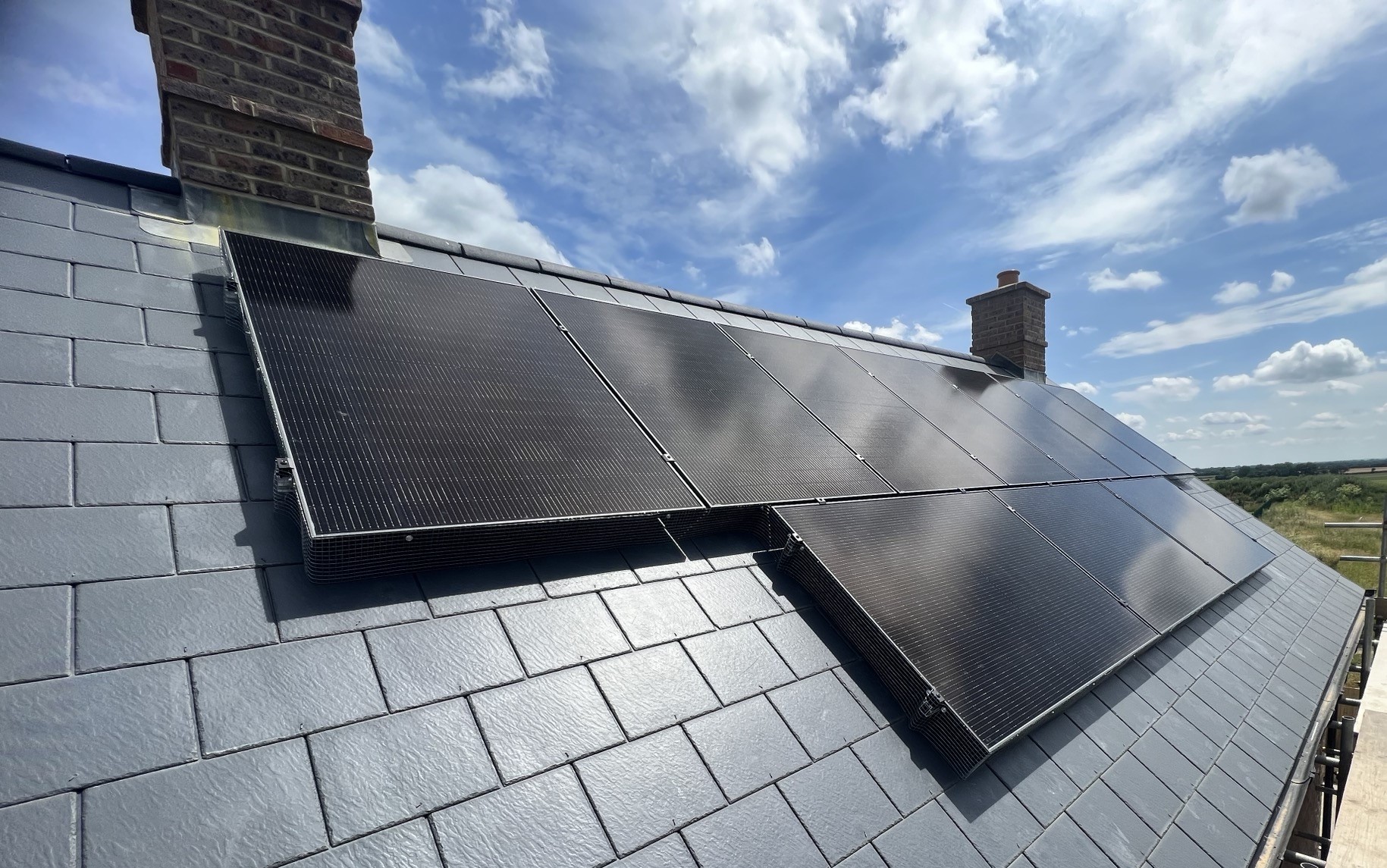
If you’re thinking about installing a solar PV system, you’ll quickly come across the term solar inverter. While solar panels get the most attention, the inverter is the real brains of your system – converting electricity, managing safety and ensuring your solar energy can actually be used in your home.
Below, the SolarTherm UK team answers some of the most common questions about solar inverters.
What Does a Solar Inverter Do?
A solar inverter converts the DC (direct current) electricity generated by your solar panels into usable AC (alternating current), for powering your home appliances and exporting to the National Grid.
Without an inverter, your solar panels would still generate electricity, but it wouldn’t be usable in your property or eligible for export payments through the Smart Export Guarantee (SEG).
Are Solar Inverters Noisy?
Modern solar inverters are very quiet. Most produce only a low level hum during peak generation hours, usually caused by internal cooling fans or electrical components. Noise levels vary depending on the inverter model, age and installation location. Many newer hybrid inverters operate at extremely low sound levels, making them barely noticeable in day to day use.
For best results, SolarTherm UK recommends installing inverters in garages or a utility room rather than in a main living space.
Are Solar Inverters Safe?
When installed correctly, solar inverters are extremely safe. Modern units include multiple built in safety protections such as:
- Surge and over voltage protection
- Ground fault monitoring
- Insulation monitoring
- Automatic shutdown during grid faults or power cuts
All systems installed by SolarTherm UK comply with UK safety standards, grid connection requirements and are MCS certified.
Are Solar Inverters Waterproof?
Solar inverters are weather resistant but not fully waterproof. They are rated using an IP (Ingress Protection) rating, which indicates resistance to dust and water. An IP65 rating or higher is typically suitable for outdoor installation, meaning the inverter is sealed against dust and protected from water jets. They should never be submerged and must always be installed according to manufacturer guidelines.
Can a Solar Inverter Be Installed Outside?
Many solar inverters are designed specifically for outdoor use. Outdoor installations should be mounted in a shaded position, allowing adequate airflow for cooling. Your solar inverter should be installed in an area away from flood risk and be securely fixed to a solid surface. In some cases, a small weather canopy is recommended to improve longevity and maintain warranty compliance.
Can Solar Inverters Be Installed in Lofts?
Loft installations are generally not recommended. Solar inverters generate heat and loft spaces often suffer from poor ventilation and high temperatures. This can directly reduce efficiency, shorten lifespan and raise fire safety concerns.
UK guidance such as PAS 63100:2024 advises against installing battery systems in lofts, and since inverters and batteries are often installed together, this guidance is highly relevant. Preferred locations include garages and utility rooms or outdoor enclosures or sheltered external walls.
Where are Solar Inverters Manufactured?
Solar inverters are produced globally. China leads manufacturing with brands such as Solis, Growatt, Sungrow and Huawei. European brands such as SMA are known for their engineering quality, while US brands such as Tesla and Enphase are known for their premium price tags.
At SolarTherm UK we balance value for money with long term reliability and proven results, best suited to UK conditions.
Can Solar Panels Work Without an Inverter?
Technically, solar panels can generate electricity without an inverter, but it cannot be used safely in our homes. Our homes run on AC electricity, without an inverter, the DC electricity generated by solar panels cannot power anything or be exported to the grid.
Smaller solar devices like solar lights may operate without inverters because they are designed to use DC electricity directly.
How Long Does a Solar Inverter Last?
Most solar inverters last 10-15 years, depending on the type, brand, installation quality and operating conditions.
- String inverters: typically 10-12 years
- Hybrid inverters: often 15+ years
- Microinverters: up to 20-25 years
Since solar panels usually last over 25 years – with most continuing to generate electricity efficiently for 40 years or more – most systems will require at least one inverter replacement during their lifetime, which at SolarTherm UK we account for when we calculate your 30 year savings and returns estimates.
Can Solar Inverters Be Connected in Parallel?
Provided the inverter model supports parallel operation, there is no reason your system cannot be connected. Running inverters in parallel allows larger systems to increase total output and adds redundancy. This is common in commercial and large residential installations. Not all inverters are parallel capable, so system design must be carefully planned by a qualified installer.
What Are the Disadvantages of Solar Inverters?
While essential, solar inverters do have limitations:
- Shorter lifespan than panels
- Small efficiency losses during DC to AC conversion
- Sensitivity to heat, dust and moisture
- Occasional servicing or firmware updates required
Correct installation and ventilation significantly reduce these issues.
What Are the Main Types of Solar Inverters?
There are three main inverter types:
- String inverters: cost effective and widely used. Panels are connected in series to a single inverter.
- Microinverters: installed on each panel. Ideal for shaded or complex roofs.
- Hybrid inverters: manage both solar generation and battery storage in one unit, offering future flexibility.
What Is the Minimum Number of Panels an Inverter Needs?
This will depend on the inverter’s start up voltage. String and hybrid inverters require multiple panels wired together to reach the minimum operating voltage. Microinverters, however work with a single panel. Always refer to manufacturer specifications or seek a professional, experienced installer for design advice.
How Many Solar Panels Can One Inverter Handle?
This depends on inverter capacity and panel wattage. For example:
- A 5kW inverter with 450W panels can typically support around 11 panels
- Many inverters allow DC oversizing, meaning more panels can be connected safely.
Voltage and current limits must always be adhered to to avoid damage and remain safe.
Are Off Grid Inverters Different from Grid Connected Inverters?
On grid inverters connect to the National Grid and export surplus energy but shut down during power cuts. Off grid inverters operate independently with battery storage and often generator back up. Hybrid inverters combine both approaches, offering grid connection with back up power capability.
How Efficient are Solar Inverters?
Most modern solar inverters operate at 95-99% efficiency. Premium models achieve peak efficiencies closer to 99%, meaning very little energy is lost during conversion. Efficiency slowly declines over time, but with proper installation and ventilation, high performance can be maintained for years.
Need Advice on Choosing the Right Solar Inverter?
If you’re planning a solar PV system in Essex, Kent, Suffolk, Hertfordshire or the wider South East or East Anglia, SolarTherm UK can help you choose the right inverter for your home. Contact us today for a free, no obligation quote and design, tailored to your property, usage and future energy needs. No hard sell, just honest, expert advice.
Your home. Your energy. Your future.