If your roof is affected by trees, chimneys or neighbouring buildings, you may be wondering whether solar panels are still worth installing. The good news is that in many cases, the answer is yes.
While shading can reduce the amount of electricity your solar PV system generates, modern technologies such as power optimisers, microinverters and high efficiency solar panels mean that even partially shaded roofs can often achieve excellent performance.
At SolarTherm UK, assessing roof shading is a key part of every solar survey. By understanding how shadows affect your roof throughout the year, we can design a system that maximises energy production, improves your return on investment and delivers reliable long term savings.
In this guide we’ll investigate the effect shading has on solar generation, what can reduce the impact and whether solar is still worth it for your roof if you have shading.
Does Shade Affect Solar Panels?
Yes, shade can reduce the amount of electricity generated by a solar PV system, particularly if the system hasn’t been designed with shading in mind. Even relatively small areas of shade from chimneys, trees, neighbouring properties or other roof features can reduce solar electricity generation. The extent of the reduction depends on the severity and duration of the shading, the panel layout and the electrical design of the system.
The effect depends on several factors, including:
- The amount of shading
- The time of day it occurs
- The orientation of the roof
- The type of inverter used
- Whether the system includes power optimisers or microinverters
Fortunately, modern solar technology makes it possible to significantly reduce these losses.
Why Does Shading Reduce Solar Panel Performance?
Solar panels generate electricity when sunlight reaches the photovoltaic (PV) cells. On a traditional string inverter system, several panels are connected together as one electrical circuit. If one panel produces less electricity because it is shaded, the performance of the entire string can be reduced.
This is often compared to a chain being only as strong as its weakest link.
Older systems were particularly affected by this, but today’s systems can often isolate the impact of shading to individual panels rather than the whole array.
What Happens When Only Part of a Solar Panel Is Shaded?
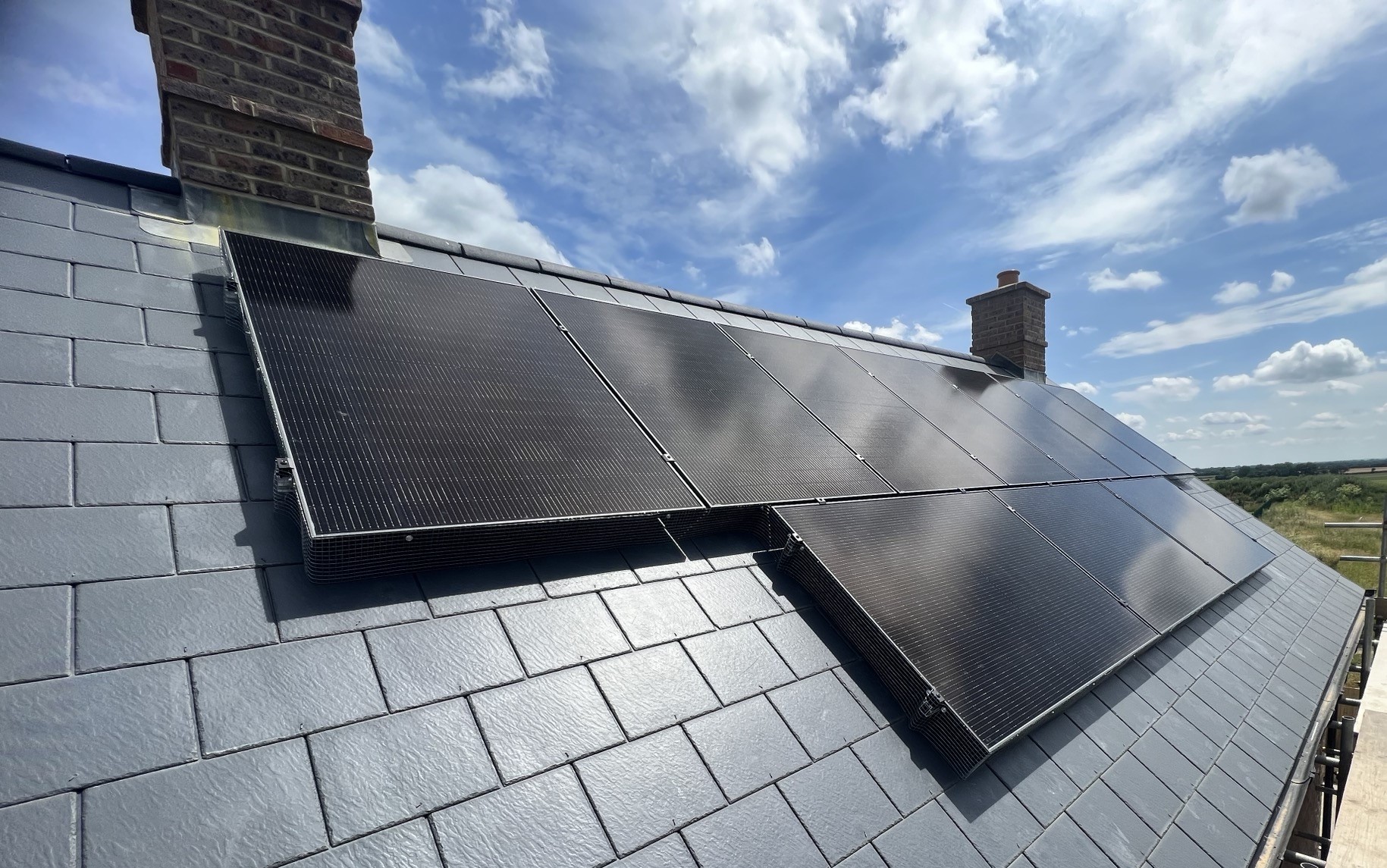
Partial shading occurs when an object such as a chimney, tree branch or neighbouring building blocks sunlight from only part of a solar panel or solar array.
The effect depends on which cells are shaded, the panel’s internal electrical configuration and the wider system design. Bypass diodes can allow current to bypass affected sections of a panel, reducing some losses, but they do not eliminate them entirely.
Where several panels are connected to a string inverter, shading on one panel can also affect the operating point of other panels in the same string. Power optimisers and microinverters can help reduce these effects, although neither technology can restore sunlight blocked by an obstruction.
This is why a shading assessment is important before choosing the most appropriate solar panel layout and inverter configuration.
What Are Bypass Diodes?
Modern solar panels include built in bypass diodes. These allow electricity to flow around shaded sections of a panel rather than stopping production altogether. While they cannot eliminate shading losses completely, they help minimise the impact and protect the panel from developing damaging hot spots.
Combined with modern inverter technology, bypass diodes make today’s solar panels far more resilient to occasional or partial shading than systems installed many years ago.
Common Causes of Solar Panel Shading
Every property is different, but some of the most common causes of shading include:
- Trees: trees are one of the biggest causes of residential solar shading across the South East and East Anglia. As trees grow, they may cast longer shadows over your roof, particularly during winter when the sun sits lower in the sky.
- Chimneys and Roof Features: chimneys, dormer windows, roof vents, TV aerials and satellite dishes can all create small areas of shade across parts of a solar array.
- Neighbouring Buildings: nearby houses, extensions and future developments may block sunlight during certain parts of the day, particularly in urban or semi-detached locations.
- Seasonal Changes: the position of the sun changes throughout the year. A roof that receives full sunlight in summer may experience significantly more shading during winter mornings and evenings.
- Temporary Obstructions: temporary shading can also be caused by bird droppings, fallen leaves, moss, snow and frost or debris build up. Regular maintenance and cleaning can help minimise these temporary losses.
Are Shaded Roofs Still Suitable for Solar Panels?
In many cases, absolutely. A partially shaded roof doesn’t automatically mean solar isn’t worthwhile. Modern system design allows installers to work around shaded areas and maximise the amount of usable roof space.
At SolarTherm UK, every survey considers:
- Roof orientation and pitch
- Annual sun path
- Existing and future shading
- Household electricity usage
- Battery storage potential
- Inverter options
- Long term system performance
Many homes with moderate shading continue to achieve excellent energy savings and attractive payback periods.
Modern Solar Panels Handle Shade Better
Solar panel design has evolved considerably, with technologies that can influence how panels perform under partial shading. However, panel efficiency and shade tolerance are not the same thing. The impact of shading depends on the panel’s cell layout, bypass diode configuration and the inverter or optimisation technology used.
Features that can influence performance under partial shading include:
- Half-cut solar cell designs
- Multi-busbar cell design
- Improved bypass diode technology
- Higher conversion efficiencies
- Module-level power optimisers
- Microinverters
The suitability of these technologies depends on the property’s shading pattern and the overall system design.
How Microinverters Help
Microinverters are one of the most effective solutions for roofs affected by shading. Instead of using one central inverter, each solar panel has its own individual inverter, allowing every panel to operate independently. As each panel has its own microinverter, shading on one panel generally has less direct impact on the AC output of other panels. Each panel’s generation will still depend on the sunlight it receives and its operating conditions.
Benefits include:
- Better performance on shaded roofs
- Panel level monitoring
- Improved reliability
- Greater design flexibility
- Easier fault identification
Microinverters are particularly beneficial for properties with chimneys, dormers, multiple roof elevations or nearby trees.
What Are Power Optimisers?
Power optimisers provide many of the same advantages while still using a central inverter. Each optimiser maximises the performance of its individual panel before sending electricity to the inverter.
Benefits include:
- Improved performance during partial shading
- Individual panel monitoring
- Better overall efficiency
- Flexible system design
- Excellent value for money
For many homeowners, power optimisers provide an ideal balance between performance and cost.
How Professional Shade Analysis Works
Accurate system design starts with understanding how sunlight interacts with your roof throughout the year.
During a professional survey, installers assess:
- Roof orientation and pitch
- Annual sun paths
- Existing shading
- Future tree growth
- Nearby buildings
- Chimneys and roof obstructions
- Expected annual generation
- Potential battery storage benefits
Using specialist design software, installers can accurately predict how much electricity your system is likely to generate before installation begins. This helps ensure realistic savings forecasts and the right equipment is specified from the outset.
Do You Need a Shading and Yield Assessment for a Solar PV System?
A shading and yield assessment helps determine how much electricity a solar PV system is likely to generate and whether shading could affect its performance or financial return.
During the assessment, an installer considers the roof’s orientation and pitch, nearby trees and buildings, chimneys, seasonal changes in the sun’s position and the proposed panel layout.
Specialist solar design software can model shading throughout the year and estimate its impact on annual electricity generation. This allows the installer to compare different panel positions and system configurations before installation.
For commercial solar PV projects, accurate yield assessments are particularly important when evaluating projected energy savings, return on investment and the financial viability of a proposed installation.
For homeowners, the same process helps establish realistic generation forecasts and determine whether technologies such as power optimisers or microinverters could improve performance.
A professional assessment cannot remove every shading loss, but it helps ensure the system is designed around the property’s actual conditions rather than relying on assumptions.
Ways to Reduce the Impact of Shading
Several design choices can improve solar performance on partially shaded roofs.
These include:
- Positioning panels away from shaded areas
- Installing power optimisers
- Choosing microinverters
- Splitting panels across multiple roof elevations and orientations
- Selecting high efficiency solar panels
- Trimming nearby vegetation where appropriate
- Considering an alternative option to roof mounted solar panels if shading is severe
Every property is unique, so the most effective solution depends on your roof, energy usage and future plans.
Can Battery Storage Help?
While a battery won’t reduce shading itself, it can help you make better use of the electricity your solar panels generate. Instead of exporting surplus electricity during sunny periods, a battery stores it for use later in the day when solar generation falls.
This can increase self-consumption, reduce reliance on expensive grid electricity and improve the overall value of your solar investment.
Common Myths About Solar Panel Shading
“Solar panels stop working in the shade”
Not true. They continue generating electricity, although output may be reduced depending on the level of shading.
“One tree means solar isn’t worth it”
Many shaded properties still achieve excellent financial returns with the correct system design.
“Every home needs microinverters”
Contrary to the belief of many national companies, some properties perform perfectly well using power optimisers or a traditional string inverter, even with shading. This is why a detailed site survey, including solar irradiance calculations, is fundamental.
“Nothing can be done about shading”
Modern solar technology offers several ways to reduce shading losses and improve performance.
Why Homeowners Choose SolarTherm UK
For more than 16 years, SolarTherm UK have helped homeowners across Essex, Kent, Suffolk, Hertfordshire and the wider South East and East Anglia install high quality solar PV systems designed around their individual properties.
Our approach focuses on honest advice, accurate system design and long term performance.
Every installation benefits from:
- Over 16 years of solar expertise
- Detailed shading assessments
- MCS certified installations
- NICEIC approved electrical work
- Advanced inverter and optimisation options
- Realistic generation forecasts, independently verified by EPVS for accuracy
- Ongoing customer support
No two homes are the same, which is why every system we install is carefully designed to maximise efficiency and long term value.
If you’re considering solar panels and are concerned about shading, our experienced, in-house team can assess your roof and recommend the most suitable solution for your property.
Contact SolarTherm UK today for a free, no obligation quote and design, tailored to your property, usage and future energy needs. No hard sell, just honest, expert advice – and the time you need to make an informed decision.
Your home. Your energy. Your future.
FAQs
What Is Solar Panel Shading?
Solar panel shading occurs when an object blocks sunlight from reaching some or all of a solar panel. Common causes include trees, chimneys, neighbouring buildings, roof structures and other obstructions. Shading can reduce electricity generation, although the extent of the impact depends on the duration of the shade, the panel layout and the system’s electrical configuration.
How Much Does Shading Affect Solar Panel Performance?
The effect of shading varies depending on the size and location of the shaded area, the type of obstruction and the solar PV system design. Even a small shadow can have a disproportionate effect if it falls across particular solar cells. Modern panels use bypass diodes to help limit some losses, while power optimisers and microinverters can help reduce the impact of shading across an array.
Can Solar Panels Work in the Shade?
Yes, solar panels can still generate electricity in shaded conditions, but their output is generally lower than when they receive direct sunlight. Panels also generate electricity from diffuse daylight, so a shaded roof is not necessarily unsuitable for solar PV. A professional assessment can establish whether the available sunlight makes installation worthwhile and identify the most suitable panel layout.
What Is a Solar Panel Shading Analysis?
A solar panel shading analysis assesses how nearby obstructions affect the sunlight available to a proposed solar PV system. An installer may use site measurements, solar design software and shading simulations to evaluate objects such as trees, chimneys and neighbouring buildings throughout the year. The results help estimate annual electricity generation and inform decisions about panel positioning and system design.
Do I Need a Shading and Yield Assessment for My Solar PV System?
A shading and yield assessment is particularly valuable where a roof has nearby trees, surrounding buildings, chimneys or other potential obstructions. It helps estimate expected electricity generation and identify potential performance losses before installation. For commercial projects, it can also support financial modelling and investment decisions by providing a more realistic generation forecast.
Can Power Optimisers Help With Solar Panel Shading?
Power optimisers can reduce the impact of shading by allowing individual panels to operate more independently of other panels in the same string. This can help prevent a shaded panel from unnecessarily restricting the performance of the wider array. However, optimisers cannot restore sunlight blocked by an obstruction, and the benefit depends on the system design and shading conditions.
Are Microinverters Better for Shaded Solar Panels?
Microinverters convert the DC electricity generated by each panel into AC electricity individually. This can reduce the effect of one shaded panel on the output of other panels. They may be beneficial for roofs with complex layouts or varying shading conditions, but they are not automatically the best option for every property. A comparison of system costs, shading patterns and expected generation can help determine the most appropriate technology.
Can Trees Cause Solar Panel Shading Problems Throughout the Year?
Yes. Trees can cast different shadows as the sun’s position changes between seasons. Deciduous trees may allow more sunlight through during winter after losing their leaves, while evergreen trees can create more consistent shading. Tree growth can also increase shading over time. A year-round shading assessment helps account for these variations when planning a solar PV installation.
Should I Avoid Installing Solar Panels on a Partially Shaded Roof?
Not necessarily. A partially shaded roof may still be suitable for solar panels, depending on the amount of sunlight available, the location of the obstructions and the proposed system design. An installer can assess alternative panel positions and technologies to reduce avoidable losses. The important consideration is whether the expected electricity generation and financial savings justify the installation.
Can Solar Panel Shading Be Eliminated Completely?
Shading losses can sometimes be reduced by repositioning panels, removing or managing suitable obstructions where permitted, or selecting appropriate inverter technology. However, it is not always possible or practical to eliminate shading completely. A professional solar assessment can identify realistic improvements and help design a system that makes the best use of the available sunlight.