What It Means for Homes and Businesses
The UK government has just awarded contracts to a record number of renewable energy projects, including 157 new solar developments across England, Scotland and Wales. The announcement marks another significant step towards the government’s target of achieving 95% clean electricity by 2030.
While much of the media focus is on large scale solar farms, the real story is bigger than fields of panels. This latest auction confirms one thing clearly:
The UK is accelerating toward an electric future – and solar is central to it.
For homeowners and businesses across the South East, that shift presents both opportunity and urgency.
The UK’s Solar Expansion: Key Figures
According to the latest government data:
- The UK currently has around 21-24GW of installed solar capacity
- The 2030 target is 45-47GE, potentially rising to 57GW with additional rooftop solar
- The latest auction secures an additional 4.9GW of solar capacity
- Solar provided over 6% of Britain’s electricity last year
- During peak summer periods, solar supplied over 40% of electricity generation
Solar projects in this auction were awarded contracts at £65 per megawatt hour, lower than previous rounds – reinforcing solar’s position as one of the cheapest forms of new electricity generation. The direction of travel is unmistakable: more solar, more electrification, less reliance on fossil fuels.
Solar Farms vs Rooftop Solar – Why It Matters Locally
Large solar farms often generate debate in local communities, particularly around land use. However, it’s important to distinguish between utility scale developments and rooftop solar PV systems.
At SolarTherm UK we do not install large scale solar farms. We specialise in:
- Residential solar panels
- Commercial rooftop solar solutions
- Battery storage systems
- Integrated energy systems for long term energy independence
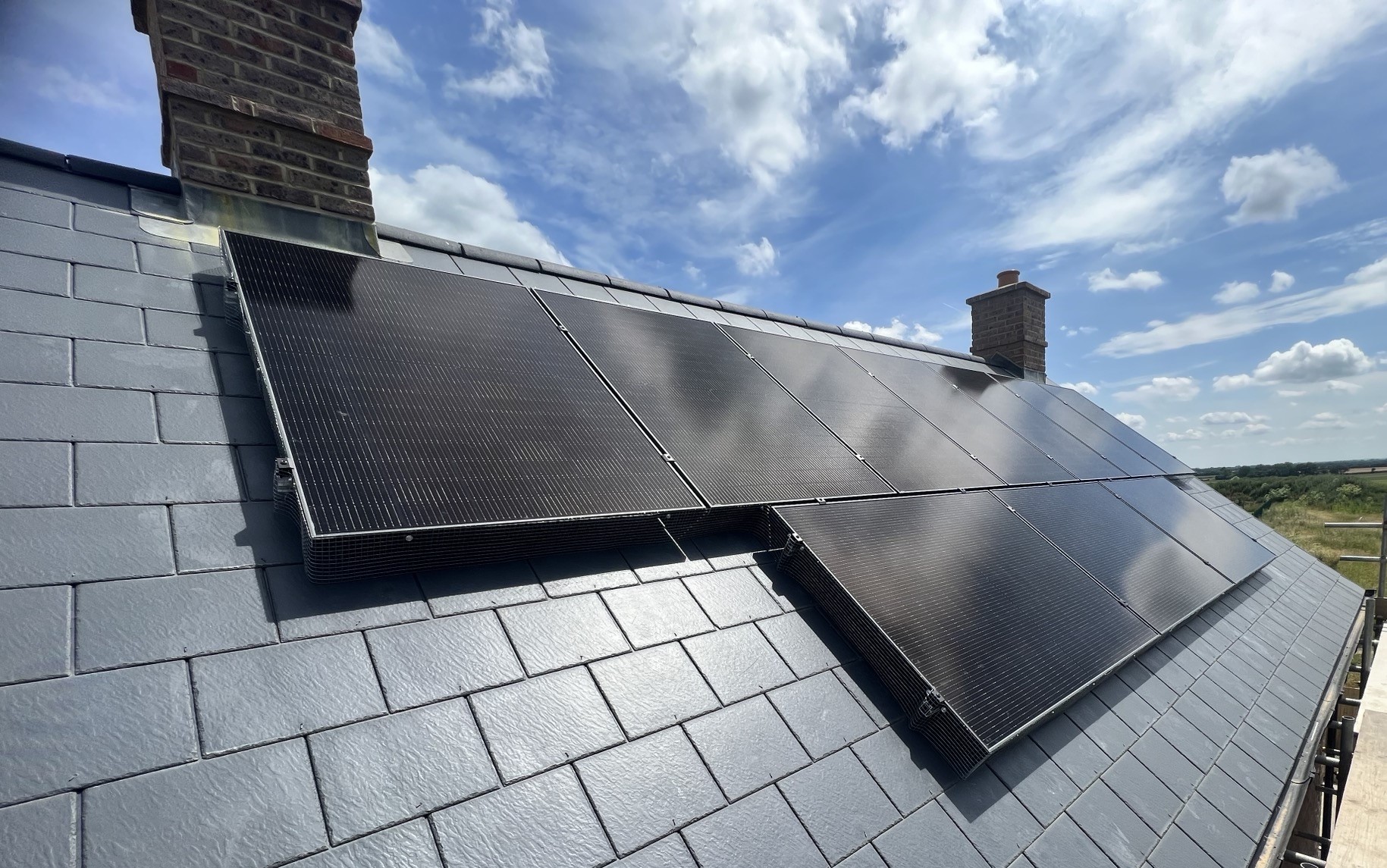
The government has already indicated that rooftop solar will be essential to hitting its upper capacity targets. That means homes, warehouses, schools, offices and agricultural buildings will play a crucial role in the UK’s clean energy transition.
Instead of industrialising countryside, rooftop solar uses existing built environments – turning unused roof space into clean energy assets.
The Electric Future: Why This Matters Now
The UK is rapidly electrifying, heat pumps are replacing gas boilers, electric vehicles are becoming more mainstream, businesses are switching to electric fleets and increased reliance on electric heating and cooling systems.
All of this increases electricity demand. If more of the grid becomes renewable – particularly solar and wind – then generating your own electricity becomes even more strategic.
Solar complements wind power, especially in summer when wind speeds tend to drop, but solar output varies by season and time of day. That’s why the government is also calling for more battery storage systems – enabling energy generated during the day to be used in the evening.
For property owners, this reinforces a clear message:
Installing a solar PV system with battery storage is not just about savings – it’s about resilience in an increasingly electric economy.
Will This Reduce Energy Bills?
Government ministers argue that expanding solar and wind will reduce reliance on volatile gas markets – the same markets that caused bill spikes in recent years. While wholesale electricity prices fluctuate, solar remains predictable once installed. When you generate your own electricity you’re offsetting grid imports – for every unit of electricity of your own self-generated electricity you use that’s a unit you don’t need to pay for. Solar reduces exposure to price volatility – in fact, the higher prices rise, the more you’re saving.
Recent studies have also shown that having solar installed on your property can increase the resale value of your home by up to 14%, this is only increasing as energy bills rise and sustainable energy becomes more popular.
Why the South East Should Act Early
The South East consistently delivers strong solar performance due to favourable irradiation levels compared to many other parts of the UK. With government targets ramping up and electrification accelerating, early adopters benefit from faster payback periods, energy bill protection, increased EPC ratings and improved sustainability credentials. Regulations are changing rapidly and adopting solar early positions you stronger for the future. Waiting until electrification becomes mandatory could mean paying more for your system and waiting longer for installation.
Solar Is No Longer “Alternative” – It’s Infrastructure
The recent auction results make one thing clear:
Solar is no longer niche, it is becoming core national infrastructure, building a Britain for the future.
Whether delivered through large solar farms or rooftop installations and everything in between, the UK’s clean power future will be powered by solar PV systems and supported by battery storage. For homeowners and businesses the question is no longer “Will solar become mainstream?” it’s
“Will you generate your own power – or continue paying for expensive imports?”
Make Your Property Part of the Solution
At SolarTherm UK we design and install high performance solar panel systems and battery storage solutions tailored to properties across the South East.
We don’t build solar farms.
We empower property owners.
Contact SolarTherm UK today for a free, no obligation quote and design, tailored to your property, usage and future energy needs. No hard sell, just honest, expert advice.
Your home. Your energy. Your future.