Yes, solar panels can improve your EPC rating. For many UK homes, a suitably sized solar PV system can increase the property’s SAP score enough to move it into a higher EPC band, although the exact improvement varies from property to property.
A typical domestic solar PV installation can potentially add several EPC points, with the exact impact depending on factors including the property’s existing EPC score, system size, roof orientation, shading, electricity generation and other characteristics of the home.
For example, a property sitting close to the boundary between EPC D and C may be able to move into band C after installing solar panels. However, solar isn’t guaranteed to move every property up a complete band, and insulation, heating, glazing and other improvements can also have a significant effect.
In this guide, we’ll explain how solar panels affect your EPC, how many points you could potentially gain, whether solar can take a property from D to C or C to B, and what the upcoming EPC changes mean for homeowners and landlords.
What Is an EPC Rating?
An Energy Performance Certificate (EPC) provides an assessment of how energy efficient a property is.
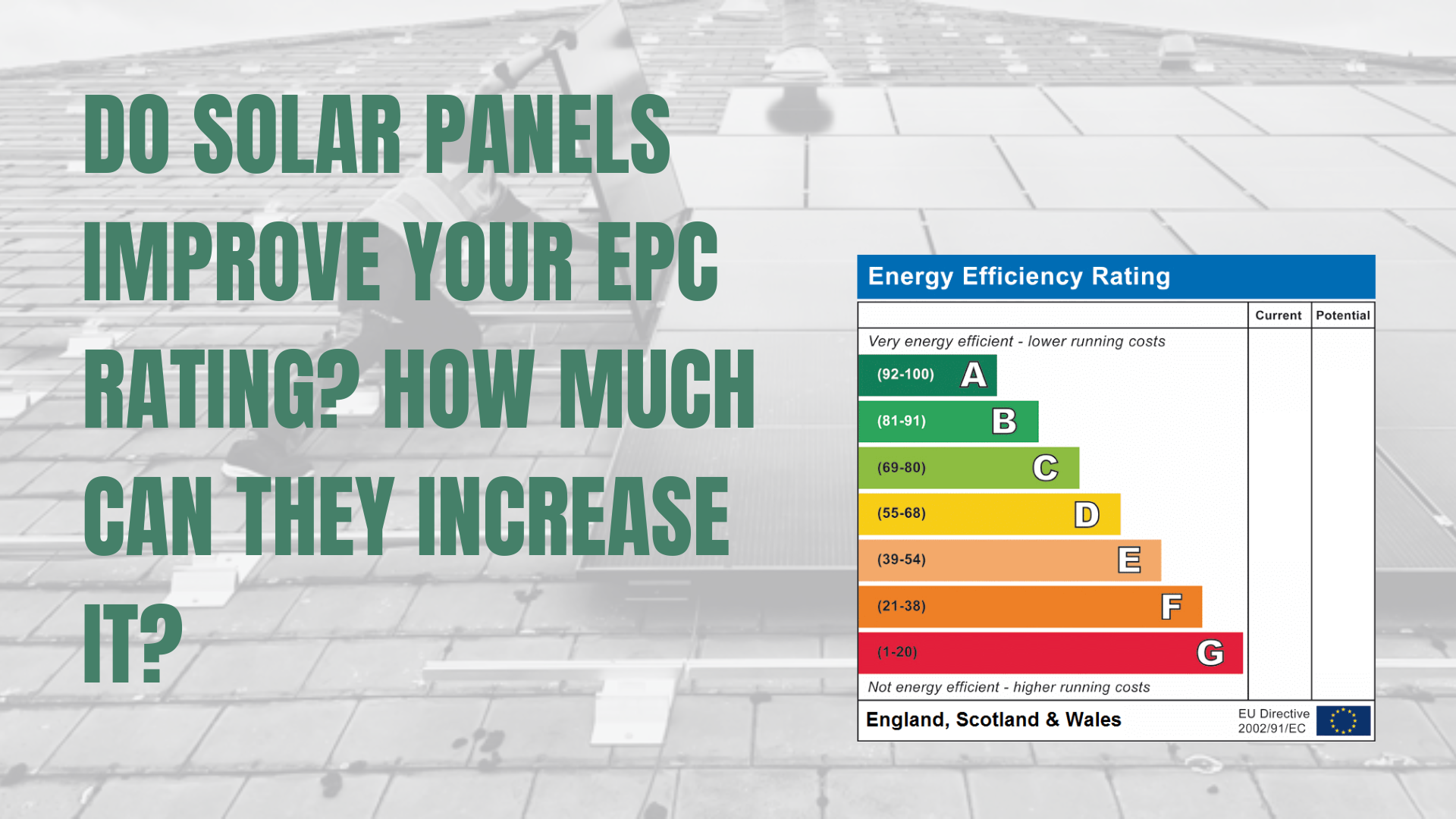
For homes using the current EPC system, properties are rated from A (most efficient) to G (least efficient). The certificate also provides information about the property’s estimated energy use, carbon emissions and potential improvements.
A higher EPC rating can make a property more attractive because it can indicate:
- Lower potential energy costs
- Better energy efficiency
- Reduced energy waste
- A more environmentally friendly home
- Greater appeal to prospective buyers or tenants
An EPC is generally required when a property is built, sold or rented out, although there are some exemptions.
How Is an EPC Rating Calculated?
An EPC assessment considers a range of factors that affect the energy performance of a property.
These can include:
- The property’s insulation
- Heating and hot water systems
- Windows and glazing
- Lighting
- The property’s construction and thermal performance
- Renewable energy technologies
- The estimated energy consumption of the property
Your EPC will also provide recommendations for improvements that could make your property more energy efficient.
These recommendations can include measures such as loft insulation, upgrading windows, improving heating systems or installing renewable technologies such as solar PV.
How Do Solar Panels Improve an EPC Rating?
Solar panels generate electricity from daylight, allowing your home to produce renewable electricity rather than relying entirely on electricity supplied from the grid.
This can improve the energy performance of a property because solar PV is recognised within EPC assessments as a renewable technology.
The exact impact will depend on the property and the size and specification of the solar PV system. There is no guaranteed increase of a particular number of EPC points or bands because EPC calculations consider the property as a whole.
However, solar panels can contribute towards improving an EPC rating, particularly when they form part of a wider programme of energy-efficiency improvements.
How Many EPC Points Can Solar Panels Add?
There is no guaranteed number of EPC points that every solar installation will add. The improvement depends on the property, the size of the PV system, expected generation and the other characteristics recorded during the EPC assessment.
As a broad guide, a typical domestic solar PV installation may add several EPC/SAP points and, in some circumstances, around 5–15 SAP points or more. This should be treated as an indicative range rather than a guaranteed result.
The UK Government’s EPC methodology takes account of solar PV generation when calculating the energy performance of a property. Factors including the installed kWp, expected annual generation, orientation, inclination and overshading can affect the calculated output.
| Current EPC | EPC Bands | Possible effect of solar | What it means |
|---|---|---|---|
| E | 39-54 | May help move towards D | Solar may need to be combined with insulation/heating improvements |
| D | 55-68 | May help reach C | Particularly useful if the property is already close to the C threshold |
| C | 69-80 | May help reach B | Solar can provide additional points alongside other efficiency measures |
| B | 81-91 | May improve the score further | The benefit depends heavily on the property and system |
| A | 92-100 | Limited room for improvement | Other factors become increasingly important |
The starting EPC score is particularly important. For example, a property with a score of 64 only needs five additional points to reach Band C, whereas a property scoring 55 would need 14 points.
Important: solar panels do not automatically move a property up one EPC band. The result depends on the property’s starting SAP score and the characteristics of the building.
Can Solar Panels Move Your Home Up an EPC Band?
They can, but there is no universal answer.
The impact of solar PV on an EPC depends on factors such as:
- Your property’s existing EPC rating
- The size of the solar PV system
- Your property’s construction
- Your heating system
- Insulation levels
- Windows and glazing
- Hot water and lighting systems
For example, a home with good insulation, efficient heating and relatively low energy demand may see a different EPC improvement from solar than an older property with poor insulation.
This is why it is important not to assume that installing solar will automatically move a property from one specific EPC band to another.
Instead, solar should be considered as one part of your home’s overall energy strategy.
Can Solar Panels Take an EPC Rating From D to C?
Yes, solar panels can potentially move a property from EPC D to C, but it isn’t guaranteed.
For example, a property with an EPC score of 64 only needs five additional points to reach Band C, whereas a property scoring 55 would need 14 points.
The potential contribution from solar depends on the size and performance of the PV system and the characteristics of the property.
Is Solar Worth Installing to Improve Your EPC?
If your primary reason for installing solar is simply to increase your EPC rating, it is worth considering the bigger picture.
Solar PV can improve your property’s energy performance, but it can also provide direct financial benefits by generating electricity that your household can use.
Rather than buying all your electricity from the grid, you can use your solar generation to power appliances, lighting and other electrical loads within your home.
Any surplus electricity can potentially be exported to the grid, depending on your system and energy tariff.
This means solar can provide benefits beyond your EPC certificate.
For homeowners looking to improve their property’s energy efficiency, solar can therefore be particularly attractive when combined with measures that reduce energy demand.
Combine Solar Panels with Other Energy Improvements
Solar PV works particularly well as part of a wider energy-efficiency strategy.
Depending on your property, other improvements could include:
Loft and Wall Insulation
Improving insulation can reduce heat loss and lower the amount of energy needed to heat your home.
Energy-Efficient Windows
Upgrading older windows can improve thermal performance and reduce heat loss.
Efficient Heating
Replacing an inefficient heating system with a more efficient alternative can improve your home’s overall energy performance.
LED Lighting
LED lighting uses significantly less electricity than traditional incandescent or halogen lighting and can be a simple way to reduce electricity consumption.
Battery Storage
A solar battery can store surplus electricity generated during the day so that it can be used later.
This can increase the amount of your solar electricity that you use yourself and reduce your reliance on electricity from the grid.
Does Battery Storage Improve Your EPC Rating?
Adding battery storage alongside solar panels can help a home make better use of the electricity it generates, but it is important to distinguish between the effect of solar PV and the effect of battery storage when considering your EPC rating.
Solar PV and your EPC
Solar photovoltaic (PV) panels are already recognised within the current methodology used to calculate domestic EPCs. The current government-approved SAP methodology takes account of renewable electricity generation from solar PV when assessing a property’s energy performance. The potential contribution from solar depends on factors such as the size of the system, expected generation, orientation, pitch and shading.
This means that installing solar panels can potentially improve a property’s SAP score and, depending on its starting position, may help move it into a higher EPC band.
Solar PV + battery storage
A battery allows more of the electricity generated by your solar panels to be stored and used in your home later, rather than being exported to the grid when solar generation is higher than your immediate electricity demand.
For example, solar panels may generate electricity during the middle of the day while the occupants are out. Without a battery, some of that surplus electricity may be exported. With battery storage, more of the solar generation can potentially be stored and used during the evening when household electricity demand is higher.
However, you should not assume that adding a battery will automatically increase your EPC rating by a specific number of points. The effect of battery storage on EPC calculations depends on the methodology being used and how the technology is modelled.
The government’s work on future EPC reform recognises the growing importance of technologies such as battery storage, smart meters, smart appliances and energy management systems. Government proposals have considered a future smart readiness metric that could recognise a property’s ability to store renewable electricity, increase self-consumption and shift energy use away from peak periods.
Solar and the Future of EPCs
The way EPCs measure energy performance is changing.
The UK Government is reforming domestic EPCs, with new headline metrics planned to provide a more detailed picture of how a property performs.
The latest government roadmap indicates that the reformed domestic EPC framework is expected to launch in the second half of 2027.
The new framework is planned to include four headline metrics:
- Fabric Performance
- Heating System
- Smart Readiness
- Energy Cost
Smart Readiness is particularly relevant to renewable technologies because it is intended to assess a property’s ability to generate energy, optimise consumption and manage energy flexibly.
This means technologies such as solar PV, battery storage and smart energy management are likely to become increasingly relevant when assessing the performance of modern homes.
The exact assessment methodology and implementation details are subject to the ongoing EPC reform process, so homeowners should avoid relying on a specific future EPC score when planning an installation.
Why Solar and Battery Storage Could Become Even More Important
Solar panels generate electricity during daylight hours, but household electricity demand does not always coincide with solar generation.
For example, your solar panels may produce their most electricity around the middle of the day while your household uses more electricity during the morning and evening.
A battery can help bridge that gap.
Excess solar generation can be stored and then used later when your household needs it.
This can help you:
- Increase solar self-consumption
- Reduce electricity imported from the grid
- Make better use of your renewable generation
- Support smart energy management
- Potentially reduce your electricity bills
As EPC assessments place greater emphasis on how homes generate, store and manage energy, these technologies could become increasingly valuable.
What EPC Rating Should You Aim For?
For homeowners using the existing EPC system, C is an important benchmark.
However, the best approach is not simply to chase a particular letter rating.
Improving the underlying energy performance of your property can provide longer-term benefits, including lower energy demand, improved comfort and potentially lower running costs.
For landlords, EPC requirements are particularly important because Minimum Energy Efficiency Standards (MEES) currently apply to many privately rented properties.
The government has also confirmed plans for higher standards for privately rented homes under the reformed EPC framework, with all in-scope tenancies expected to meet the new standard by 1 October 2030, subject to the final regulations and exemptions.
This makes energy-efficiency improvements increasingly relevant for landlords planning the long-term future of their properties.
How Can I Check My Current EPC?
If you already have an EPC, you can check your current rating and recommendations through the official EPC register.
Your EPC can provide useful information about:
- Your current energy rating
- Your property’s estimated energy performance
- Potential improvement measures
- The potential rating that could be achieved following improvements
This can be a useful starting point before deciding which improvements to make.
However, an EPC is not a substitute for a detailed solar assessment. The suitability and potential performance of a solar PV system will depend on your roof, orientation, shading, electricity consumption and available installation space.
Improve Your Home’s Energy Performance with SolarTherm UK
Solar panels can be an effective way to improve your home’s energy performance while generating your own renewable electricity.
At SolarTherm UK, we design solar PV and battery storage systems around your property, electricity consumption and future energy requirements.
Whether your priority is reducing your electricity bills, improving your property’s energy efficiency or preparing your home for the changing energy landscape, we’ll help you understand what a solar PV system could realistically deliver.
Contact SolarTherm UK today for a free, no obligation quote and design, tailored to your property, usage and future energy needs. No hard sell, just honest, expert advice – and the time you need to make an informed decision.
Your home. Your energy. Your future.
Frequently Asked Questions
There is no fixed number of EPC points that every solar PV system will add. The improvement depends on factors including the size of the solar system, expected electricity generation, roof orientation, inclination, shading and the property’s existing energy performance.
As a broad indication, a typical domestic solar PV system can potentially add several EPC points, with some installations contributing around 5–15 points or more. However, this should only be treated as an indicative range rather than a guaranteed result. A qualified EPC assessment is needed to determine the actual impact on a specific property.
Yes, solar panels can potentially improve a property from EPC D to C. EPC Band C starts at a score of 69, so the number of points required depends on the property’s current score.
For example, a property with an EPC score of 64 would need just five additional points to reach Band C. Solar PV could potentially provide enough improvement to achieve this, although the result depends on the property and the solar installation.
Solar panels can potentially help a property move from EPC C to B, but there is no guarantee that solar alone will achieve this.
Band B starts at an EPC score of 81. A property scoring 78, for example, would need three additional points to reach Band B, whereas a property scoring 69 would need 12 points. The potential contribution from solar depends on the property’s characteristics and the size and expected generation of the PV system.
There is no standard EPC improvement for a 4kW solar PV system. The effect depends on the property, the expected annual generation of the system, roof orientation, shading and other factors used in the EPC calculation.
A 4kW system could improve an EPC score by several points in some properties, but it should not be assumed that every 4kW installation will produce the same result. If improving your EPC is a specific objective, your property’s existing EPC and proposed solar system should be assessed together.
Solar batteries allow surplus electricity generated by solar panels to be stored and used later, potentially increasing the amount of renewable electricity consumed within the home.
However, a battery does not automatically add a specific number of EPC points. Solar PV is already recognised within the current SAP methodology used for domestic EPCs, while the treatment of battery storage and smart technologies is evolving as the government develops future EPC methodologies.
Even where a battery does not provide a guaranteed additional EPC score, it can make a solar PV system more effective by increasing self-consumption and reducing reliance on electricity from the grid.
Solar panels can potentially improve the EPC rating of a rental property, which may be particularly relevant for landlords concerned about energy efficiency requirements.
The current Minimum Energy Efficiency Standards (MEES) generally require privately rented domestic properties in England and Wales to have an EPC rating of E or above, subject to exemptions. Solar PV can be one of a number of improvements considered when seeking to improve a property’s energy performance.
Landlords should consider solar alongside measures such as insulation, glazing and heating improvements rather than assuming that solar alone will achieve a particular EPC rating.
Installing solar panels does not automatically invalidate or update your existing EPC. If you want the solar installation to be reflected in the property’s EPC rating, a new assessment will generally be required.
This can be particularly relevant if you are planning to sell or let the property and want the EPC to reflect its current energy performance.
If you are considering a new EPC after installing solar, check the current requirements with an accredited domestic energy assessor, as the circumstances and purpose of the assessment can affect what is required.
Solar panels can potentially make a property more attractive to buyers because they can reduce electricity costs, generate renewable electricity and improve energy efficiency.
An improved EPC rating can also be beneficial when selling a property. However, there is no guaranteed increase in property value from installing solar panels, and the effect will depend on factors such as the property, location, system quality, remaining warranty and the buyer’s priorities.
Solar should therefore be viewed primarily as an investment in energy generation and lower energy costs, with any increase in property value being a potential additional benefit.
EPC ratings range from A (most energy efficient) to G (least energy efficient). For a typical homeowner, achieving Band C or above is generally a useful target because it represents a relatively energy-efficient property.
The current EPC bands are:
- A: 92–100
- B: 81–91
- C: 69–80
- D: 55–68
- E: 39–54
- F: 21–38
- G: 1–20
The appropriate target will depend on the property and the improvements that are practical and cost-effective.
You can check an existing property’s EPC rating using the government’s online Find an Energy Certificate service. You can search using the property’s postcode and view the current EPC, its rating, recommendations and score.
If your property has an existing EPC, checking the report before investing in improvements can help you identify which measures could provide the greatest improvement.
Solar panels can be an effective way to improve an EPC, but they are not necessarily the best improvement for every property.
The most effective measures depend on the home’s existing EPC and its weaknesses. Improvements such as loft insulation, cavity wall insulation, solid wall insulation, double glazing, heating upgrades and heating controls can all contribute to better energy performance.
For some homes, solar PV may provide a significant improvement, particularly when the property already has good insulation and efficient heating. For others, improving the building fabric first may deliver greater benefits.
The best approach is to look at the recommendations in your existing EPC and consider which improvements offer the greatest combination of EPC improvement, energy savings and long-term value.