With household energy bills continuing to put pressure on family finances, many homeowners are looking for ways to reduce their reliance on the grid and take greater control of their energy costs.
Recent reports have warned that household energy bills could rise significantly again – by up to 16% – in January, just hours before energy bills are set to increase by 4%. This adds concern for millions of households already facing the rising cost of living expenses and struggling to afford electricity prices. The news is a reminder that relying entirely on the grid leaves homeowners exposed to changes in energy prices.
So, could generating your own electricity with solar panels help?
Why Are Energy Bills Rising?
Energy prices in the UK have remained a concern for households for several years, with changes in wholesale energy costs feeding through to household bills.
Ofgem’s energy price cap for October to December 2026 puts the average electricity unit rate for Direct Debit customers at 26.32p per kWh, alongside a daily standing charge of 54.83p.
However, forecasts for the months ahead suggest that further increases could be on the horizon. For homeowners, this creates a difficult situation: even if you reduce the amount of electricity you use, you still have to pay for the electricity you need – and the price you pay can change.
This is where solar power can make a difference.
Solar Panels Can Reduce Your Reliance on the Grid
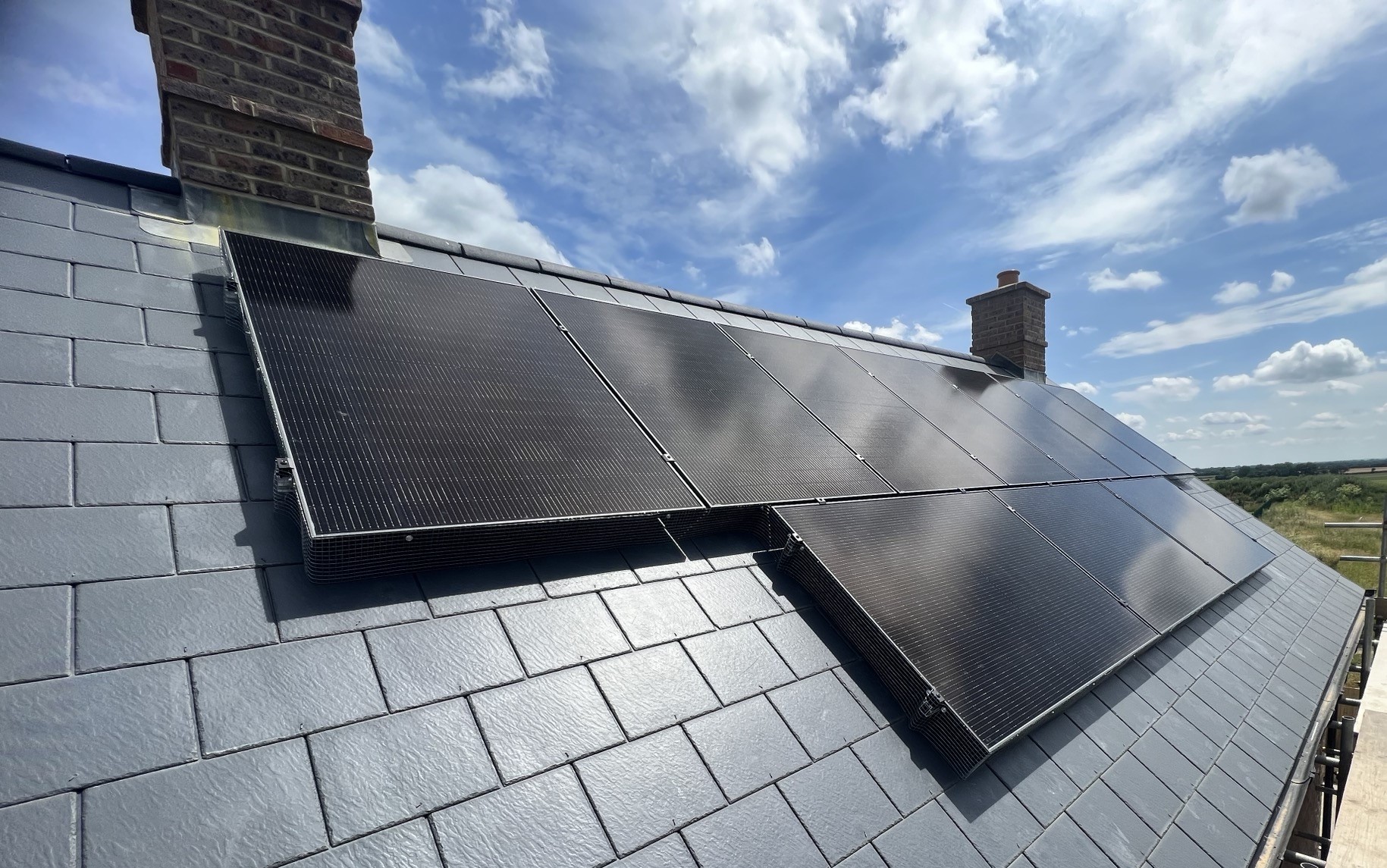
Solar panels generate electricity from daylight, allowing you to use your own renewable electricity rather than buying all of your power from your energy supplier. Modern solar panels don’t need bright sunshine to work and work well in all UK weather conditions – even the grey, cloudy days!
Recent analysis reported that households in even some of the cloudier parts of Great Britain could potentially save more than £400 a year through rooftop solar, while estimated savings in sunnier parts of southern England were higher.
For homeowners in Essex, Kent, Suffolk, Hertfordshire and surrounding areas, the UK’s relatively favourable solar conditions mean solar PV can be a practical way of generating electricity throughout the year.
Of course, the actual benefit varies from property to property. Roof orientation, shading, system size, electricity consumption, usage patterns and how much of your solar generation your use at home all affect the financial return.
The Key is Using More of Your Own Solar Energy
One of the biggest factors in determining how much you can save is self-consumption. Your solar panels may generate plenty of electricity during the day, but if nobody is using electricity at home at that time, some of that energy may otherwise be exported to the grid.
This is where home battery storage can become particularly useful. Instead of exporting surplus solar electricity during the day, a battery can store it for use later in the day when your panels are no longer generating electricity. This can help reduce the amount of electricity you need to buy from the grid.
Solar Panels and Battery Storage: A Powerful Combination
Adding battery storage to a solar PV system can help homeowners make greater use of the electricity their panels generate.
For example:
During the day:
- Solar panels generate electricity
- Your home uses what it needs
- Excess electricity charges the battery
In the evening:
- The battery discharges
- Your home uses stored solar energy
- Less electricity needs to be purchased from the grid
Modern battery systems can also be used alongside smart energy tariffs, allowing homeowners to charge their batteries from the grid during cheaper periods and use that energy when electricity prices are higher.
This means a well designed solar and battery system isn’t simply about generating electricity – it is about managing when and how your home uses energy.
Solar Can Help Reduce Your Exposure to Future Price Increases
Nobody can predict exactly where electricity prices will be in five, ten or twenty years. What homeowners can do is reduce the amount of electricity they need to purchase from their supplier.
Every unit of electricity generated by your solar panels and used in your home is a unit that you don’t need to buy from the grid at the prevailing electricity rate. As electricity prices change, the value of generating your own electricity can change too. This is one reason the recent increase in electricity prices has renewed interest in residential solar, and, as demand on the renewable installation sector (where there is a known UK skills gap) grow, so too will wait times for the work to be carried out as more and more installation companies reach capacity for the amount of work they can physically fit in.
Solar Is Becoming Increasingly Popular
The growth in solar installations demonstrates that more UK households are looking at renewable energy as a way of managing their energy costs.
Government figures show that 269,000 solar installations were completed in the UK during 2025 – the highest total recorded in a calendar year. There were also 23,000 new solar installation in April 2026 alone, with more than half installed on homes.
Battery installations have also been increasing. Government figures published in August reported almost 150,000 MCS certified solar installation during the first six months of 2026, alongside around 36,000 certified battery installations.
The trend is clear: more homeowners are looking beyond simply switching energy suppliers and are considering ways to generate and manage their own electricity.
What About Exporting Excess Electricity?
A solar PV system doesn’t mean you have to use every unit of electricity yourself. When your panels generate more electricity than your home needs – and your battery is full, if you have one – surplus electricity can be exported to the grid.
Under the Smart Export Guarantee (SEG), participating energy suppliers pay eligible generators for the electricity they export.
The combination of
Solar generation + battery storage + energy efficiency + export payments + smart tariffs
can therefore help homeowners get more value from their solar investment.
Is Solar Suitable for Every Home?
Solar isn’t a one size fits all solution.
Before installing a system, it is important that your chosen installer considers:
- The direction and pitch of your roof
- Potential shading from trees or neighbouring buildings
- Available roof space
- Your annual electricity consumption
- When you typically use electricity
- Whether battery storage would be beneficial
- Your future electricity requirements, such as an EV or heat pump
- Your budget and expected return on investment
A professional solar installer should assess these factors before recommending a syste,.
The headline figures from national or regional studies can provide useful context, but your own property and energy consumption are what ultimately determine the potential savings.
Rising Energy Bills Make Energy Dependence More Important
The latest warnings about rising household energy bills are another reminder that electricity costs can change considerably over time.
Solar panels won’t eliminate your electricity bill completely, and the savings available will vary between households, but generating your own electricity can reduce your dependence on the grid and give you greater control over how much energy you buy.
Adding battery storage can take this further by allowing you to store more of the electricity your solar panels generate and use it when you actually need it.
For homeowners considering solar in Essex, Kent, Suffolk, Hertfordshire and across the wider South East and East Anglia, now could be a good time to look at what your property could achieve.
If you’re concerned about rising energy bills and want to find out how much solar could potentially save you, contact SolarTherm UK today for a free, no obligation quote and design, tailored to your property, usage and future energy needs. No hard sell, just honest, expert advice – and the time you need to make an informed decision.
Your home. Your energy. Your future.
Frequently Asked Questions
Yes. Solar panels generate electricity from daylight, not just direct sunshine, so they continue producing energy throughout the winter months, although generation is generally lower than in summer.
Solar panels can reduce the amount of electricity you need to buy from the grid. The more of your own generated electricity you use, the less exposed you may be to future changes in electricity prices.
Not necessarily, but a battery can help you make better use of your solar energy. It stores excess electricity generated during the day so you can use it later when your panels aren’t producing.
Yes. Eligible homeowners can receive payments for electricity exported to the grid through the Smart Export Guarantee (SEG), subject to the terms of their chosen supplier.
Savings vary depending on your system size, electricity usage, roof, shading, battery storage and energy tariff. A professional assessment can provide a more accurate estimate for your property.