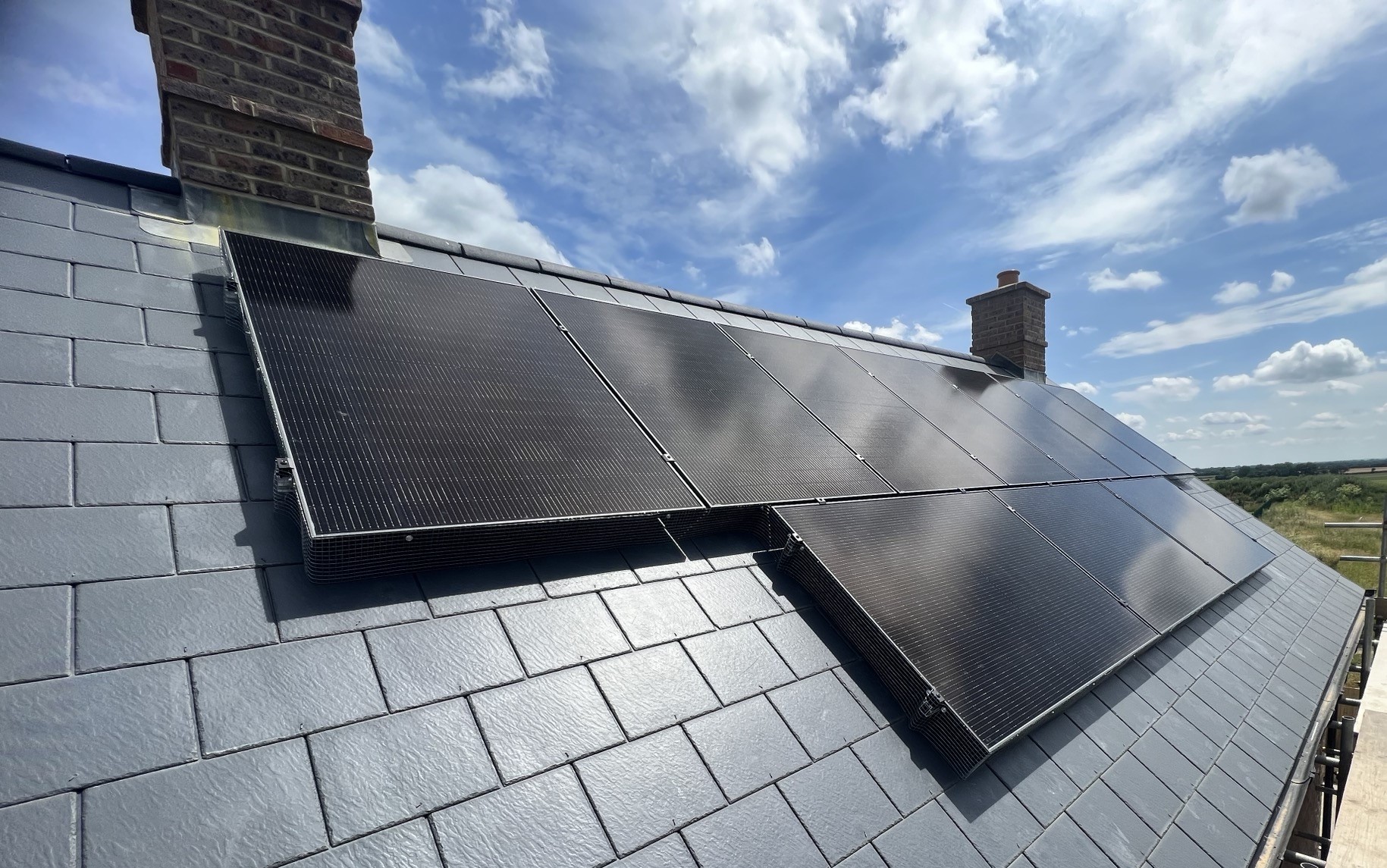
If you’re a homeowner in the South East considering solar panels, you’ve likely asked:
“How does solar power actually work?”
Understanding the fundamentals helps you make a confident, informed investment – one that can significantly reduce your energy bills and carbon footprint.
At SolarTherm UK, we install high performance solar PV systems across the South East, helping homeowners take control of their energy. In this guide, we break down how solar power works in clear, practical terms – without the jargon.
What Is Solar Power?
Solar power is energy generated from sunlight using solar photovoltaic (PV) panels. These panels convert daylight – not just direct sunshine – into usable electricity for your home.
Even in the UK’s famously overcast skies, solar panels are highly effective. Modern systems generate electricity throughout the year, including on cloudy days, making them a reliable solution for homeowners across Essex, Kent, Suffolk, Hertfordshire and the wider South East and East Anglia.
How Do Solar Panels Generate Electricity?
At the core of every solar panel are photovoltaic cells, typically made from silicon. Here’s how the process works:
1. Sunlight hits the panels – photons (light particles) strike the surface of the solar cells.
2. Electric current is generated – this energy excites the electrons within the silicon, creating a flow of electricity (DC – direct current).
3. Conversion to usable electricity – an inverter converts DC electricity AC (alternating current), which powers your home.
4. Powering your home – your home uses this electricity in real time – reducing the amount you need to import from the grid.
What Happens to Excess Energy?
During the day, your system may generate more electricity than you use. You have two main options; export it to the grid or store it in a battery. If you export it, you may qualify for payment under the Smart Export Guarantee (SEG), which the government brought in to ensure homeowners get paid for their surplus electricity. Storing your surplus in a solar battery gives you more flexibility over when you use your self-generated electricity, giving you access to your free solar power even after your solar panels have stopped generating for the day.
Key Components of a Solar Power System
A typical residential solar setup includes:
- Solar panels – capture the sunlight and generate electricity
- Inverter – converts electricity into usable form
- Mounting system – secures panels to your roof
- Battery storage (optional) – stores surplus power
- Monitoring system – tracks performance and savings
At SolarTherm UK, we specify systems tailored to your roof, usage patterns and long term goals – ensuring optimal performance.
Does Solar Work in the South East?
Yes – very effectively.
The South East of England is one of the best regions for solar generation in the UK, due to higher than average sunlight hours, favourable roof orientations and strong return on investment compared to energy costs.
Even in winter, systems continue to produce electricity, offsetting a portion of your usage.
How Much Can You Save?
Savings vary depending on system size, energy usage and whether you include battery storage. However, most homeowners in the South East can expect:
- Significant reductions in electricity bills, with most households saving up to 80%
- Protection against rising energy prices
- Shorter payback periods (typically 6-10 years)
- Higher long time energy savings
A professionally designed system ensures you maximise both generation and financial return.
Why Choose SolarTherm UK?
Choosing the right installer is just as important as choosing the right system.
SolarTherm UK offers:
- Experienced, accredited installers
- High quality, Tier 1 solar panels and inverters
- Tailored system design
- Transparent pricing and performance forecasts
- Ongoing support and maintenance
We understand local property types, planning considerations and grid requirements – ensuring a smooth, compliant installation from start to finish. When you choose a local installer, you get a personalised service, long term protection and reactive maintenance when required. Choosing a national installer, you get a sub contractor and become a faceless sale in a list of faceless sales.
Is Solar Power Right for Your Home?
Solar works best if your property has a south-, east- or west-facing roof, minimal shading from trees or nearby buildings and sufficient roof space. That said, many homes are suitable – even if they’re not “perfect”. A professional assessment will confirm you potential savings and system performance.
Ready to Harness Solar Energy?
Understanding how solar power works is the first step. The next is seeing what your roof can do for your home. SolarTherm UK provides expert advice, detailed system designs and honest guidance – helping you make a smart, future proof investment.
Contact SolarTherm UK today for a free, no obligation quote and design, tailored to your property, usage and future energy needs. No hard sell, just honest, expert advice – and the time you need to make an informed decision.
Your home. Your energy. Your future.
FAQs
How do solar panels work on cloudy days?
Solar panels generate electricity from daylight, not just direct sunlight. While output is lower on cloudy days, your system will still produce energy.
Do I need planning permission for solar panels?
Most residential installations fall under permitted development. However, listed buildings or conservation areas may require approval.
How long do solar panels last?
Most panels come with 25-year performance warranties and can last even longer with minimal maintenance.
Will solar panels increase my property value?
Yes—energy-efficient homes are increasingly attractive to buyers, particularly with rising energy costs.
Can I go completely off-grid?
It’s possible with a large system and battery storage, but most homeowners remain grid-connected for flexibility and reliability.