As more homeowners across the South East install solar panels and battery storage, a common question quickly follows:
“Is it better to export surplus solar energy to the grid or store it in a battery for later use?”
With rising electricity prices, the Smart Export Guarantee (SEG) and rapidly improving battery storage technology, the answer depends on how your home uses energy – and how you want to maximise return on your solar PV system.
This guide explains how exporting and storing solar energy work, compares the financial and practical benefits of each and helps South East homeowners decide the best approach.
How Solar Export Works (SEG Explained)
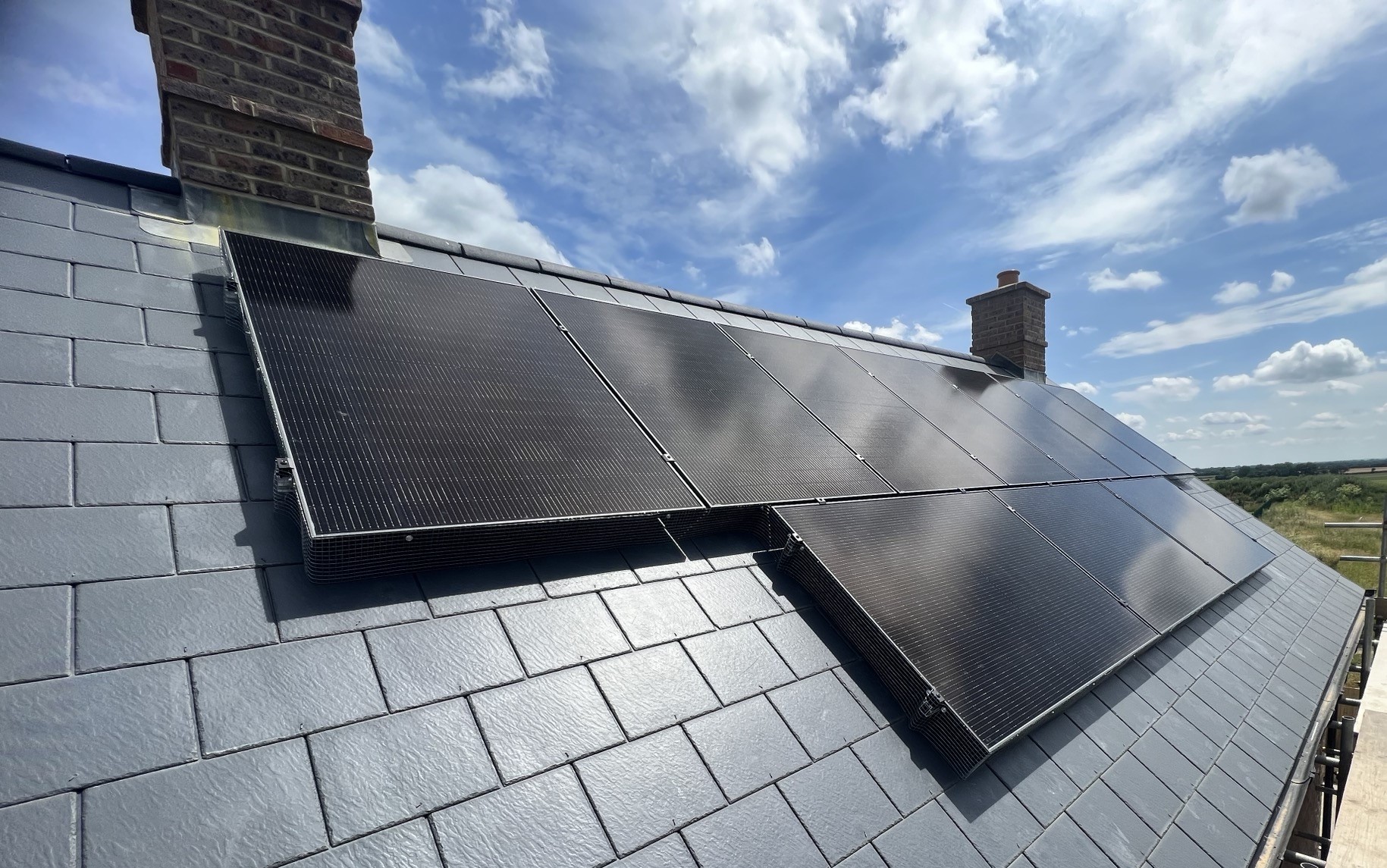
When your solar panels generate more electricity than your home is using, excess power can be exported to the National Grid. Under the Smart Export Guarantee (SEG), licensed energy suppliers pay you for every kilowatt hour (kWh) you export.
SEG replaced the Feed-in Tariff and is regulated by Ofgem, ensuring fair access for eligible solar PV systems. To qualify for SEG your system must be MCS certified and installed by an MCS certified installer. You need a smart meter installed with capabilities to read export every 30 minutes and a contract with a SEG licensed supplier.
SEG rates are variable from supplier to supplier, with some requiring you to import electricity from them to access preferential export rates. Most suppliers pay between 3p and 15p per kWh, with rates being significantly lower than imported electricity rates during peak periods.
SEG works best if:
- You are home during the day
- Your electricity use closely matches solar generation
- You want a lower upfront system cost without batteries
How Solar Battery Storage Works
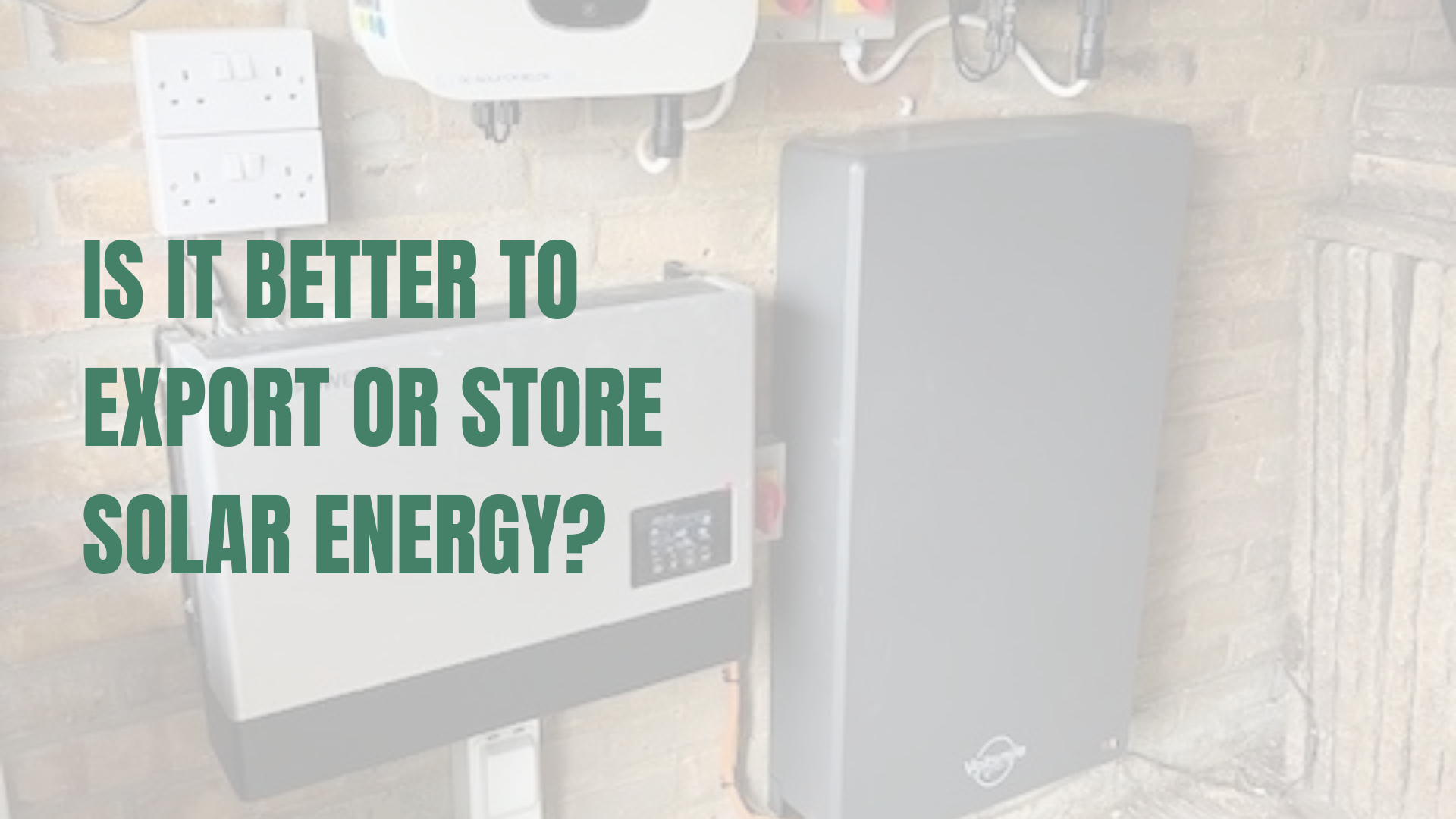
A solar battery stores excess electricity generated by your solar panels instead of exporting it. This stored energy can then be used in the evening, overnight or during periods of high electricity prices.
Benefits of battery storage
- Increases solar self-consumption from ~30-40% to 70-90%
- Reduces reliance on expensive peak time grid electricity
- Works well with time of use tariffs, giving you access to import cheaper electricity for use around the clock
- Offers protection against future price volatility
Battery storage is particularly valuable in the South East, where many households have higher evening demand due to EV charging, heat pumps or home working patterns.
Export vs Storage: A Direct Comparison
| Factor | Exporting via SEG | Storing in a Battery |
| Upfront cost | Lower | Higher |
| Payment per kWh | Low (SEG rate) | High (avoided import cost) |
| Energy independence | Low | High |
| Evening electricity | Grid-powered | Solar-powered |
| Best for | Daytime users | Evening-heavy households |
In simple terms, exporting earns you a small payment, while storing helps you avoid buying expensive electricity during peak hours.
Can You Combine Battery Storage and SEG?
Yes – and this is often the most effective strategy.
A typical setup prioritises:
- Powering your home directly from solar
- Exporting any remaining excess under SEG, finding a preferential rate of around 15p per kWh
- Charging your battery using off peak tariffs that are usually around 7p per kWh
This hybrid approach maximises savings while still generating SEG income when the battery is full. Some advanced systems can even decide automatically whether to store or export based on electricity prices and usage patterns.
What Makes the Most Sense for South East Homes?
In the South East, electricity demand is often highest in the evening – when solar panels are no longer producing. This makes battery storage especially attractive.
Battery systems also:
- Pair well with EV chargers and heat pumps
- Protect against future SEG rate reductions
- Improve long term return on investment as grid prices rise
For most SolarTherm UK customers, battery storage delivers greater overall financial benefit than exporting alone, even when SEG payments are available.
Final Verdict: Export or Store?
- Exporting solar energy is simple and provides modest income
- Storing solar energy maximises savings, control and energy independence
- Combining both usually delivers the strongest long term return
If your goal is to reduce bills, protect against rising electricity prices and get the most from your solar PV system, battery storage is increasingly the smart choice.
Thinking About Adding a Solar Battery?
SolarTherm UK designs and installs tailored solar battery storage systems across Essex, Kent, Suffolk, Hertfordshire and the wider South East and East Anglia, helping homeowners optimise both self-consumption and SEG returns.
Contact SolarTherm UK today to find out whether exporting, storing – or combining both – is right for your home. Get in touch for a free, no obligation quote and design, tailored to your property, usage and future energy needs. No hard sell, just honest, expert advice – and the time you need to make an informed decision.
Your home. Your energy. Your future.
Frequently Asked Questions
For many homeowners, storing surplus solar energy in a battery can provide greater value because you can use it later when your solar panels are not generating. However, exporting excess electricity can still be worthwhile, particularly if you have a good Smart Export Guarantee (SEG) tariff.
Ideally, you want to store enough surplus energy to cover your typical evening and overnight electricity use. The right battery size depends on your household consumption, solar system size and energy usage patterns.
Yes. Once your battery has reached its charge limit, surplus solar generation can be exported to the grid, provided your system and electricity tariff allow it.
Yes. If you are eligible for the Smart Export Guarantee, an energy supplier can pay you for electricity you export to the grid. Export rates vary between tariffs and suppliers.
It can be. A battery can increase the amount of solar energy you use yourself, reducing the amount of electricity you need to buy from the grid. However, the financial benefit depends on your electricity usage, battery cost and available import and export tariffs.