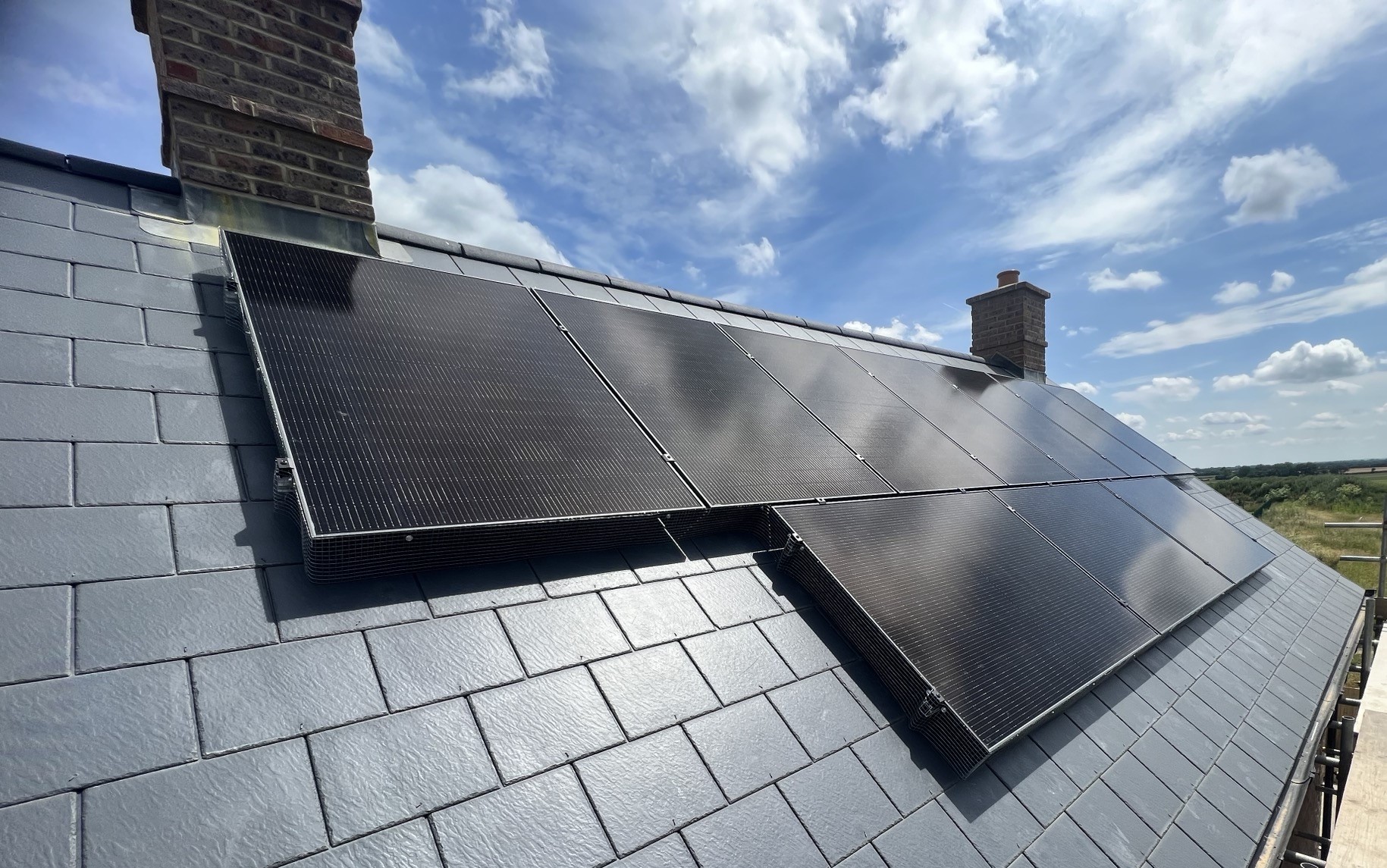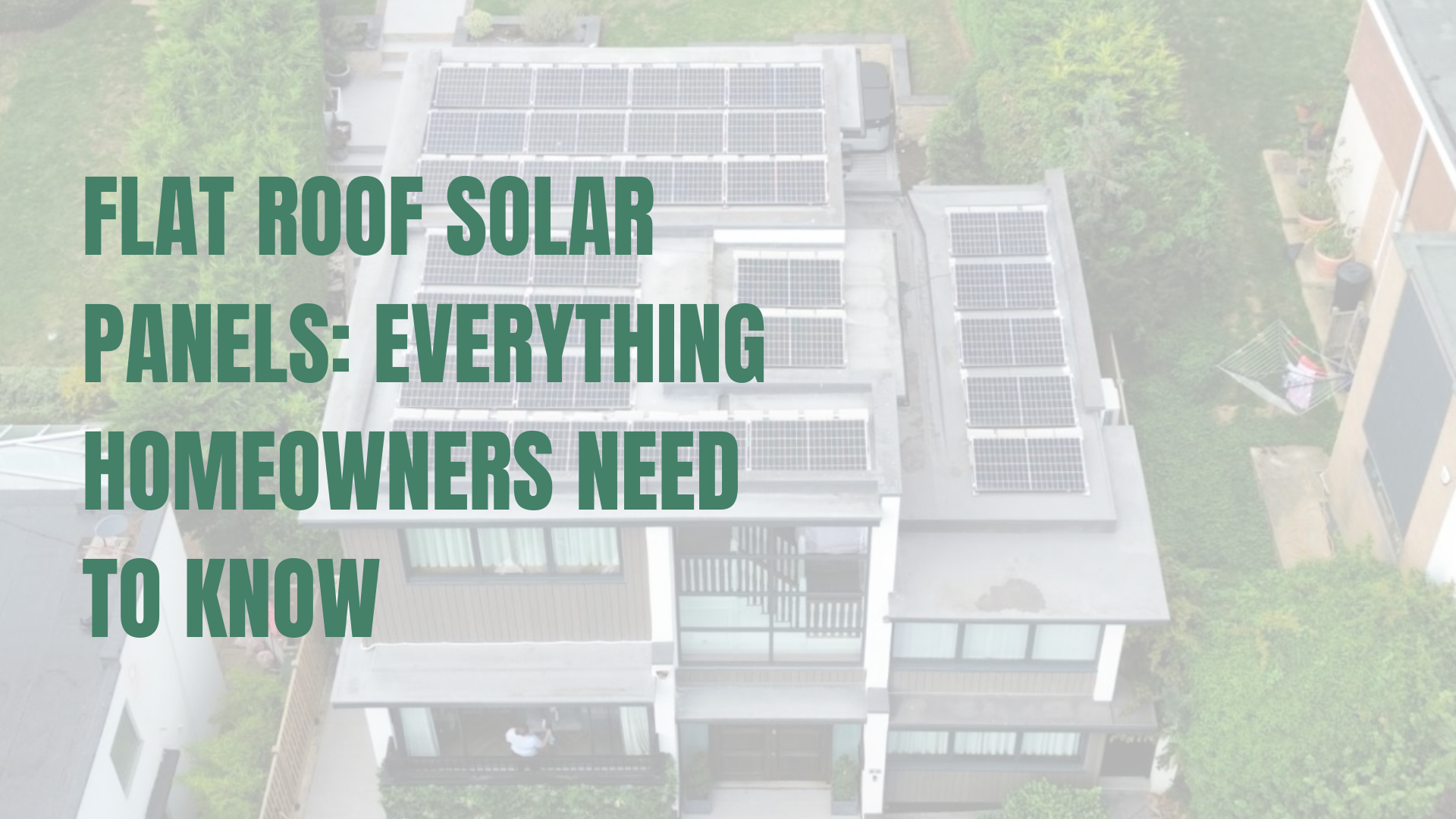
Flat roofs aren’t just found on commercial buildings anymore. Across Essex, Kent, Suffolk, Hertfordshire and the wider South East and East Anglia, many modern homes, extensions, garages and garden buildings feature flat roofs that provide an excellent opportunity for solar panel installation.
At SolarTherm UK, one of the questions we’re asked most often is:
“Can solar panels be installed on a flat roof?”
The answer is yes – and when designed correctly, flat roof solar panels can perform just as well as systems installed on pitched roofs. This guide explains how flat roof installations work, their advantages, what homeowners should consider before installation and how they compare with on roof solar panels, integrated solar and ground mounted solar systems.
Can Solar Panels Be Installed on a Flat Roof?
Absolutely. A common misconception is that solar panels need a sloping roof to generate electricity efficiently. In reality, modern mounting systems are specifically designed to optimise flat roof solar panels by positioning them at the ideal angle and orientation to capture sunlight throughout the year.
Rather than laying flat, the panels are mounted on specially engineered frames that tilt them towards the sun. This allows homeowners to enjoy excellent solar generation without needing a traditional pitched roof.
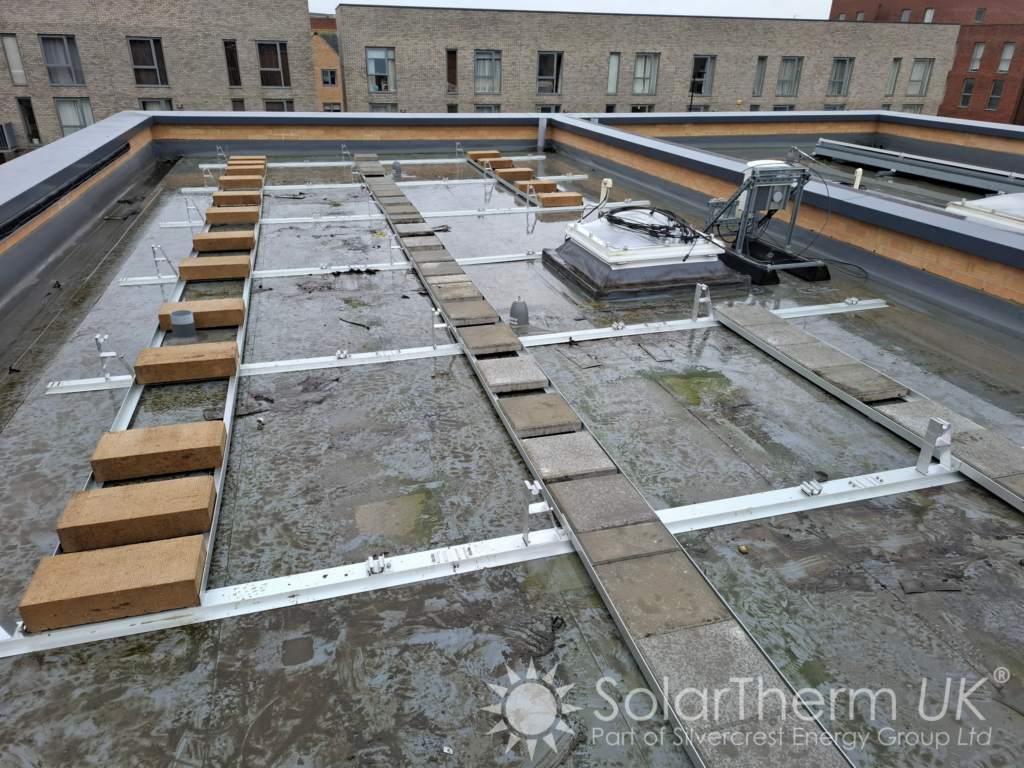
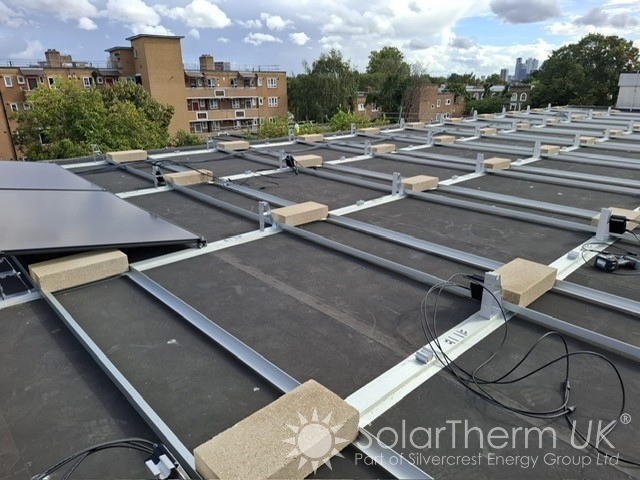
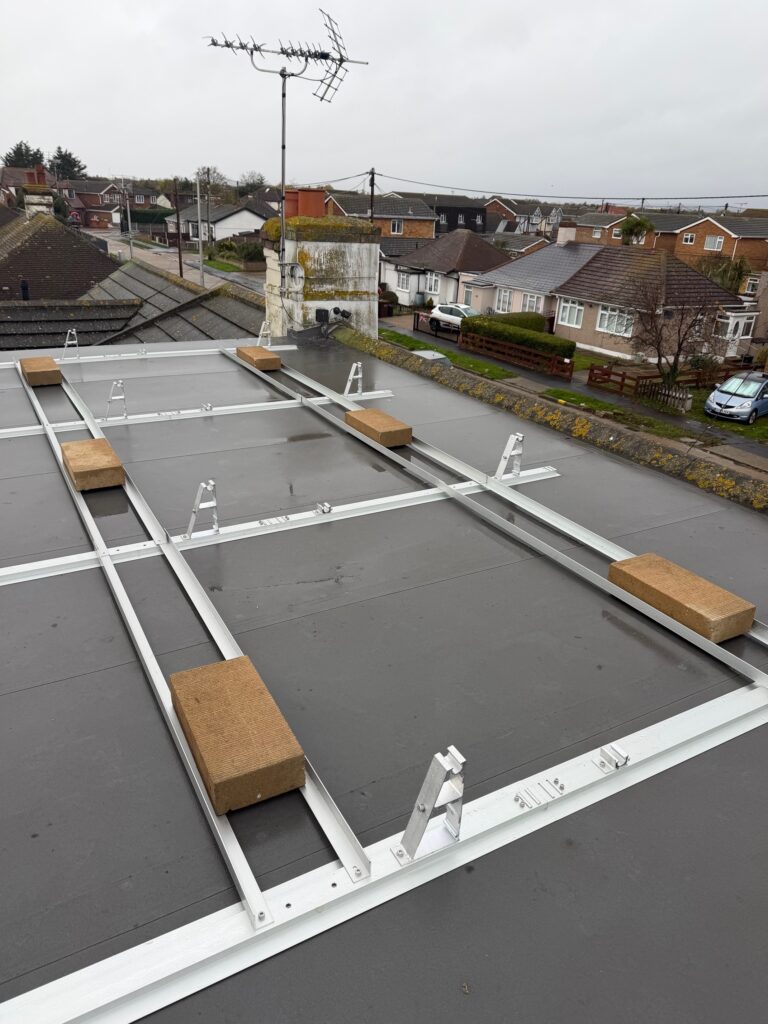
Ballast weighted flat roof mounting system.
How Are Flat Roof Solar Panels Installed?
Unlike standard roof installations where panels attach directly to roof rafters, flat roof systems use purpose built mounting frames. These frames are carefully designed to:
- Achieve the optimum angle for solar generation
- Minimise wind loading
- Protect the roof membrane
- Allow rainwater to drain correctly
- Avoid unnecessary roof penetrations where possible
Depending on the roof construction, installers may use ballasted mounting systems, mechanically fixed systems or hybrid mounting methods. Every roof is different, which is why SolarTherm UK carries out a full structural and site assessment before recommending the most suitable installation method.
What Angle Is Best?
One of the biggest advantages of flat roof solar panels is that installers can choose the ideal angle. In the UK, solar panels generally perform best when installed between 30° and 40°. On a pitched roof, you’re limited by the roof’s design.
On a flat roof, however, the mounting system can be engineered to maximise energy production. This flexibility often allows flat roof systems to perform exceptionally well throughout the year.
Benefits of Flat Roof Solar Panels
- Excellent Energy Generation: as the mounting system angle can be optimised, flat roof systems often generate outstanding annual energy yields. The ability to position the panels correctly helps improve generation during spring, summer and autumn while maintaining strong winter performance.
- Flexible Panel Layout: flat roofs allow greater freedom when designing a solar PV system. Installers can optimise spacing to reduce shading and improve airflow around the panels, helping maintain efficiency.
- Easier Maintenance: as access is generally simpler, cleaning and servicing can often be carried out more safely and efficiently, usually without the need for scaffolding which can increase costs significantly. Regular maintenance remains minimal, but easier access can help if inspections are ever required.
- Minimal Visual Impact: many homeowners appreciate that flat roof solar panels are often less visible from ground level. Unlike pitched roof systems, the panels frequently sit below the roofline, helping preserve the appearance of the property.
Are Flat Roof Solar Panels Safe?
Yes, professional solar installers calculate wind loading, roof loading and structural requirements before installing.
At SolarTherm UK, every installation is carefully designed to ensure:
- Roof integrity is maintained
- Mounting systems meet engineering requirements
- Wind uplift is correctly managed
- Electrical installations comply with current UK regulations
- Systems meet MCS standards
Our experienced installation teams follow industry best practices from survey through to commissioning, giving homeowners confidence that their investment is built to last.
Do Flat Roof Solar Panels Need Planning Permission?
In many residential cases, flat roof solar panels fall under Permitted Development rights. However, planning permission may be required if:
- Your property is listed
- Your home is within certain conservation areas
- The installation exceeds permitted height limits
- Local planning restrictions apply
SolarTherm UK can advise homeowners during the quotation process and explain whether any permissions are likely to be needed and design a system that will pass any local authority planning restrictions.
How Do Flat Roof Solar Panels Compare with Integrated Solar Panels?
Although both generate clean renewable electricity, they are installed differently. Flat roof solar panels use angled mounting systems positioned above the roof surface. In roof solar panels replace part of the roof covering itself, sitting flush within the roof structure.
In roof systems are typically chosen during roof replacements, major renovations or new build properties. They offer a sleek appearance but are generally only suitable for pitched roofs rather than flat roofs. Flat roofs use waterproof membranes rather than tiled coverings, professionally mounted flat roof solar panels deliver excellent performance while maintaining waterproofing.
When Might Ground Mounted Solar Panels Be Better?
Some homeowners have limited roof space or roofs that aren’t suitable for solar. In these situations, ground mounted solar panels may provide an excellent alternative.
Ground mounted systems can be ideal when:
- You have a large garden
- Your roof experiences significant shading
- Roof orientation isn’t suitable
- You want a larger solar array than your roof can accommodate
During your survey, SolarTherm UK will assess all available options and recommend the solution that delivers the greatest long term value.
Is My Flat Roof Strong Enough?
Most modern flat roofs can accommodate solar panels, but every professional installation begins with a structural assessment.
At SolarTherm UK, our survey considers:
- Roof construction
- Roof age
- Waterproof membrane condition
- Load bearing capability
- Wind exposure
- Available installation area
This ensures every solar PV system is designed specifically for your property.
Why Professional Installation Matters
Flat roof installations require specialist knowledge. Incorrect mounting angles, poor ballast calculations or inadequate structural assessments can reduce performance and short system lifespan.
SolarTherm UK has more than 16 years of experience designing and installing residential solar PV systems across Essex, Kent, Suffolk, Hertfordshire and the wider South East and East Anglia.
As an MCS certified, NICEIC approved installer and EPVS Gold Standard member, we follow recognised industry standards throughout every installation. From detailed roof surveys and bespoke system design to installation and aftercare, our team focuses on delivering safe, efficient solar solutions that maximise long term performance and homeowner confidence.
Why Choose SolarTherm UK?
Choosing the right installer is just as important as choosing the right solar panels. Homeowners trust SolarTherm UK because we provide:
- Free, no obligation home feasibility assessments
- Bespoke solar PV system designs
- MCS certified installations
- NICEIC approved electrical work
- High quality solar panels and battery storage
- Ongoing technical support and aftercare
- Experienced local in house installation teams serving the South East and East Anglia
Every recommendation is personalised based on your home’s roof type, electricity usage and future energy goals – not a one size fits all approach.
Final Thoughts
A flat roof should never be seen as a barrier to solar energy.
With modern mounting technology and expert system design, flat roof solar panels offer homeowners an efficient, attractive and reliable way to reduce electricity bills and generate renewable energy.
Whether you’re considering solar for a modern extension, garage, garden office or your main home, a professionally designed system can provide decades of electricity and long term savings.
If you’re unsure whether your property is suitable, SolarTherm UK’s experienced surveyors can assess your roof and recommend the most effective solution, whether that’s flat roof solar panels, in roof solar panels or ground mounted solar panels.
Contact SolarTherm UK today for a free, no obligation quote and design, tailored to your property, usage and future energy needs. No hard sell, just honest, expert advice – and the time you need to make an informed decision.
Your home. Your energy. Your future.
Frequently Asked Questions
No. When installed at the correct angle using quality mounting systems, flat roof solar panels can achieve performance comparable to pitched roof installations.
Not when installed correctly. Professional mounting systems are designed to protect the roof membrane while maintaining structural integrity.
Most modern solar panels carry product warranties of 15-25 years, with many systems continuing to generate electricity well beyond this period when properly maintained.
Yes. Adding solar battery storage allows you to store surplus electricity generated during the day for use during the evening, increasing your energy independence and reducing reliance on the grid.
If your roof isn’t suitable, ground mounted solar panels may provide an excellent alternative. A professional site survey will identify the best solution for your property.