Delivering Major Savings for Essex Cricket Club
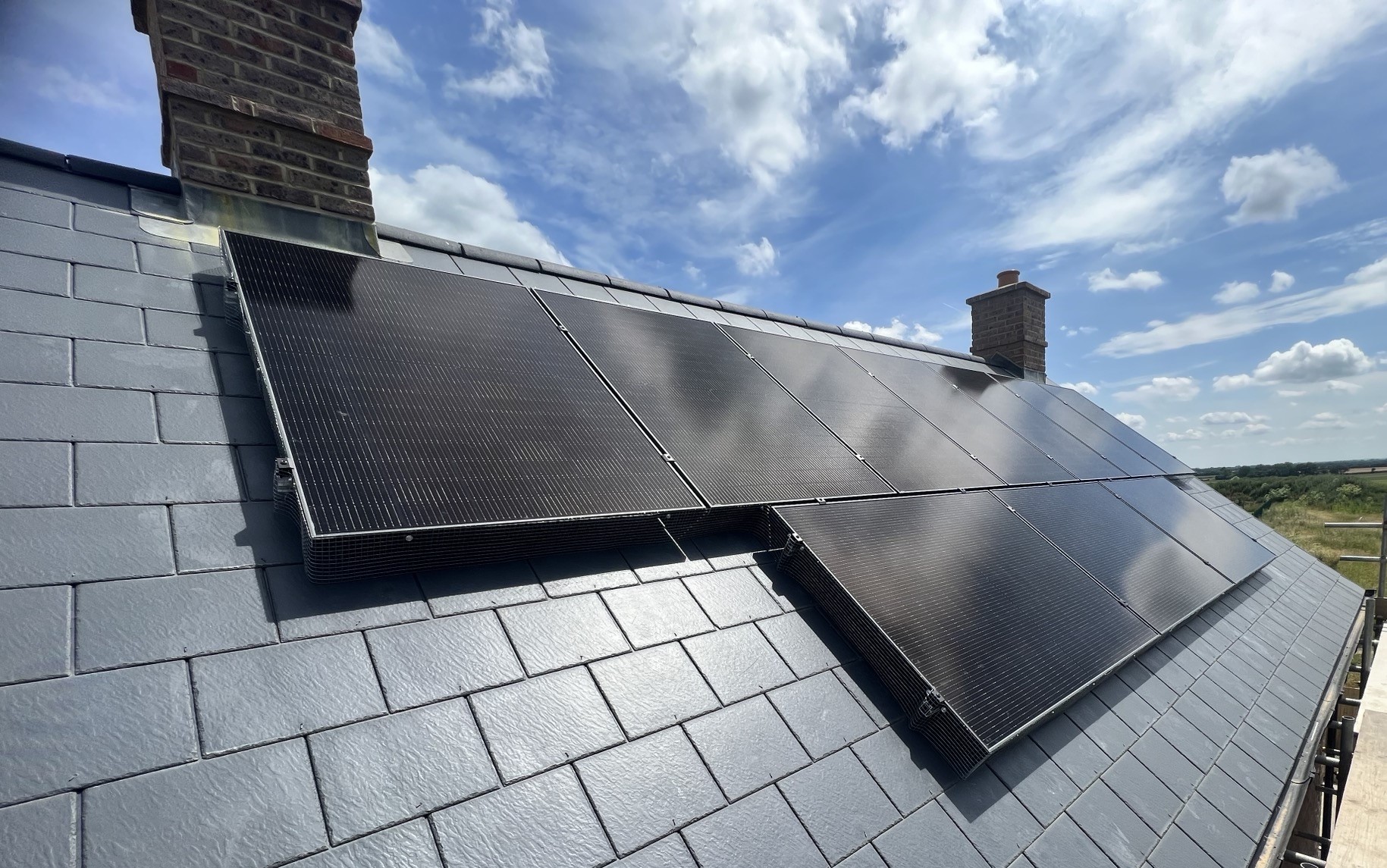
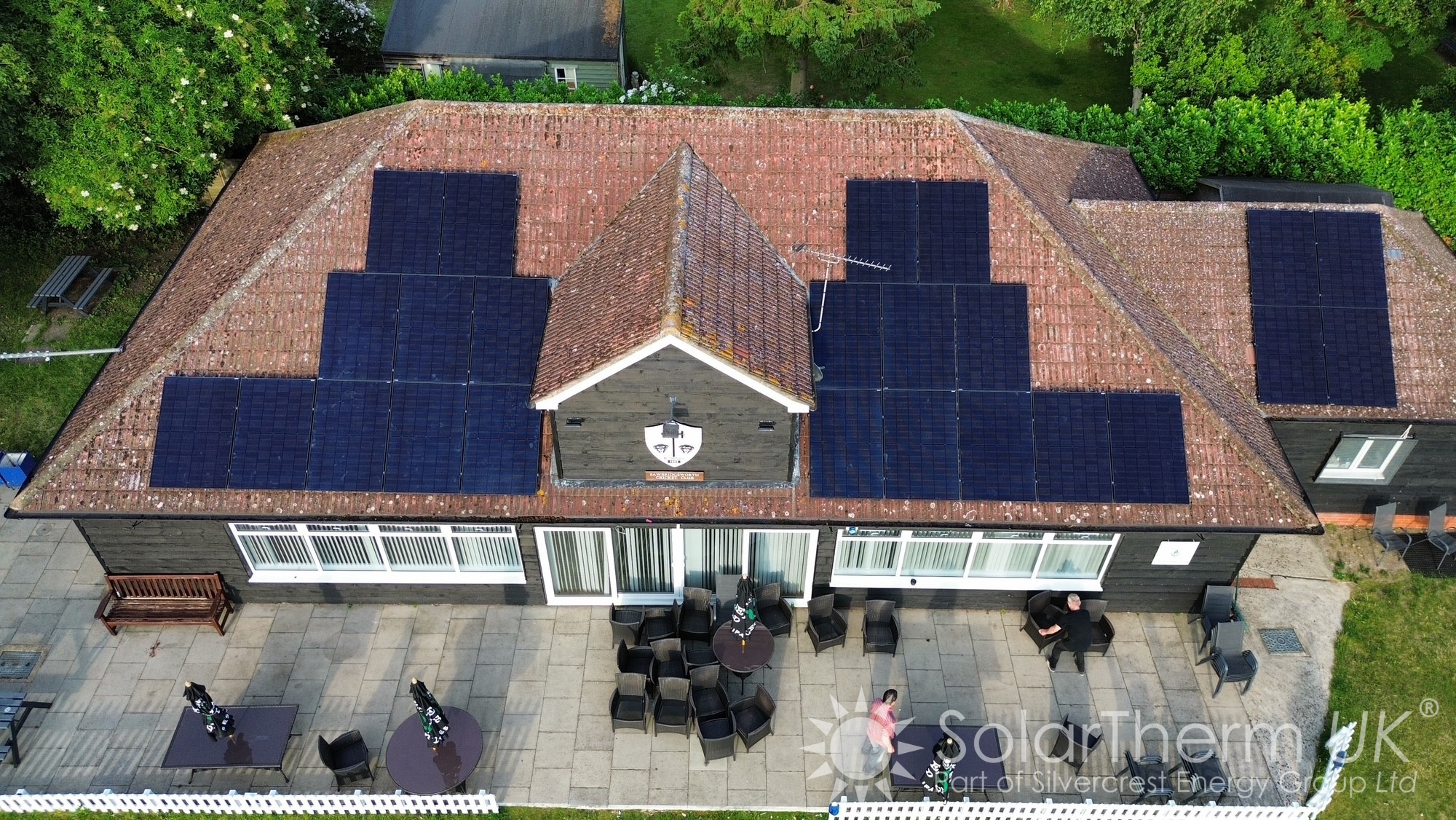
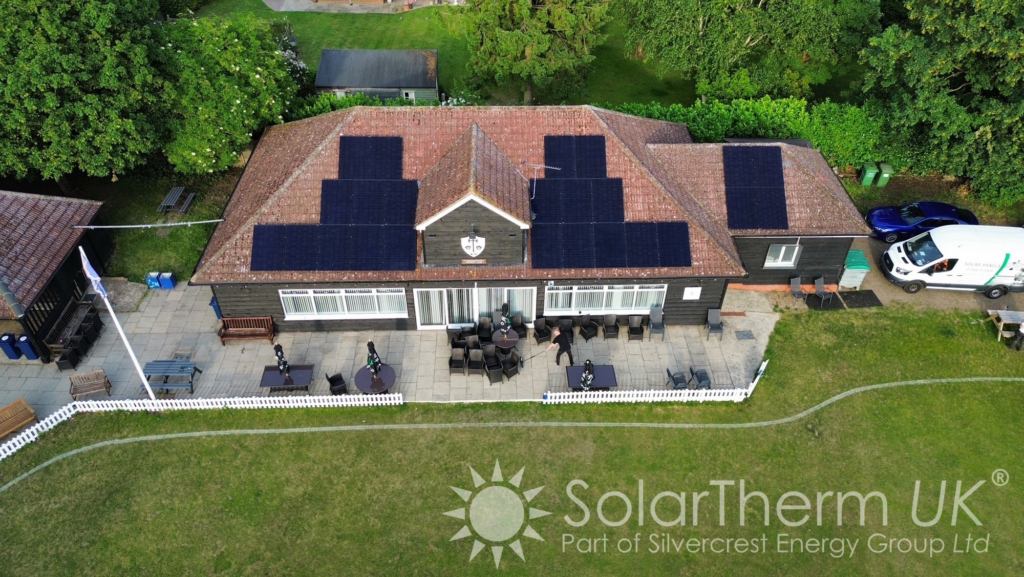
Sawbridgeworth Cricket Club in Essex partnered with SolarTherm UK to upgrade and expand its solar energy system over a multi-phase installation. By combining battery storage with strategic solar PV expansion, the site has significantly reduced energy costs, improved efficiency and accelerated return on investment.
This case study demonstrates how a phased solar approach – supported by real performance data – can deliver substantial long term financial and operational benefits for commercial properties across the South East.
The Challenge
The club faced rising electricity costs and high energy demand, with usage recorded a t nearly 2000kWh in February 2023 alone. Like many commercial facilities, energy consumption remained consistent throughout the year, making cost control a priority. The client required:
- A solution to reduce ongoing electruicity costs
- Better utilisation of renewable energy
- A system capable of scaling with future demand
- Improved energy independence, particularly during peak tariff periods
The Solution: A Phased Solar and Battery Strategy
SolarTherm UK implemented a structured, multi-stage upgrade to maximise both immediate and long term returns.
Phase 1 – November 2023
- Integration of SolarEdge technology with the existing solar array
- Installation of a 12kWh battery storage system
This phase focused on improving system efficiency and enabling energy storage for peak time usage.
Phase 2 – December 2024
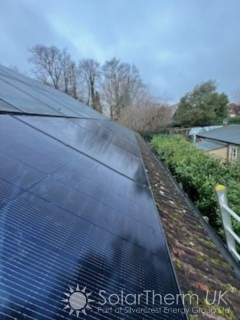
- Installation of 8 additional solar PV panels
This increased generation capacity to better meet daytime demand.
Phase 3 – September 2025
- Installation of 24 additional solar PV panels
- Panels positioned on an east-facing orientation (~274° from south)
- Approximate irradiance level: 77%
This phase significantly expanded the system output, ensuring higher generation even outside peak summer conditions.
Performance and System Data
SolarTherm UK conducted a detailed analysis using monitoring platforms, energy bills, generation meter readings and engineer site reports.
In February 2023 energy usage was ~2000kWh, by April 2025 this had reduced to ~1281kWh, equating to an estimated saving of £577.22.
Generation Performance
Despite installation just before winter, the system demonstrated strong output:
- Meter 298:
- September: 799kWh → November: 938.87kWh
- Approximately: 34.96kWh per week
- Meter 843:
- September: 184.46kWh → November: 441.60kWh
- Approximately: 64.25kWh per week
This highlights consistent generation during the first four weeks of installation, even during lower solar months – an important factor for UK based systems.
Battery Storage Impact
Since installation in 2023, total electricity stored through solar and off-peak charging was 8,590kWh, with 1,810kWh exported to the grid.
The battery system plays a critical role in reducing reliance on grid electricity and maximising self-consumption of generated solar power. Battery storage helps lower costs during peak tariff periods, by reducing the amount of electricity that needs to be purchased from the grid during expensive peak windows.
Financial Results
Initial System (2023 Installation)
- First year savings: £1,355.92
- Projected lifetime savings: £57,718.34
- Payback period: 7 years
Expanded System (2025 Upgrade)
- First year savings: £3,639.78
- Projected lifetime savings: £281,745.57
- Payback period: 3 years
Key Takeaways
This project demonstrates several important principles for commercial solar installations:
- Phased installations reduce upfront costs while allowing systems to scale
- Battery storage significantly enhances savings and efficiency
- Solar remains effective even in UK winter conditions
- System monitoring and maintenance are critical for long term performance
- ROI improves dramatically with system expansion