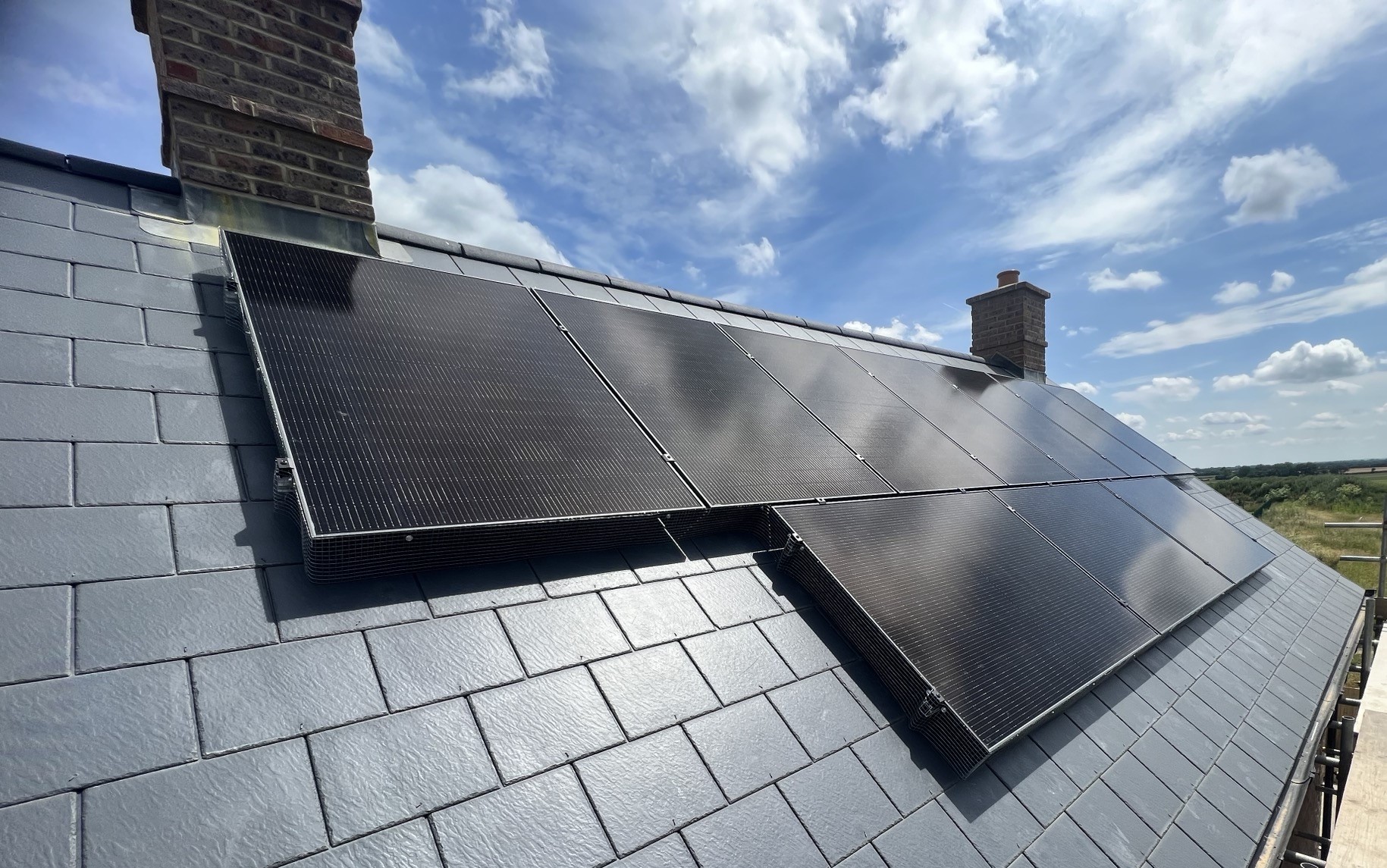
The UK Government has published its much anticipated Warm Homes Plan, a major policy designed to cut household energy bills, tackle fuel poverty, reduce carbon emissions and accelerate the transition to cleaner home technologies such as solar panels, batteries and heat pumps.
This represents one of the largest public investments in home energy upgrades in British history, with up to £15 billion of public funding targeted at upgrading up to 5 million homes and lifting up to 1 million homes out of fuel poverty by 2030.
What the Warm Homes Plan Covers
The Warm Homes Plan takes a whole home approach to energy upgrades, combining support for low income households with universal financing options for all homeowners.
Major Public Investment (£15bn)
The government will fund home improvements designed to reduce bills, increase comfort and lower carbon emissions, with priority on low carbon technology like solar PV, battery storage and heat pumps.
Free or Heavily Subsidised Upgrades for Low Income Households
Low income households will be eligible for packages of upgrades, including solar panels, batteries, insulation and low carbon heating, paid for entirely through government investment.
Consumer Loans and Grants for All Households
A programme of low interest and zero interest loans will be established to help homeowners install solar panels, battery systems and heat pumps, alongside universal grants such as a £7,500 grant for heat pumps.
New Homes Standards and Solar Mandates
Solar installation is expected to become standard on new build homes under updated building rules aimed at accelerating rooftop solar deployment.
Support for Renters and Social Housing
The plan includes stronger requirements and protections for private rental properties to ensure homes are warm and efficient and specific funding streams to support large scale upgrades in social housing.
Key Targets and Outcomes
- Upgrading up to 5 million homes by 2030
- Lifting up to 1 million households out of fuel poverty
- Tripling the number of homes with solar panels by the end of the decade via grants, loans and regulation
- Boosting heat pump adoption to over 450,000 installations annually by 2030
- Forming a new “Warm Homes Agency” to help streamline delivery and improve quality assurance
Why It Matters to SolarTherm UK Customers
This is a major shift in UK energy policy that directly aligns with SolarTherm UK’s mission to deliver cost saving, low carbon home technologies:
- Solar PV and battery systems are centrepiece technology in government support, meaning more homeowners will have financial pathways to adopt clean energy systems.
- Low income and vulnerable households will increasingly access fully funded upgrades, expanding community uptake of solar and storage
- Zero interest and low interest loans reduce upfront cost barriers for mainstream buyers
- New build solar requirements and regulatory support will drive long term market growth for installers and supply chains
For businesses and homeowners considering solar, battery storage or heat pumps in 2026 and beyond, the Warm Homes Plan creates clearer and broader opportunities to reduce lifetime energy costs while lowering carbon footprints.
What We Still Need to See
Industry stakeholders and analysts note that while this plan sets a strong strategic direction, it still faces challenges like ensuring rapid delivery at scale across a diverse housing stock. Experts also acknowledge that reducing the ongoing relative cost of electricity versus gas will be needed to ensure heat pumps and electric heating technology is affordable for households.
Stricter regulation and higher quality standards in installation and materials is needed following failures within the ECO scheme and Great British Insulation Scheme leading to homes receiving substandard and dangerous upgrades to their insulation resulting in mould, damp and suspected fraud across the schemes. The system is needing to be reformed to prevent this happening again and to ensure households have access to quality installers and parts.
Conclusion
The UK Government’s Warm Homes Plan marks a pivotal move towards energy affordability and decarbonisation in the residential sector. For homeowners and businesses alike, the expanded support landscape for solar panels, batteries, heat pumps and home efficiency upgrades presents significant opportunities to cut bills, reduce carbon emissions and future proof properties.
As SolarTherm UK continues supporting local communities across Essex, Kent, Suffolk, Hertfordshire and the surrounding South East and East Anglia, we’ll be monitoring how these policies evolve and how customers can benefit from every available financial and technology incentive.
Contact SolarTherm UK today to find out how much you can save with a free, no obligation quote and design, tailored to your property, usage and future energy needs. No hard sell, just honest, expert advice – and the time you need to make an informed decision.
Your home. Your energy. Your future.
Frequently Asked Questions
The Warm Homes Plan is the UK Government’s programme to improve home energy efficiency, reduce energy bills and support the transition to low-carbon technologies. It aims to upgrade up to 5 million homes by 2030, backed by £15 billion of public investment.
Some eligible households may be able to receive fully or partially funded energy improvements, which can include solar panels. The exact support available depends on the specific scheme, household circumstances and local authority.
Potentially. The Warm Homes: Local Grant can fund improvements including solar panels, insulation and heat pumps for eligible households in England. Eligibility generally depends on household income, property type, EPC rating and location.
Yes. Battery storage forms part of the wider low-carbon technology approach within the Warm Homes Plan. However, whether a household can receive funding for a battery will depend on the particular scheme and eligibility criteria.
Not necessarily. Existing funding, the 0% VAT rate on qualifying residential energy-saving installations and Smart Export Guarantee payments can all affect the cost-effectiveness of installing solar now. Waiting for future funding is not guaranteed to result in a better deal.
SolarTherm UK can assess your property, electricity usage and future energy needs to determine whether solar panels and battery storage could work for you. We can also explain the current funding and financial options available and help you understand your potential savings.