When investing in a solar PV system, most people focus on panel wattage and system size. But one of the most important components often goes unnoticed: power optimisers. These small devices play a big role in how much energy your system actually produces – and how safe, flexible and future proof it is.
In this guide we’ll explain what power optimisers are, why they matter and why SolarEdge power optimisers outperform other options on the market.
What Is a Solar Panel Optimiser and How Does It Work?
A solar panel optimiser is a small electronic device connected to an individual solar panel. It helps the panel operate at its best working point by adjusting its electrical output, allowing the solar PV system to manage differences in performance between panels.
Solar panel optimisers are particularly useful when a roof has partial shading, panels face different directions or individual panels perform differently. They are commonly used in power-optimised systems such as SolarEdge, where optimisers work alongside a compatible central inverter.
How Do Solar Panel Optimisers Work?
Solar panels generate direct current (DC) electricity. In a conventional string inverter system, multiple panels are connected together, and their electrical operating conditions can affect the performance of the array.
A power optimiser uses maximum power point tracking (MPPT) to help its connected panel operate at an appropriate voltage and current. The optimiser then conditions the DC output for the wider solar system.
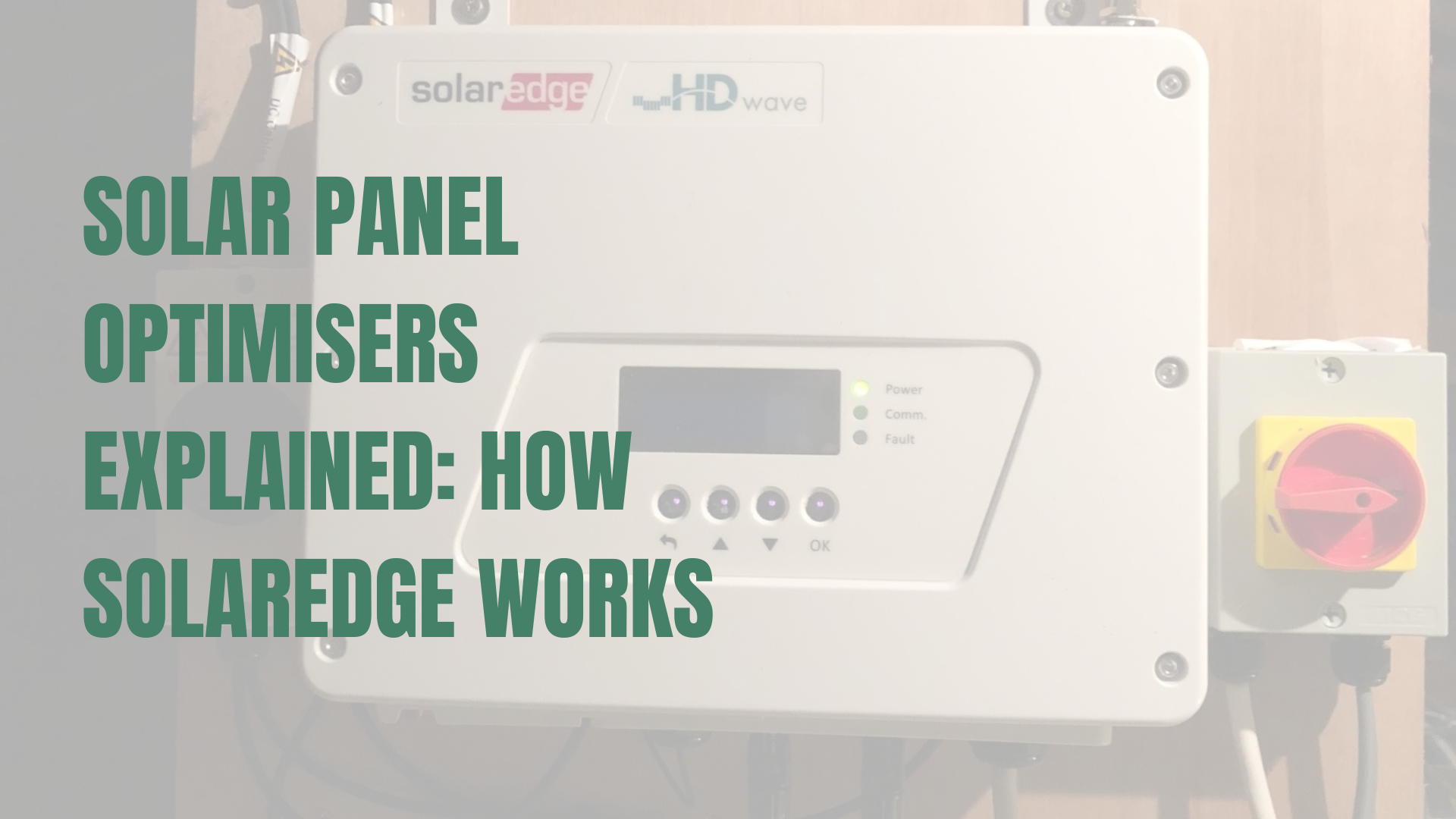
In a SolarEdge installation, each panel has a compatible power optimiser connected to a SolarEdge inverter. This allows the system to manage panel-level differences more effectively and provides monitoring capabilities that can help identify individual panels that are underperforming.
Do Solar Panel Optimisers Help in Shaded Conditions?
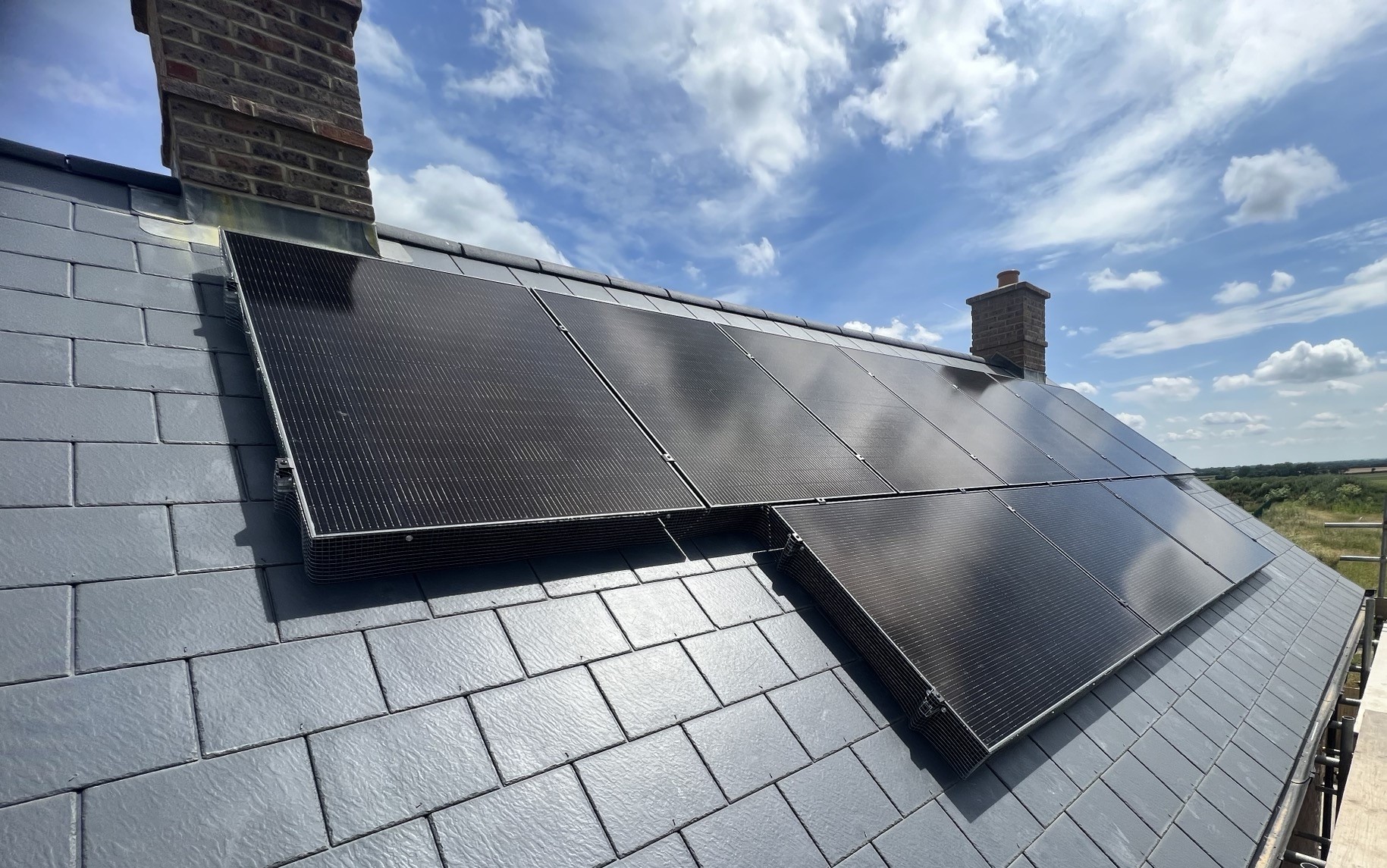
They can. If a chimney, tree or neighbouring building casts a shadow across part of your solar array, optimisers can help reduce some of the resulting performance losses.
However, optimisers cannot generate electricity from sunlight that never reaches a panel. The improvement depends on the extent and timing of the shade, the system design, the panels used and the inverter technology.
For a roof that receives consistent, unobstructed sunlight, a conventional string inverter may already be an effective solution. A professional shading assessment helps establish whether the additional cost of optimisers is justified.
Why Power Optimisers Matter in the South East
UK roofs are rarely perfect. Chimneys, trees, neighbouring buildings, TV aerials and seasonal shading are common – especially in the South East and urban areas.
Power optimisers are particularly valuable when:
- Roofs face multiple directions
- Panels experience partial or intermittent shading
- Maximum yield is needed from limited roof space
- Long term performance and monitoring are priorities
Solar Panel Optimisers vs Standard String Inverters
When comparing solar panel optimisers with a standard string inverter, it is important to understand that they perform different roles within a solar PV system.
A standard string inverter manages the electricity generated by a group of connected solar panels. A power-optimised system uses additional electronics at panel level to manage differences in individual panel output, while still using a central inverter to convert DC electricity into usable AC electricity.
| Feature | Standard string inverter | SolarEdge power-optimised system |
|---|---|---|
| Panel-level optimisation | Not normally provided by the inverter alone | Provided by compatible power optimisers |
| Partial shading | Performance depends on string design, bypass diodes and shading conditions | Can reduce some losses caused by differences between panels |
| Panel-level monitoring | Depends on the inverter and any additional monitoring equipment | Supported through compatible SolarEdge monitoring equipment |
| System components | Typically a string inverter and solar panels | Compatible SolarEdge inverter, power optimisers and solar panels |
| Installation cost | Can be lower | May cost more because of additional components |
| Best suited to | Many straightforward, relatively unshaded roofs | Roofs where panel-level optimisation and monitoring offer practical benefits |
Are Solar Panel Optimisers Always Better?
No. A well-designed string inverter system can perform very effectively where the panels receive similar levels of sunlight and have compatible orientations.
Solar panel optimisers may be worth considering when a roof has partial shading, multiple orientations or other design constraints. The additional equipment should deliver a practical benefit rather than simply add cost.
At SolarTherm UK, the right choice should be based on the property’s roof layout, expected generation, equipment compatibility and budget. Comparing realistic generation estimates and whole-system costs is more useful than assuming one inverter technology is best for every home.
Why SolarEdge Is the Better Power Optimiser System
There are a number of optimiser systems available, but SolarEdge consistently stands out as the market leader for performance, safety, system intelligence and aftersales support.
True Panel Level Performance
Unlike “add-on” optimisers, SolarEdge uses a fully integrated optimiser and inverter architecture. Every panel is optimised at source, ensuring higher overall system yield, minimal losses from shading or mismatch and consistent performance across the array. This is especially beneficial on complex UK rooftops.

Advanced Safety as Standard
SolarEdge systems include built in safety features that go far beyond standard string inverters:
- Automatic voltage shutdown during faults or emergencies
- Safer conditions for installers, firefighters and maintenance
- Compliance with the highest international safety standards
This level of protection is not standard with many other optimiser brands.
Best in Class Monitoring
SolarEdge offers panel level monitoring via an intuitive app and web platform. You can see how each panel is performing, identifying faults or underperformance quicker. The monitoring platform allows you to track generation, consumption and savings in real time and month by month comparisons. For homeowners and businesses alike, this transparency means faster diagnostics and better long term returns.
Designed for Future Upgrades
SolarEdge systems are built with expansion in mind. They integrate seamlessly with battery storage and EV chargers. Smart energy management and time of use tariffs are easily compatible making your system future ready without costly redesigns later.
Proven Reliability and Industry Leadership
SolarEdge is a trusted worldwide brand, widely specified by professional installers because of:
- Long product warranties
- Excellent technical support
- Proven performance over millions of installations
Cheaper optimiser alternatives may offer partial benefits, but often lack the integration, safety and monitoring depth SolarEdge provides.
SolarTherm UK and SolarEdge Partnership
At SolarTherm UK, we were the first UK installer of SolarEdge, adopting their power optimiser technology as early as 2015. Since then, SolarEdge has been our default and preferred optimiser system across residential, commercial and public sector installations. In fact, we have only specified alternative power optimiser brands when a customer has explicitly requested it. This long standing commitment isn’t about brand loyalty for its own sake – it’s based on over a decade of real world performance, reliability and consistently higher yields on UK rooftops.
Are SolarEdge Power Optimisers Worth the Extra Cost?
SolarEdge power optimisers can be a worthwhile investment when the benefits of panel-level optimisation, monitoring and system design flexibility justify the additional upfront cost. However, they are not essential for every solar panel installation.
When Are SolarEdge Optimisers Most Beneficial?
SolarEdge power optimisers are worth considering when:
- Your roof experiences partial shading. Chimneys, trees and neighbouring buildings can affect individual panels at different times of day.
- Your panels face different directions. Separate roof pitches may receive different amounts of sunlight throughout the day, so the system design needs to account for those differences.
- You want panel-level monitoring. Compatible SolarEdge monitoring can help you identify differences in individual panel performance and investigate potential faults.
- Your roof has limited usable space. An appropriate power-optimised design may offer additional flexibility when arranging panels around roof features and obstructions.
When Might a Standard Inverter Be the Better Choice?
If your panels have a straightforward layout, receive consistent sunlight and can be connected efficiently to a conventional string inverter, optimisers may not provide enough additional benefit to justify their cost.
The decision should take account of the installation price, estimated annual electricity generation, maintenance requirements, warranties and the expected lifetime of the system.
How Can You Calculate Whether Optimisers Are Worth It?
Ask your installer to compare the proposed system with a suitable alternative. The comparison should include:
- Total installed cost, including the inverter and any additional equipment.
- Expected annual electricity generation under realistic shading assumptions.
- Estimated electricity bill savings and export payments.
- Product warranties and potential replacement costs.
- The effect of battery storage and your household’s electricity usage.
The most appropriate system is the one that meets your property’s needs and offers a convincing long-term financial case. SolarTherm UK can assess your roof and electricity requirements to help determine whether SolarEdge technology is a sensible choice for your installation.
Expert Design Makes the Difference
Power optimisers are only as good as the system design behind them. At SolarTherm UK, we assess roof layout and shading, panel positioning, current and future energy usage and battery and EV integration potential. This ensures SolarEdge is used where it delivers real value, not just added for the sake of it.
Thinking About Going Solar?
Contact SolarTherm UK today for a free, no obligation quote and design, tailored to your property, usage and future energy needs. No hard sell, just honest, expert advice from a team that gets solar right from day one.
Your home. Your energy. Your future.
Frequently Asked Questions
A solar panel optimiser is an electronic device connected to an individual solar panel. It manages the panel’s electrical output to help the solar PV system deal with differences in performance between panels. Optimisers are particularly useful where shading, different roof orientations or panel-level monitoring requirements influence system design.
No. Many solar PV systems operate effectively with a conventional string inverter and no individual panel optimisers. They are generally considered when shading, roof layout or other design factors make panel-level optimisation beneficial.
Solar panel optimisers can reduce some of the performance losses associated with partial shading, but they cannot replace the sunlight a panel does not receive. The actual benefit depends on the shading pattern, equipment and overall system design.
SolarEdge offers an integrated system combining compatible power optimisers, an inverter and panel-level monitoring. Other optimiser products have different compatibility requirements and features. The best choice depends on the property’s needs, equipment compatibility, monitoring requirements and installation cost.
It may be possible to retrofit optimisers to an existing solar PV installation, but compatibility must be checked first. The existing inverter, panel specifications, electrical configuration and proposed optimiser model all matter. Some installations may require an inverter replacement or a wider system redesign.
They can increase generation compared with a suitable alternative design when panel-level differences or partial shading cause avoidable losses. However, the improvement is not guaranteed, and a system without optimisers may already perform efficiently. Ask your installer to provide realistic generation estimates for the options being considered.
SolarEdge power optimisers are designed to operate within compatible SolarEdge system configurations. They should not be assumed to work with a conventional inverter from another manufacturer. Always check the technical requirements for the specific optimiser and inverter models.
A power optimiser manages a solar panel’s DC electrical output but normally works with a central inverter that converts the array’s DC electricity into AC. A microinverter performs the DC-to-AC conversion at the individual panel level. Both can offer advantages in certain roof layouts, but their costs, equipment requirements and system designs differ.
Warranty terms depend on the manufacturer and product model. Check the product warranty, installation requirements, exclusions and whether labour is covered. The warranty on an optimiser may differ from the warranties on the solar panels and inverter.
A professional solar survey should assess roof orientation, shading throughout the day and year, panel placement, inverter compatibility and expected generation. This information helps determine whether optimisers offer enough practical benefit to justify the additional cost.