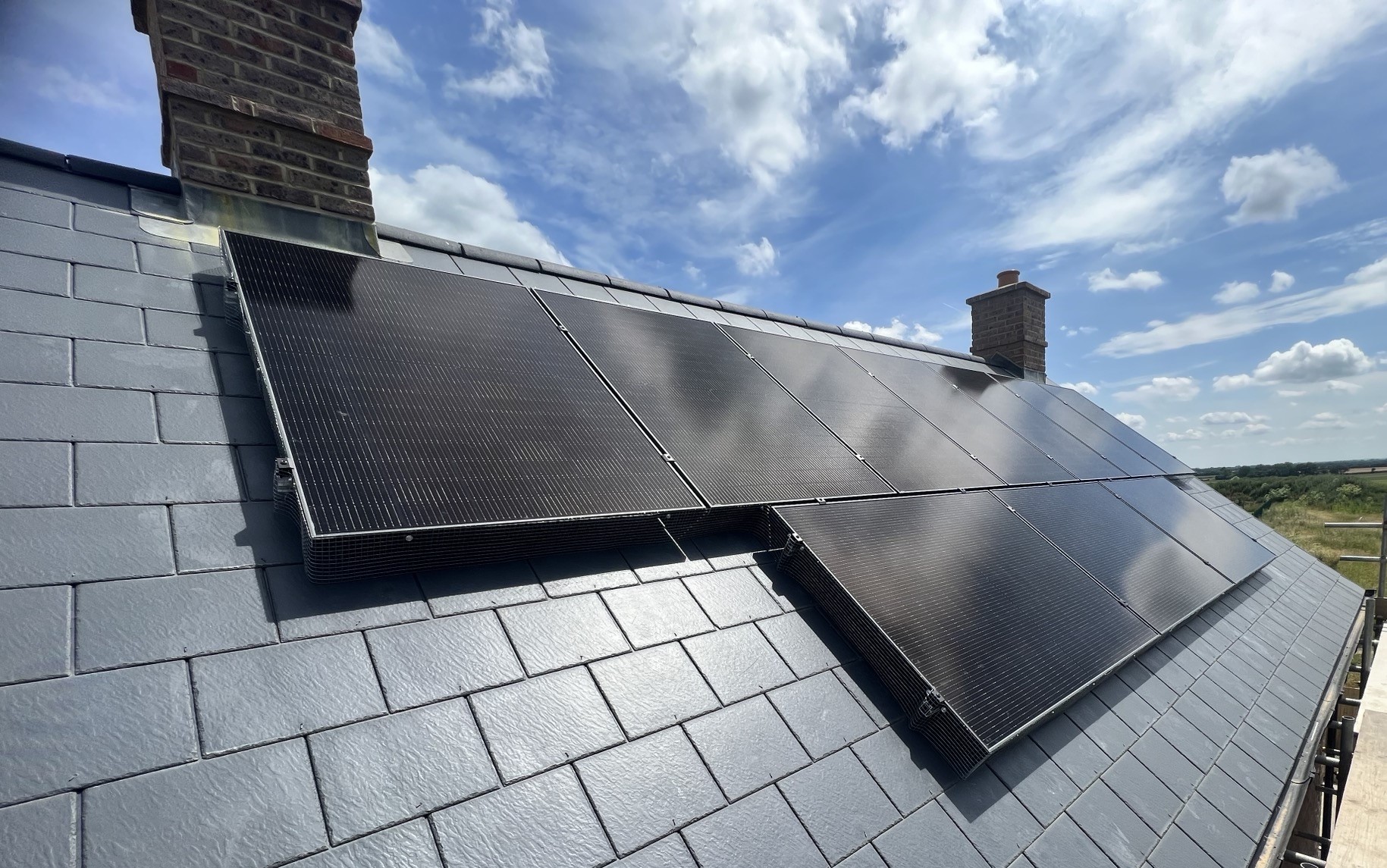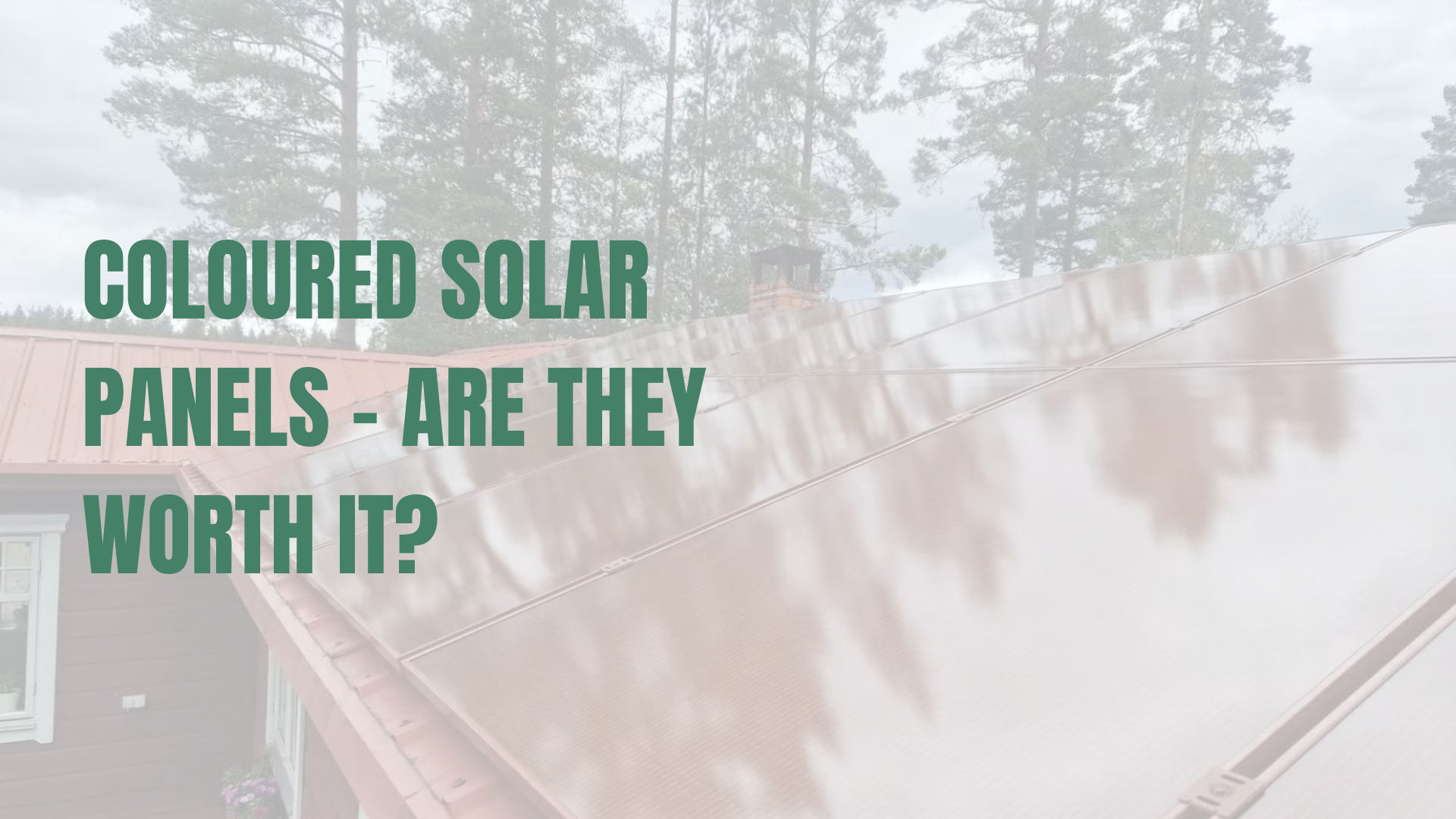
Coloured solar panels offer an alternative to traditional black solar panels, allowing homeowners to choose finishes that complement their roof tiles and property style. Options such as terracotta, brown and grey can be particularly appealing where the appearance of a solar installation is important.
But are coloured solar panels worth the extra cost? In this guide, we’ll explain the different solar panel colours available, how colour affects efficiency and electricity generation, what influences the price, and whether coloured panels are the right choice for your home.
What Are Coloured Solar Panels?
Coloured solar panels are exactly what they sound like, panels designed in different shades to the standard blue or black. Traditional solar panels get their colour naturally from the silicon used in their construction, but coloured solar panels change the appearance of the silicon using special coatings or dyes.
Coloured solar panels are possible in a full range of colours, helping your solar panels blend in with your roof tiles or stand out as a design feature. There is more to coloured solar panels than meets the eye, the shade of your solar panel can directly affect the efficiency and cost.
Black vs Blue Solar Panels – The Standard Options
Black Solar Panels (Monocrystalline)
Black panels are made from monocrystalline silicon solar cells. Pure silicon is formed into bars and cut into wafers, making them the most efficient solar panel on the market at between 20%-25% efficient. Due to their sleek, black look, these solar panels are the most popular choice for homeowners and businesses across the South East.
Blue Solar Panels (Polycrystalline)
Blue solar panels are made from polycrystalline silicon solar cells. Fragments of silicon crystal is melted together to create solar cells. Typically polycrystalline solar panels are around 20% cheaper than monocrystalline panels. Polycrystalline solar panels have a distinctive blue appearance and are often seen on older installations. Polycrystalline solar panels last around 25 years (compared to monocrystalline panels which can last up to 40 years) and have a lower efficiency of between 15% and 20%.
Solar Panels in Other Colours
As solar installation has become more popular, manufacturers have started experimenting with panels in different colours. These options are designed to blend in with clay or slate roofs, making them more appealing in conservations areas, on listed buildings or for homeowners who wish to preserve the look of their property.
Coloured solar panels can produce less electricity than comparable conventional panels, depending on how their colour is achieved. Some coatings and colour treatments reflect or absorb light that would otherwise reach the photovoltaic cells, potentially reducing output. However, the performance difference varies between products, so it is important to compare the manufacturer’s rated power output and efficiency.
When comparing coloured and black solar panels, look at the rated output in watts, module efficiency, dimensions and warranty. These figures provide a more reliable comparison than colour alone.
Coloured panels may also carry a price premium or have more limited availability. The key question is whether the visual benefits justify any additional upfront cost or reduction in generation for your particular property.
At present, coloured solar panels are less common in the UK, although some specialist manufacturers offer them for bespoke installations, resulting in a longer gap between signing your contract and completing your installation. As technology improves, SolarTherm UK expects to see more availability and better performance in coming years.
What Colours Are Available for Solar Panels?
Although black solar panels remain a popular choice, specialist products are available in a range of colours and finishes. Availability varies by manufacturer, and not every colour is readily available for residential installations in the UK.
- Terracotta solar panels: Designed to complement traditional clay roof tiles and some period properties.
- Brown solar panels: An option for homeowners looking for a finish that blends with brown roof tiles or other earthy tones.
- Red solar panels: Specialist options may be available for properties where a red or terracotta appearance is preferred.
- Grey solar panels: Can complement slate roofs and contemporary architectural styles.
- Black solar panels: Remain a widely available choice, offering a uniform appearance and a broad selection of high-output modules.
The best colour depends on the roof covering, the appearance you want to achieve and the products available for your installation. Always compare the manufacturer’s rated power output and efficiency rather than choosing a panel on colour alone.
How Much Do Coloured Solar Panels Cost?
Coloured solar panels generally cost more than standard black solar panels because they use specialist finishes and may be produced in smaller quantities. The final price depends on the manufacturer, colour, panel output, availability and complexity of the installation.
When comparing the price of coloured solar panels, it is important to look beyond the cost of the individual panels. Your total installation cost will also depend on the number of panels required, roof access, mounting equipment, inverter selection and any battery storage included in the system.
A coloured panel with a lower power output may also mean you need more roof space to achieve the same overall system capacity as a higher-output black panel.
There is no single price that applies to every coloured solar installation. The best way to compare options is to request a tailored quotation that considers your roof, electricity usage and preferred panel finish.
At SolarTherm UK, we can help you assess the available options and compare appearance, system performance and overall value before making a decision.
Are Coloured Solar Panels Worth It?
Whether coloured solar panels are worth the investment depends on your priorities, roof appearance and budget.
Coloured panels can be a good choice if you want your solar installation to complement traditional roof tiles, preserve a particular architectural appearance or achieve a more discreet finish. This can be especially relevant for period properties and homes where the visual impact of solar panels is a major consideration.
However, standard black solar panels may offer better value where maximising electricity generation per pound spent is the priority. They are widely available, with a broad choice of panel outputs and specifications.
Before choosing coloured panels, compare:
- Purchase price: Is the additional cost justified by the appearance?
- Power output: How much electricity will the proposed system generate?
- Roof space: Will the chosen panels provide sufficient capacity within the available area?
- Long-term savings: How might any difference in output affect your expected savings?
- Availability: Can your installer source the required panels and provide suitable warranties?
For most homeowners focused primarily on financial returns, standard black panels are worth considering first. For homeowners who place a high value on the appearance of their property, coloured panels may justify the additional investment.
The best choice is the one that balances appearance, reliable performance and the overall cost of the installation.
The Future of Coloured Solar Panels
Solar technology is advancing rapidly. Researchers in Europe are developing new techniques allowing panels to reflect specific colours while maintaining high efficiencies. It’s likely within the next few years homeowners will have access to a wide range of coloured solar panels at more affordable prices.
If your goal is to cut energy costs, reduce your carbon footprint and future proof your home, standard black or blue panels remain the smartest choice.
Thinking About Solar Panels for Your Home in the South East?
At SolarTherm UK we’ve been helping homeowners across Essex, Kent and London harness the power of the sun to make their homes more sustainable and affordable. Whether you’re looking for a stylish black solar system or want to explore bespoke coloured options, our solar experts can help you choose the right solar solution for your home.
Contact SolarTherm UK for a free no obligation quote and design, tailored to your property, usage and future energy needs. No hard sell, just honest, expert advice.
Your home. Your energy. Your future.
Frequently Asked Questions
Solar panels are commonly available in black and blue finishes, while specialist coloured panels may be available in shades such as terracotta, brown, red and grey. The exact options depend on the manufacturer and product range.
Coloured solar panels can cost more than conventional black panels because of specialist finishes and more limited availability. The price depends on the panel specification, colour, supplier and installation requirements.
Some coloured panels produce less electricity than comparable conventional panels because colour treatments can reduce the amount of light reaching the photovoltaic cells. The difference depends on the technology and product, so compare rated power output and efficiency before buying.
Yes, specialist brown and terracotta solar panels are available from some manufacturers. These finishes can complement traditional roof tiles, although availability and technical specifications vary.
No. Solar panels do not have to be black. Specialist coloured options are available, although conventional black panels generally offer a wider choice of products and specifications.
They may be suitable in some cases, but choosing a colour that matches the roof does not automatically remove planning requirements. Listed building consent or other permissions may be required, depending on the property and proposed installation. Check the relevant requirements before proceeding.
Not necessarily in every case. Standard black panels often offer a strong combination of availability, output and value, but performance depends on the individual product rather than colour alone. Compare the specifications and cost of the panels you are considering.
They may be worth it if matching the roof or preserving the appearance of your home is a priority. If your main objective is to maximise financial returns, compare the additional upfront cost against the expected electricity generation and long-term savings.