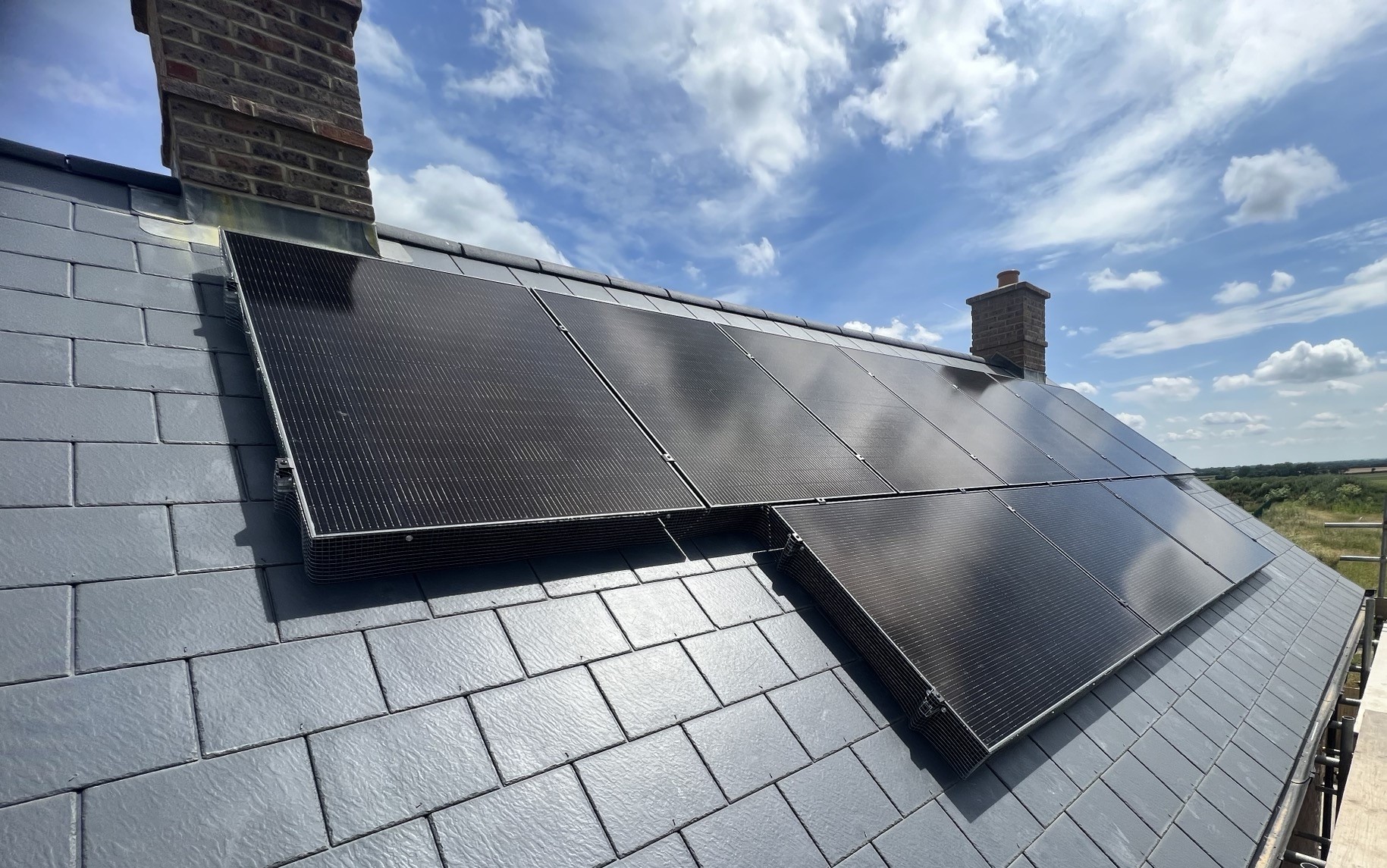
Homes across the South East are using more electricity than ever before – particularly in the evenings. Electric vehicles (EVs), heat pumps, induction cooking, home offices and smart appliances all tend to peak after normal work hours, precisely when grid electricity is most expensive. For households with high evening demand, battery storage paired with solar PV is one of the most effective ways to reduce bills, improve self-consumption and increase energy resilience.
At SolarTherm UK we design battery led systems specifically for high usage households in Essex, Kent, Suffolk, Hertfordshire and the wider South East and East Anglia.
Why Evening Energy Use Is a Cost Problem
Homes generate solar electricity during daylight hours, but many homes have the largest loads after sunset. EV charging typically starts in the evening, heat pumps ramp up as temperatures start to drop and cooking, lighting and after work entertainment peak in the evenings.
Without battery storage, surplus daylight solar is exported to the grid, often at a relatively low rate, while expensive electricity is bought back later. This mismatch is where a solar battery delivers the greatest value.
How Battery Storage Solves the Evening Usage Gap
A home battery stores surplus solar generation during the day and releases it to power your home when its needed most – usually between 4pm and midnight.
Solar battery helps you consume more of your own free electricity, generated from the solar panels on your roof. This results in lower reliance on peak rate grid electricity which can be expensive. You can also use your stored solar energy to charge your EV overnight, further increasing self-consumption.
For many high demand households, battery storage is the difference between “having solar” and using solar effectively.
How to Balance Evening Electricity Use with Overnight Battery Charging
For homes with high evening electricity consumption, choosing the right battery is only part of the solution. How you charge and discharge it can also influence your electricity savings.
A solar battery can store surplus electricity generated during the day and release it when household demand increases in the evening. Depending on your battery, inverter and electricity tariff, you may also be able to charge the battery from the grid during cheaper off-peak periods.
The challenge is balancing these two sources of energy. If your battery charges completely overnight, there may be little room left to store the following day’s solar generation. However, if you leave too much capacity unused, you might not have enough stored energy to cover your morning and evening electricity demand.
Should You Charge Your Battery Overnight?
Overnight charging can be worthwhile if your electricity tariff offers a sufficiently low rate compared with the electricity you would otherwise buy later. It can be particularly useful during winter, when shorter days and reduced solar generation make it harder to charge a battery entirely from solar panels.
The best approach depends on your household’s electricity consumption, expected solar generation, tariff rates and battery efficiency.
For example, a household that uses substantial electricity between 5pm and 10pm may benefit from charging its battery overnight to cover part of that demand. A household with strong daytime solar generation may achieve better results by leaving some battery capacity available for solar charging.
How Can You Leave Room for Tomorrow’s Solar Generation?
Some battery systems allow you to schedule grid charging, set charge limits or configure operating modes through an inverter or energy management app. Where these features are supported, you may be able to limit overnight charging so that the battery has space to accept solar electricity the following day.
A practical approach is to:
- Review your typical morning and evening electricity consumption.
- Check your battery’s usable capacity and the amount of energy it usually needs to cover your evening demand.
- Consider the following day’s solar forecast alongside seasonal changes in generation.
- Set grid charging schedules or charge limits where your equipment supports them.
- Monitor imported electricity, solar exports and battery charge levels to see whether your settings are delivering savings.
There is no single ideal overnight charge level for every home. The objective is to balance affordable electricity imports with effective use of your own solar generation.
For more detail on tariffs, charging schedules and the potential savings, read our guide to charging a solar battery with off-peak electricity.
A correctly configured battery system can help households with high evening usage make better use of both stored solar energy and cheaper grid electricity, without relying on one charging strategy throughout the year.
Battery Storage for EV Charging at Home
EVs are one of the largest electrical loads in the modern home. A battery allows you to store daytime solar and use it to charge your EV (for free) overnight and reduce or eliminate peak rate charging. Combine your solar and battery storage with off peak tariffs for maximum savings, benefitting from free solar during the day and cheaper off peak grid electricity to charge your battery overnight. In the South East, battery backed solar systems are increasingly essential for cost effective home charging.
Supporting Heat Pumps with Solar Batteries
Heat pumps run for long periods and often peak in the early morning and evenings. Battery storage helps by powering the heat pump with stored solar energy rather than grid electricity. This can help the UK’s transition to an electric energy system by reducing strain during peak tariff periods, improving overall system efficiency and predictability.
For homes transitioning away from gas, pairing heat pumps with battery storage significantly improves running costs and long term return on investment.
What Size Solar Battery Do High Usage Homes Need?
The right solar battery size depends on how much electricity your household uses, when you use it and how much surplus solar energy your panels can generate.
Homes with high evening electricity consumption may need more storage than households that use most of their electricity during daylight hours. However, installing the largest available battery does not automatically deliver the best financial return.
What Battery Capacity Should You Consider?
As a starting point, consider the following illustrative ranges when assessing a home battery system:
| Household usage pattern | Battery capacity to assess | Main consideration |
|---|---|---|
| Moderate evening usage | 5–7 kWh | Covering typical evening appliances and lighting |
| High evening usage | 8–12 kWh | Supporting cooking, entertainment and other household loads |
| Very high usage, EV or heat pump | 10 kWh or more | Assessing overnight demand, charging requirements and future electricity use |
These are indicative starting points, not fixed recommendations. Your actual requirements may be lower or higher depending on your consumption profile, solar array, battery configuration and tariff.
Why Usable Capacity Matters
Battery capacity is measured in kilowatt-hours (kWh), which indicates how much energy can be stored. Power output, measured in kilowatts (kW), indicates how much electricity the battery can supply at a given moment.
Both matter. A battery might have enough stored energy to cover several hours of use but still be unable to supply the combined demand of several high-power appliances if its output rating is too low.
You should also consider usable capacity, charging and discharging efficiency, reserve settings and whether the battery is expected to provide backup power.
Should You Allow for Future Electricity Demand?
If you are planning to install an electric vehicle charger, replace a gas boiler with a heat pump or add other electrical appliances, your future demand may be higher than your current consumption.
An expandable battery system may provide flexibility, but the inverter, battery compatibility and electrical installation must support any planned expansion.
At SolarTherm UK, we assess your consumption patterns, solar generation and future requirements to help determine a suitable battery capacity and configuration.
Is Battery Storage Worth It Without Solar?
Yes – particularly for high usage households without a suitable roof for solar. A solar battery paired with a suitable time of use tariff can charge cheaply overnight on off peak grid electricity. This electricity can then be used to power your home during expensive evening peak periods and deliver savings, even if you don’t have solar. Many homeowers in the South East install battery storage first then add solar PV panels later when budget or roof work allow.
Why High Usage Homes in the South East Benefit Most
The South East benefits from strong solar generation, high electricity prices and widespread adoption of EVs and heat pumps. This combination makes battery storage especially effective at reducing long term energy costs and increasing household energy independence.
Expert Battery Design from SolarTherm UK
Every home uses energy differently and at SolarTherm UK we don’t believe in a one size fits all approach to solar design and battery storage. We carry out a detailed energy usage analysis and use this to custom design your battery storage system. All our systems are future proofed and scalable, allowing you to add more storage in the future if your energy needs increase.
At SolarTherm UK our MCS accredited installers provide high quality, compliant systems and expert long term aftercare. If your home has a high evening electricity usage, battery storage is not an optional upgrade, it’s a strategic investment.
Speak to SolarTherm UK
If you are running EVs, heat pumps or simply use more electricity at night, our expert team can design a battery storage solution tailored to your home and lifestyle. Contact SolarTherm UK today for a free, no obligation quote, tailored to your home, usage and future energy needs. No hard sell, just honest, expert advice.
Your home. Your energy. Your future.
Frequently Asked Questions
Yes. Battery storage is particularly useful for homes that use most of their electricity in the evening, as it can store surplus solar energy generated during the day and make it available after sunset.
The ideal battery size depends on your household’s electricity consumption, solar PV system and usage patterns. Homes with EVs, heat pumps or other high evening loads may benefit from a larger or expandable battery system.
Yes. A battery can store surplus daytime solar electricity for use when charging your EV in the evening or overnight. It can also be charged using cheaper off-peak electricity where your tariff allows.
Yes. Battery storage can provide stored electricity to help power a heat pump during the evening and overnight, reducing the amount of electricity you need to buy from the grid during higher-cost periods.
It can be. A suitable battery can charge from the grid during cheaper off-peak periods and then provide electricity during more expensive peak periods. This can make standalone battery storage an option for homes with high evening electricity demand.
Yes. Many compatible battery systems can charge from the grid overnight and store surplus solar electricity during the day. The way these charging sources are prioritised depends on the battery, inverter and energy management settings.
Not necessarily. A full overnight charge can leave limited capacity for the following day’s solar generation. The ideal charge level depends on your expected household demand, solar forecast, tariff rates and available battery settings.
Yes. A battery can store surplus solar electricity during the day and release it when household demand increases in the evening. Depending on your tariff and equipment, it may also be possible to charge the battery during cheaper periods to reduce more expensive electricity imports.
Battery capacity, measured in kilowatt-hours (kWh), indicates how much energy a battery can store. Power output, measured in kilowatts (kW), indicates how much electricity it can supply at one time. Both are important when choosing a battery for a household with high evening demand.
Yes, subject to the system’s design and electrical capacity. An appropriately configured battery can help support household electricity demand associated with EV charging and heat pump operation. However, these loads can be substantial, so battery sizing, power output and charging priorities need careful assessment.
No. A larger battery may provide more storage, but it can also increase installation costs and may not deliver proportionately greater savings if there is insufficient surplus solar generation or suitable off-peak charging. The right size depends on your consumption, charging opportunities and expected financial return.