Installing solar PV on your home can be a great investment for any homeowner. You can generate your own electricity, reduce your reliance on the grid and make savings on your electricity bills.
However, as higher users of electricity, electric vehicle (EV) owners could benefit from solar panels even more.
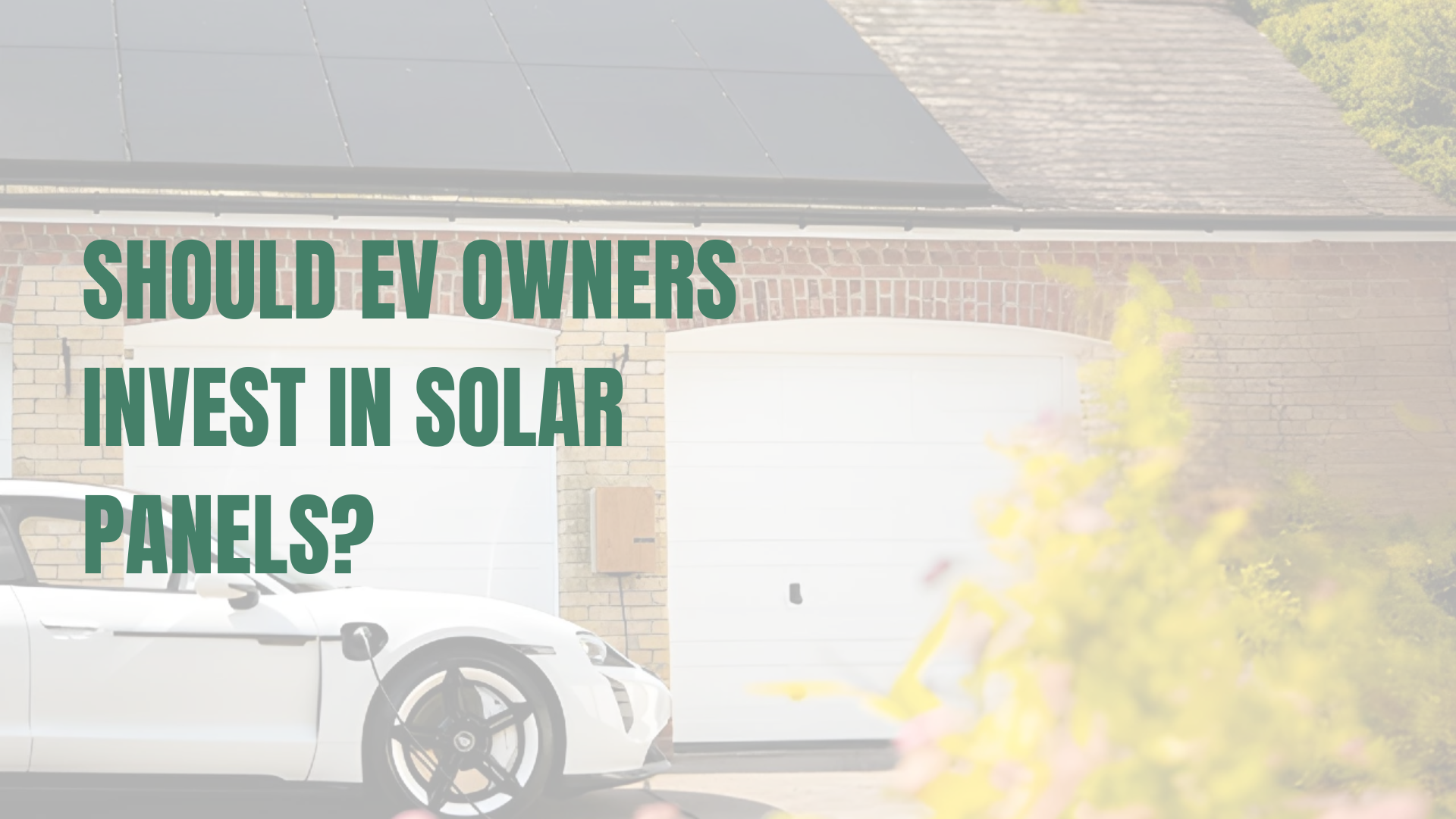
If you charge your EV at home, combining solar panels with your electric vehicle can help reduce both your household electricity costs and the cost of running your car.
Why Do EV Owners Like Solar Panels?
Many owners of electric vehicles have invested in an EV because they want to be kinder to the environment and reduce the cost of running their car.
If these are your motivations, the next step could be to invest in solar panels, as they offer many of the same benefits.
Solar PV systems enable you to generate your own green electricity, making you less reliant on electricity from the national grid, which comes from a variety of energy sources. Solar panels can also help you reduce your electricity bills by allowing you to use more of your own generated electricity.
As an EV owner, if you are charging your vehicle at home, you may have seen an increase in your electricity bills. Charging an electric vehicle can add significantly to household electricity consumption, so reducing the amount of electricity you need to buy from the grid can make a noticeable difference.
Will Solar Panels Work for Me?
A large proportion of homes have suitable roof space for solar panels, provided the roof receives sufficient sunlight and is not significantly affected by shading.
It doesn’t matter whether you have a pitched roof or a flat roof, as there are solar installation options available for most roof types.
What If My Car Isn’t at Home During the Day?
If you work during the day and your car isn’t at home to charge while your solar panels are generating electricity, you may think solar isn’t an option for you.
However, you can combine solar PV with battery storage to make better use of the electricity your panels generate.
Electricity generated during the day can be stored in your solar battery and then used during the evening or night to charge your car.
This means you don’t necessarily need to be at home during daylight hours to benefit from solar-generated electricity.
How Much Solar Power Will I Need?
The size of your roof will determine the size of the solar panel system that can be installed on your property and how much electricity it can generate.
Your EV and its battery size, as well as the distance you drive, will determine how much of your vehicle’s charging requirements can be covered by the electricity you generate.
Your household appliances will also be using the electricity generated by your solar panels, so your total household electricity consumption needs to be considered when designing your system.
An Example: Solar Panels and an Electric Vehicle
If you drive to work doing the average commute of 19.5 miles and your EV achieves an average of 3 miles per kWh, you will need approximately 6.5kWh of electricity to charge your vehicle each day.
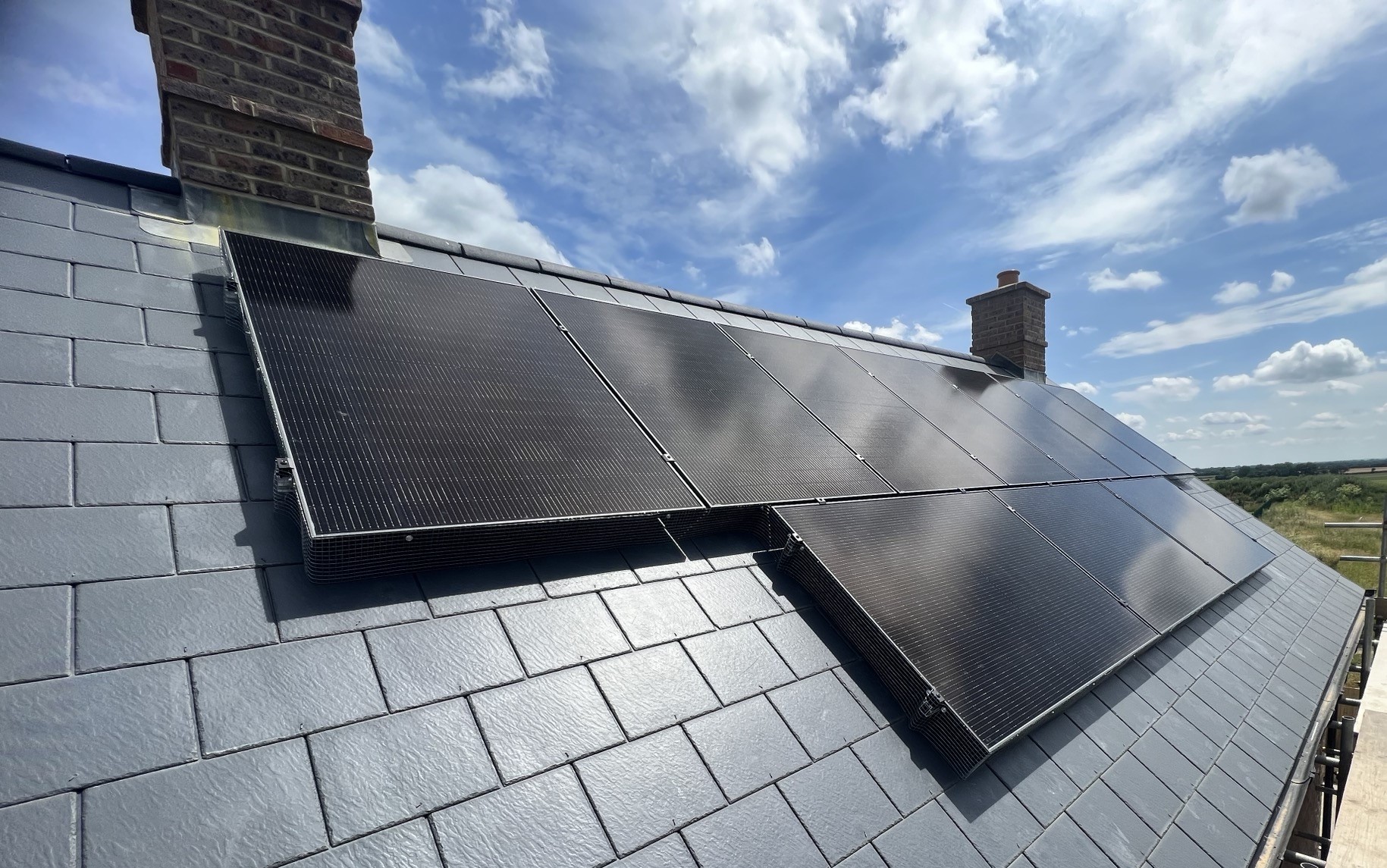
A 12-panel solar system used in the example below can generate an average of 12.95kWh per day.
This would mean you could use around half of the electricity generated to charge your EV for your commute, with the other half available for your household consumption.
This could significantly lower your electricity bills and travel costs, while also allowing you to charge your vehicle using electricity generated from a renewable source.
Of course, actual generation will vary throughout the year, with solar panels generating considerably more electricity during the longer, sunnier months than during winter.
How Much Could I Save If I Installed Solar Panels?
Let’s take a three-bedroom house in the South East of the UK as an example.
A typical installation size for this property could be a 12-panel solar PV system with 5.12kWh of battery storage. This system could generate approximately 4,728.12kWh per year.
In this example, the household could save £1,008.47 per year, made up of:
- £771.75 in electricity bill savings
- £236.72 in export payments for unused electricity
If this household had medium electricity usage of 3,500kWh per year, and their electricity tariff charged 24.5p per kWh with a standing charge of 60.1p per day, their annual electricity bill without solar would be approximately £1,076.86.
This demonstrates how solar panels can help reduce the amount of electricity you need to purchase from the grid.
How Long Does It Take to See a Return?
You can typically see a return on your investment in 5–9 years, while solar PV systems with battery storage can last for around 30 years.
Based on inflation over the next 30 years, the average annual savings over the system’s lifetime could be £2,431.15.
When we factor in the initial installation costs and any replacement parts during the 30 years, the total savings could be £57,689.37.
For EV owners, there is an additional benefit: the electricity generated by your solar panels can help reduce the amount you spend charging your vehicle, as well as reducing your household electricity costs.
Can Solar Panels Charge an Electric Vehicle?
Yes. Solar panels can generate electricity that can be used to charge an electric vehicle at home.
How much of your EV charging can be powered by solar will depend on factors including the size of your solar PV system, your vehicle’s electricity consumption, how far you drive and when you charge your car.
Adding battery storage can also allow you to store electricity generated during the day and use it later to charge your EV.
Is Solar Worth It If I Have an Electric Vehicle?
For many EV owners, solar panels can be particularly attractive because an electric vehicle can significantly increase household electricity consumption.
The more electricity you use at home, the greater the potential opportunity to use your own solar-generated electricity rather than buying it from the grid.
Combining solar panels, battery storage and an EV can therefore help you make greater use of the renewable electricity generated by your system and reduce your overall energy costs.
Interested in Installing Solar PV on Your Home?
If you live in Essex, Kent, Suffolk, Hertfordshire or the wider South East and East Anglia, we can assess whether your home is suitable for solar, determine what size system could be installed and, most importantly, calculate how much you could save with solar.
Contact SolarTherm UK today for a free, no obligation quote and design, tailored to your property, usage and future energy needs. No hard sell, just honest, expert advice – and the time you need to make an informed decision.
Your home. Your energy. Your future.
Frequently Asked Questions
Yes. Electricity generated by your solar panels can be used to charge your EV. How much of your charging can be powered by solar will depend on your system size, driving habits and when you charge your vehicle.
No, but a battery can be useful if your car is away from home during the day. It allows surplus solar electricity generated during daylight hours to be stored and used later, including for EV charging.
Yes. Using your own solar-generated electricity to charge your EV means you don’t need to purchase as much electricity from the grid. The potential saving will depend on how much electricity your solar system generates and how much you use to charge your vehicle.
Not every property will be suitable for solar, but many homes have suitable roof space. Factors such as roof orientation, shading, available roof area and the condition of the roof will need to be considered as part of a solar assessment.