Plug-in soalr has officially arrived in the UK, offering households a new way to generate their own electricity without installing a traditional rooftop solar PV system. But while plug-in solar could be useful for some properties, it doesn’t replace the benefits of a professionally installed rooftop solar system.
From 27 August 2026, approved plug-in solar systems became legal to buy and use across Great Britain. The Government says these systems could save households up to £110 a year and provide up to 20% of an average home’s electricity use.
For renters, flat owners and people who don’t have a suitable roof, this is potentially an exciting development. But for homeowners with a suitable roof, the question is whether plug-in solar really offers a better solution than traditional solar PV.
In most cases, rooftop solar remains the more powerful, flexible and financially rewarding option.
What Is Plug-In Solar?
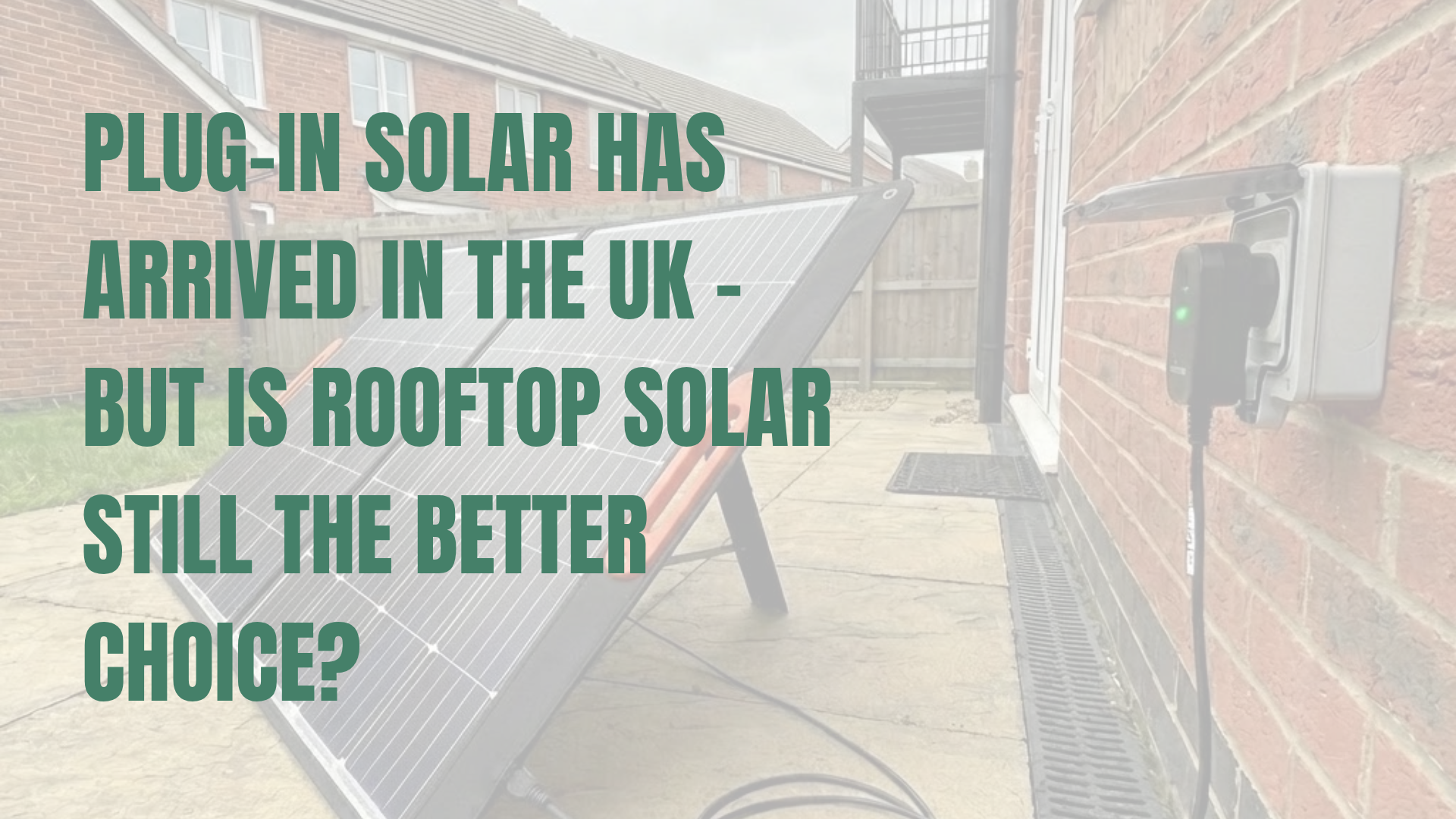
Plug-in solar is a small scale solar generation system designed to connect directly to a standard household socket. Unlike conventional solar PV, which is professionally designed and wired into a property’s electrical system, plug-in systems are intended to be much simpler to install. Approved systems can produce up to 800W of AC output, with the electricity generated being used within the property to reduce the amount of power being imported from the grid.
The technology is particularly attractive to people who may not be able to install conventional solar panels. It can be appealing to those who rent and don’t own their roof, people living in flats and apartments with balcony space, homes without suitable roofs and those who don’t want the upfront cost of a full solar installation but want a relatively inexpensive introduction to solar power.
The Government estimates that a plug-in solar system could save up to £110 per year. That sounds attractive – but it’s important to put those savings into context.
Plug-In Solar vs Rooftop Solar: What’s the Difference?
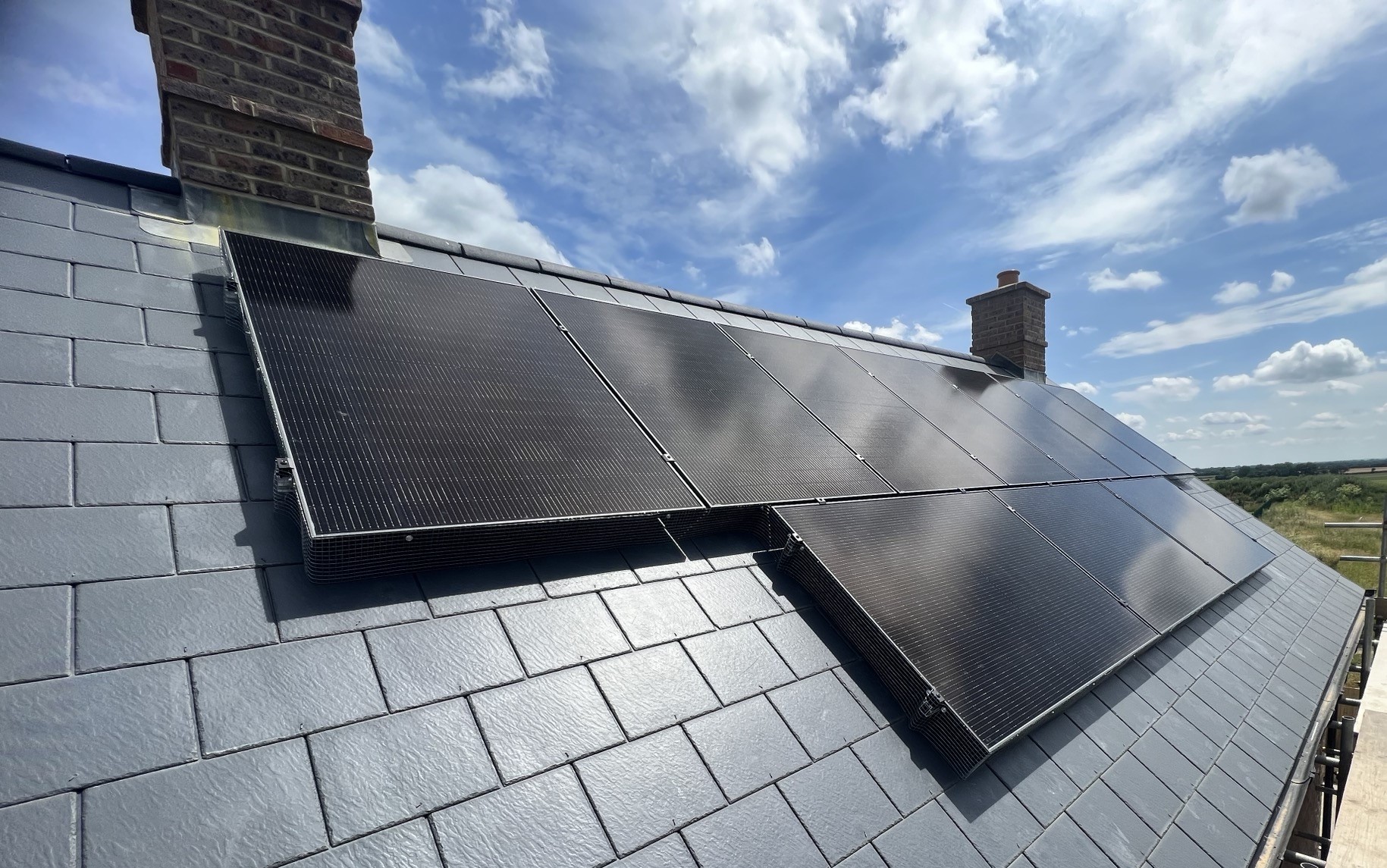
The fundamental difference is scale. A plug-in system is deliberately limited to a maximum 800W AC output. A typical rooftop solar installation, meanwhile, can be several kilowatts in size.
A typical SolarTherm UK installation might be 4.5 kWp to 10 kWp of solar panels (10-24 panels) compared to a maximum of 800W of AC output from a plug-in system.
That means a properly sized rooftop system can generate considerably more electricity over the course of a year. And that’s where the biggest distinction lies.
Plug-in solar is primarily designed to help reduce the electricity you are buying from the grid at the time the panels are generating. A rooftop solar system can be designed as part of a much larger home energy system.
Why Rooftop Solar Still Has the Edge
Much Greater Generation Potential
The most obvious advantage of rooftop solar is the amount of electricity you can generate. A larger array means more panels producing electricity throughout the day.
With the right roof orientation, pitch and shading conditions, a professionally designed solar PV system can generate thousands of kilowatt hours of electricity every year.
The Government itself highlights the difference, stating that rooftop solar can already save households £480 per year – with most SolarTherm UK installations saving over £600+ per year – compared with up to £110 for plug-in solar.
The actual saving will depend on the property, system size, electricity usage and tariff, but the potential is substantially greater with a properly sized rooftop installation.
You Can Add Battery Storage
One of the biggest limitations of basic plug-in solar is that it is designed around generating electricity for immediate household use. Solar generation and household electricity demand don’t always happen at the same time.
Your panels might produce their most electricity around lunchtime, while your household may use considerably more electricity in the morning or evening.
A rooftop solar installation can be paired with a home battery. Instead of allowing surplus solar generation to go unused, a battery can store electricity for when you need it – usually in the evenings or early mornings.
That could mean using your own solar energy during the evening rather than buying expensive grid electricity from your supplier. It also opens up additional opportunities to use smart energy tariffs and optimise when electricity is imported and exported.
More Control Over Your Energy
A conventional solar PV system can become part of a complete home energy system. Solar generation can potentially be used to:
- Power household appliances
- Charge a home battery
- Charge an electric vehicle
- Run a heat pump
- Reduce electricity imported from the grid
- Export surplus electricity
- Take advantage of time of use tariffs
A plug-in panel is much more limited in comparison. It’s a useful source of additional generation, but it isn’t designed to provide the same level of energy management.
Greater Long Term Savings Potential
The Government estimates plug-in solar could save households up to £110 per year. For someone who cannot install rooftop solar, that could still be worthwhile. However, if you own a suitable property, the larger generation capacity of a rooftop system creates significantly greater potential for long term savings.
A properly designed installation can reduce the amount of electricity purchased from the grid while potentially generating additional income through exporting surplus electricity under an appropriate export arrangement. And because solar panels can continue generation electricity efficiently for up to 40 years, the long term value of the system can be substantial.
Plug-In Solar Isn’t Bad – It’s Just Designed for a Different Customer
It’s important not to dismiss plug-in soalr. In fact, we think it could be a positive development for the UK’s renewable energy market.
Not everyone can have rooftop solar.
A tenant can’t necessarily make permanent alterations to their landlord’s property. Someone living in a flat may have no access to a suitable roof. And, some properties simply aren’t suitable for conventional solar PV.
For those households, plug-in solar could provide a relatively accessible way to generate some of their own electricity. It also introduces more people to the concept of generating and managing their own energy.
The Government’s electrical safety assessment found that representative plug-in solar systems could operate safely under the tested conditions, although it also identified differences in product performance and the need for appropriate UK-specific product requirements.
So the technology has a place.
It just shouldn’t be confused with a replacement for a full solar PV system.
There Are Also Important Things to Consider
Despite being marketed as simple, plug-in solar isn’t something homeowners should treat as just another household appliance.
The Government advises people to check whether permissions are required before installing a system. Depending on the property, this could include landlord or freeholder permission, planning permission or listed building consent.
There are also important considerations around where and how the panels are mounted. London Fire Brigade has highlighted the importance of using reputable products and appropriate mounting systems, as well as considering balconies, escape routes, external walls and electrical installations.
As these systems generate electricity, there are network considerations too, including notifying the relevant Distribution Network Operator. In other words, “plug it in and forget about it” isn’t necessarily the right approach.
So, Which Should You Choose?
The answer depends on your property.
Plug-in solar could make sense if:
- You rent your home
- You live in a flat or apartment
- You don’t have access to a suitable roof
- You want a small amount of solar generation without a full installation
- Your electricity consumption is relatively low
- A conventional solar installation isn’t practical
Rooftop solar is likely to make more sense if:
- You own your home
- You have a suitable roof
- You want to maximise solar generation
- You want to significantly reduce your electricity bills
- You want battery storage
- You own or plan to buy an EV
- You want to export surplus electricity
- You’re looking for a long term investment in your home
For homeowners with a suitable roof, the bigger questions isn’t necessarily “plug-in solar or rooftop solar?” – it’s how much of your home’s energy demand you could meet with a properly designed solar PV system.
Rooftop Solar Is Still the Complete Solution
Plug-in solar is an interesting development, and it could help make solar energy accessible to households that previously couldn’t consider it. For homeowners who have the option, conventional rooftop solar remains the more comprehensive solution.
A professionally designed system can provide substantially more generation, integrate with battery storage and EV charging, and give you much greater control over how your home produces, stores and uses electricity.
The UK’s solar market is already growing rapidly. Government figures show that there were almost 150,000 certified solar installations in the first six months of 2026, while battery installation were almost double the level recoded during the same period in 2025.
Plug-in solar may bring even more people into that market.
For homeowners with a suitable roof, traditional rooftop solar isn’t being replaced – it’s still the benchmark.
Thinking About Solar for Your Home?
If you’re considering solar panels, don’t simply look at the size or price of the system. A proper solar assessment should consider your roof, orientation, shading, electricity consumption, future energy needs, battery storage requirements and whether an EV could be added later.
Contact SolarTherm UK today for a free, no obligation quote and design, tailored to your property, usage and future energy needs. No hard sell, just honest, expert advice – and the time you need to make an informed decision.
Your home. Your energy. Your future.
Frequently Asked Questions
Plug-in solar can be worthwhile for renters, flat owners or properties where traditional rooftop solar isn’t practical. However, for homeowners with a suitable roof, a professionally installed rooftop solar PV system can generate significantly more electricity and offer greater long-term savings.
The Government estimates that an approved plug-in solar system could save households up to around £110 per year. Actual savings depend on the system, property and how much of the generated electricity is used.
For most homeowners with a suitable roof, yes. Rooftop solar can accommodate a much larger array, generate considerably more electricity and integrate with batteries, EV chargers and export tariffs.
Plug-in solar is primarily designed as a small-scale generation solution, whereas conventional rooftop solar can be specifically designed to work alongside a home battery. This provides much greater flexibility for storing surplus generation and using it later.
No. Plug-in solar provides an accessible option for properties that cannot have conventional solar, but it is not intended to replace a properly designed rooftop solar PV system where one is suitable.