When homeowners begin researching solar energy, one of the first questions they ask is whether traditional on-roof solar panels are the only option. The answer is no. In-roof solar panels, also known as integrated solar panels, offer an attractive alternative that blends seamlessly into your home’s roof while delivering the same clean renewable electricity.
For many new builds, self-build homes and roof replacement projects, integrated solar panels provide a sleek appearance without compromising performance. However, they’re not the right solution for every property.
At SolarTherm UK, we’ve been designing and installing solar PV systems across Essex, Kent, Suffolk, Hertfordshire and the wider South East and East Anglia for more than 16 years. Our MCS certified designers assess every roof individually, ensuring homeowners receive the most suitable system for their property, budget and long term energy goals.
In this guide, we’ll explain how in-roof solar panels work, their advantages and disadvantages, how they compare with traditional systems and when alternative options such as flat roof solar panels or ground mounted solar panels may be the better solution.
What Are In-Roof Solar Panels?
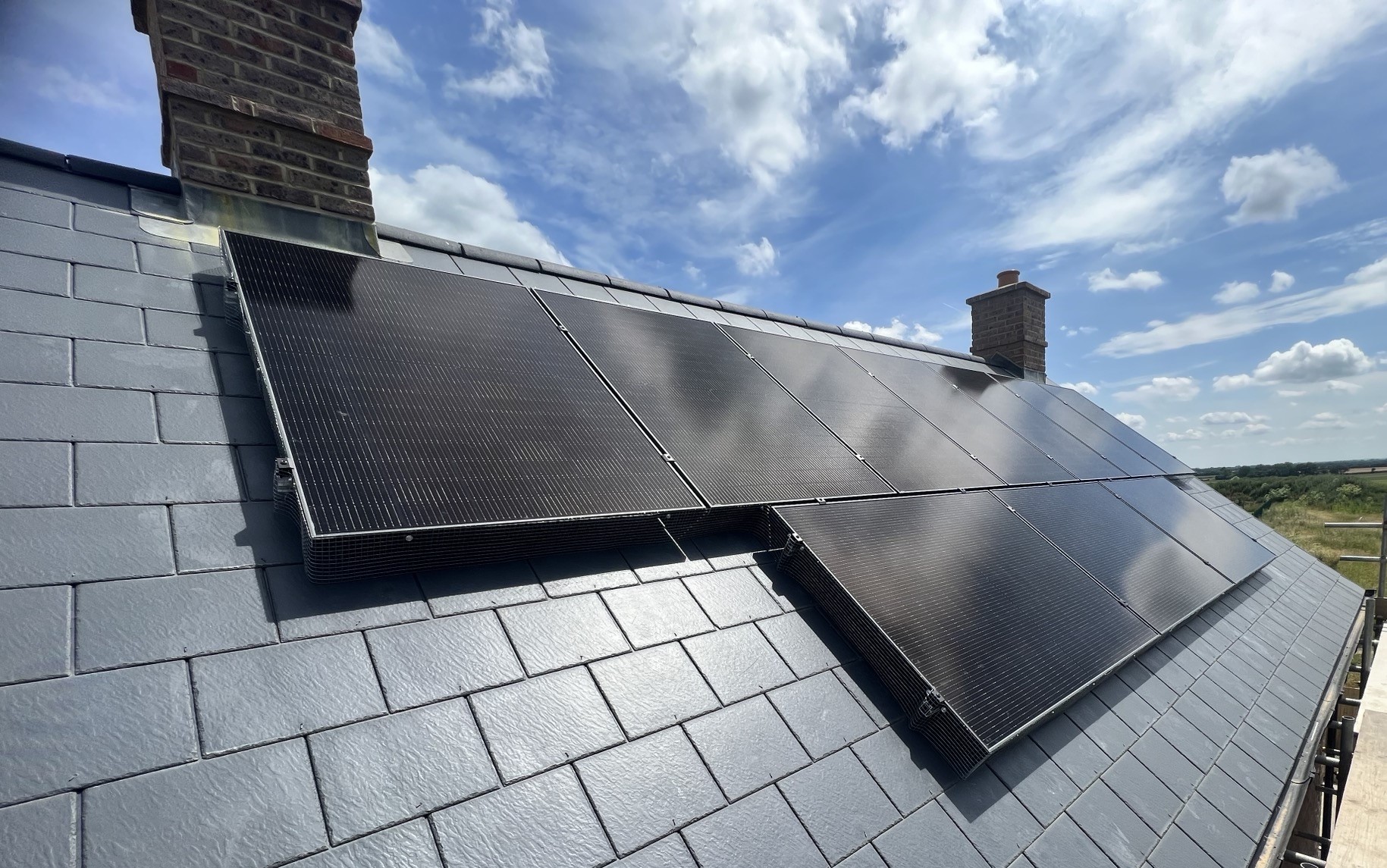
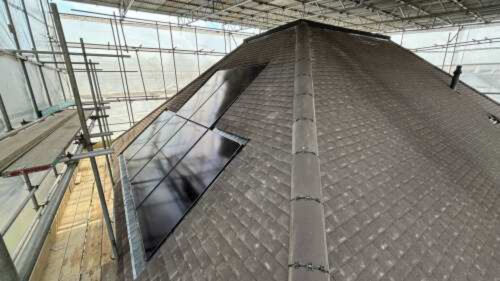
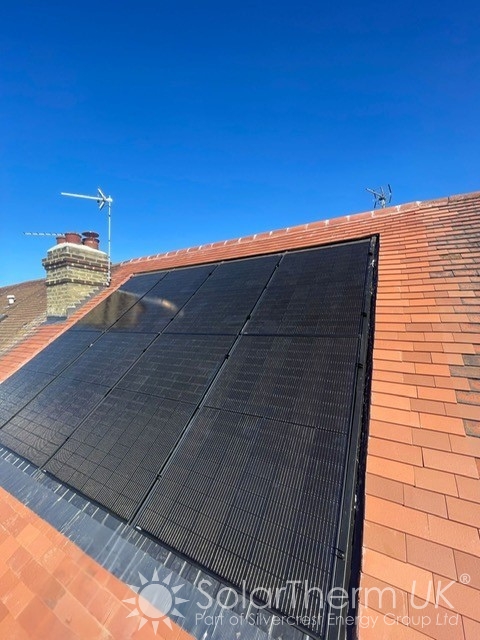
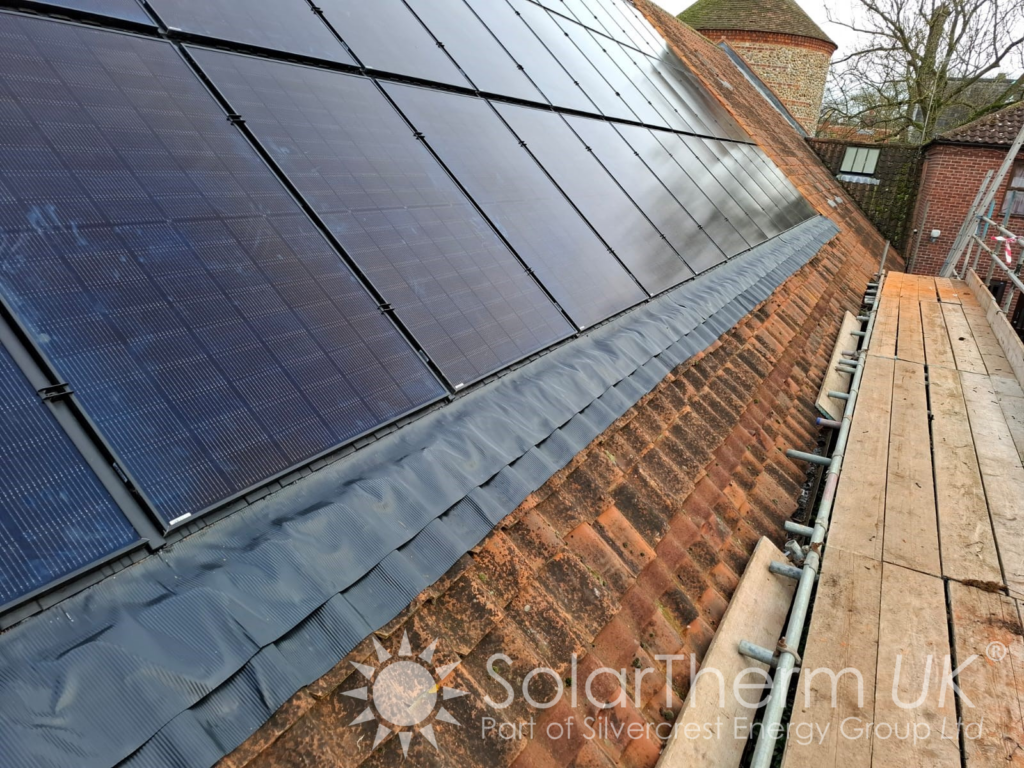
Unlike conventional solar panels that sit above your existing roof covering, in-roof solar panels are installed flush with the roof itself. Instead of mounting rails fixed above tiles or slates, part of the roof covering is removed and replaced by specially designed mounting trays that become part of the roof structure.
The solar panels effectively become the weatherproof roof covering in that section of the roof. This creates a much cleaner, lower profile appearance that many homeowners prefer, particularly on modern properties.
Although the installation method differs, they generate electricity in exactly the same way as traditional photovoltaic (PV) systems.
How Do Integrated Solar Panels Work?
Integrated solar panels use photovoltaic cells to convert sunlight into electricity. The electricity generated passes through an inverter, which converts it into usable electricity for your home. Any surplus electricity can be stored in a solar battery, exported to the grid for payment via the Smart Export Guarantee (SEG), used to charge an electric vehicle or used to heat a hot water cylinder with a solar diverter. The only real difference between integrated and standard systems is how they’re attached to the roof.
Benefits of In-Roof Solar Panels
A Cleaner, More Modern Appearance
One of the biggest reasons homeowners choose integrated solar panels is aesthetics. As the panels sit flush within the roof covering, they create a sleek finish without the raised appearance of traditional mounting systems.
For many homeowners investing in a new roof, loft conversion or self-build property, this integrated look complements modern architecture exceptionally well.
Ideal During Roof Replacement
If you’re already replacing your roof, installing in-roof solar panels can be highly cost effective. Since roof tiles are already being removed, much of the roofing work over;a[s with the solar installation, making it an ideal time to invest in renewable energy.
Reduced Wind Loading
As the panels sit flush with the roof surface, there is generally less wind uplift compared with conventional roof mounted systems. This can be particularly beneficial in exposed coastal areas across Essex, Suffolk and Kent.
Excellent for New Build Homes
Many architects now specify integrated solar systems from the design stage. The lower profile helps maintain clean roof lines while contributing towards energy efficiency requirements under modern building standards.
Are There Any Disadvantages?
Like any solar installation, integrated systems have considerations.
Slightly Lower Efficiency
As airflow behind the panels is reduced, they typically operate slightly warmer than traditional roof mounted panels. Solar panels perform most efficiently when kept cool, meaning integrated systems can lose a small percentage of efficiency during very hot weather. For most UK homeowners, this difference is relatively modest.
Higher Installation Costs
Integrated mounting systems are generally more complex than conventional rail systems. The overall installation cost may therefore be slightly higher, particularly when retrofitting onto an existing roof.
More Complex Roof Repairs
If roofing work is needed underneath the integrated array in future, additional labour may be required to temporarily remove sections of the solar system.
Are In-Roof Solar Panels Right for Every Home?
Not necessarily. Every roof is different. At SolarTherm UK, every project begins with a detailed site survey considering:
- Roof pitch, orientation and available space
- Roof age and structural condition
- Potential shading from nearby trees and neighbouring buildings
- Future energy usage
- Battery storage opportunities
Sometimes traditional roof mounted panels will provide greater energy generation. Other properties may benefit more from flat roof solar panels or even ground mounted solar panels, depending on available space and energy needs. Choosing the right installation method is far more important that choosing a particular panel brand.
What About Flat Roof Solar Panels?
Not every property has a pitched roof. Many garages, home extensions and contemporary homes feature flat roofs. Flat roof solar panels use specialist mounting frames that position panels at the optimal angle to maximise solar generation while avoiding excessive wind loading.
Flat roof systems benefit from adjustable panel angles, easy maintenance access and minimal roof penetration using ballast weighted systems. When there is limited space on the pitched roof, or high levels of shading, flat roof solar offers an alternative solution to reduce energy bills with solar.
When Are Ground Mounted Solar Panels a Better Option?
If your roof isn’t suitable, ground mounted solar panels may provide a practical solution. These systems are commonly installed where homeowners have large gardens, paddocks, small fields and significant energy demand.
Ground mounted arrays can often achieve excellent performance because the panels can be positioned at the idea orientation and angle. Although installation costs are typically higher due to groundwork, long cable runs and additional mounting structures, they can provide an excellent alternative where roof space is limited, unsuitable or where energy usage is high.
Can Integrated Solar Panels Be Installed on Older Roofs?
It depends on the roof’s condition. If your roof is nearing the end of its lifespan, replacing it before installing solar often makes the most financial sense. Our surveyors will assess tile condition, roof timbers, structural integrity, weatherproofing and look for any future maintenance requirements. Installing solar onto a roof that may require replacement within a few years can lead to unnecessary removal and reinstallation costs in the future.
Pairing In-Roof Solar Panels with Battery Storage
Many homeowners now combine integrated solar panels with battery storage. A battery allows excess daytime electricity to be stored for use during the evening when household demand is often highest.
Benefits include:
- Greater energy independence
- Reduced reliance on the National Grid
- Lower electricity bills
- Better use of self-generated energy
- Backup capability on compatible systems
Battery storage is becoming an increasingly popular addition for homeowners looking to maximise their solar investment.
Why Professional Installation Matters
An integrated solar system forms part of your home’s weatherproof envelope. Correct installation is essential to prevent leaks, maintain roof integrity and ensure long term performance.
At SolarTherm UK, every installation is designed around the individual property rather than using a one size fits all approach. Our experienced in house team carries out detailed roof assessments, electrical design calculations and performance modelling before installation begins. As an MCS certified installer and NICEIC approved contractor, we follow recognised industry standards and current UK regulations, giving homeowners confidence that their system is designed for safety, efficiency and long term reliability.
We also provide guidance on battery storage, export tariffs, ongoing system monitoring and future expansion, ensuring your investment continues to deliver value for years to come.
Why Homeowners Across the South East are Choosing SolarTherm UK
SolarTherm UK has been installing residential solar PV systems throughout Essex, Kent, Suffolk, Hertfordshire and the wider South East and East Anglia for over 16 years. Our experienced team understand the variety of roof types found across the region – from traditional clay tiled cottages and Victorian terraces to modern new build developments and contemporary homes.
Every recommendation is based on a detailed assessment of your property, energy usage and future plans, helping you choose the most appropriate solution, whether that’s in-roof solar panels, flat roof solar panels, ground mounted solar panels or a conventional roof mounted system.
From your initial survey through to installation and aftercare, our focus is on delivering safe, high quality workmanship, honest advice and systems designed to perform reliably for decades.
Speak to SolarTherm UK
Whether you’re considering in-roof solar panels, a flat roof system or ground mounted solar, choosing the right system starts with expert advice. Contact SolarTherm UK today for a free, no obligation quote and design, tailored to your property, usage and future energy needs. No hard sell, just honest, expert advice – and the time you need to make an informed decision.
Your home. Your energy. Your future.
Frequently Asked Questions
Yes, particularly if you’re replacing your roof, building a new home or prioritising appearance. While installation costs are often slightly higher than traditional systems, many homeowners value the seamless finish and long-term energy savings.
Integrated systems can operate slightly warmer because there is less airflow behind the panels. This may reduce efficiency marginally during very hot weather, but for most UK homes the difference is relatively small.
Yes. However, they are generally most cost-effective when installed during a roof replacement or major renovation project.
Absolutely. With the correct mounting system and structural assessment, flat roof solar panels can generate excellent levels of electricity and are ideal for extensions, garages and modern homes.
If your roof has excessive shading, limited space or structural issues, ground mounted solar panels may provide an excellent alternative. During our survey, we’ll recommend the most practical and efficient solution for your property.