Installing solar panels is no longer as simple as putting a few panels on the roof and connecting an inverter. Today’s solar PV systems are smarter, more powerful and increasingly integrated with battery storage, EV chargers and intelligent energy tariffs.
While many installers can fit solar panels, designing a system that delivers maximum performance, complies with UK regulations and continues to provide value for decades requires genuine expertise.
At SolarTherm UK, we believe every installation should be engineered around your property, your energy usage and your future plans – not simply solar as an off the shelf package.
Solar Technology Has Advanced – Your Solar Installer Should Too
A decade ago, most residential solar systems followed a fairly standard formula. Systems were typically designed to maximise Feed-in Tariff (FiT) payments, with little consideration given to self-consumption or future energy needs.
Today’s systems are very different.
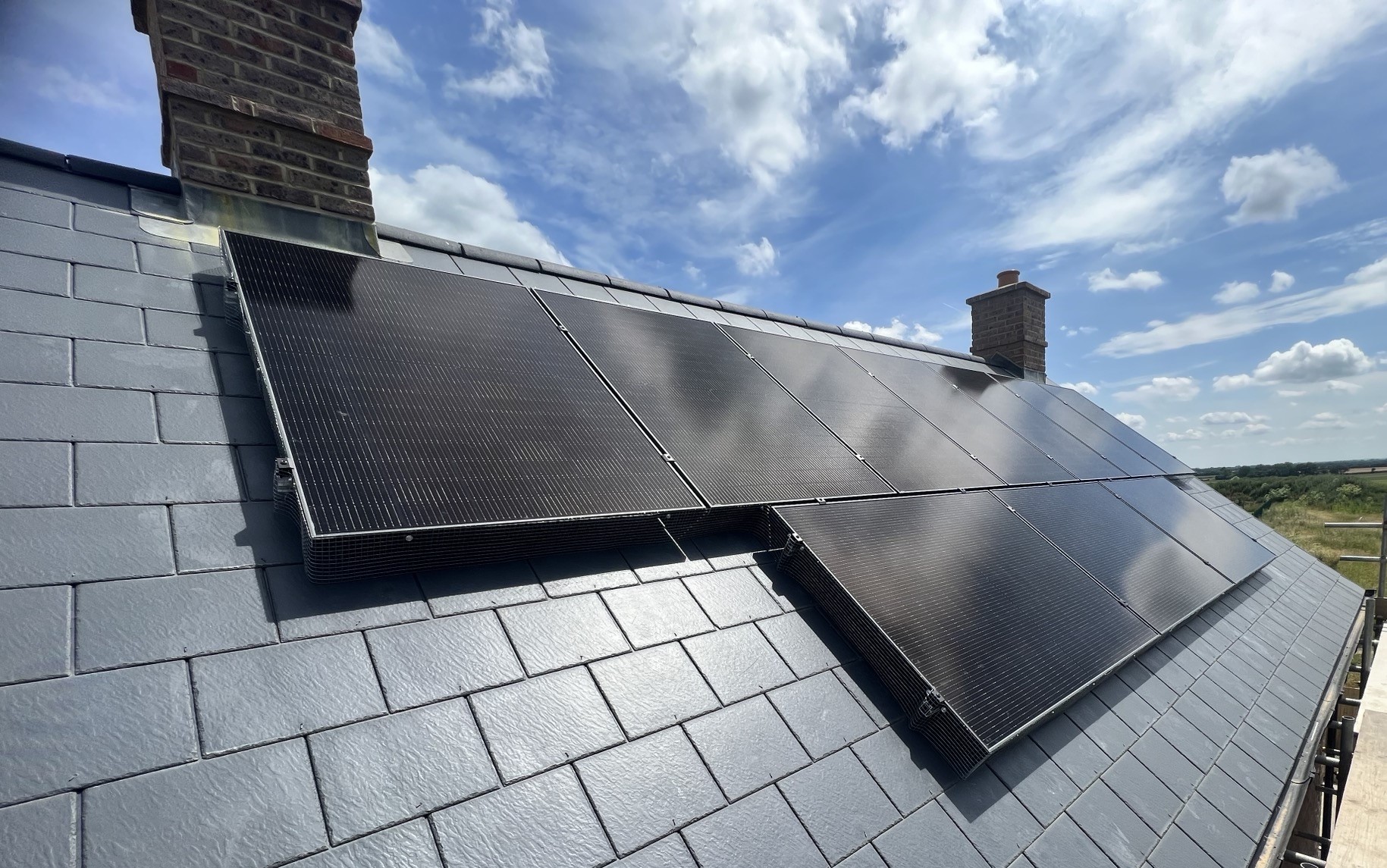
Modern solar panels commonly produce over 450W per panel, allowing homeowners to generate significantly more electricity from the same roof space. Combined with advances in inverter technology, battery storage and smart energy management, a professionally designed system can dramatically increase your energy independence.
However, higher performing equipment also requires a more sophisticated design.
Every installation should consider:
- Your household’s actual electricity usage
- Roof orientation, pitch and available space
- Shading throughout the year
- Correct string sizing and inverter selection
- Future battery storage or EV charging
- Export limits set by your local electricity network
Rather than designing systems around products, we design them around how you live and use energy.
Good Solar Design Starts Before Installation
Installing the equipment is only part of the process. The quality of a solar PV system is largely determined during the design stage.
Our design process includes:
- Detailed remote and on-site surveys
- MCS compliant performance calculations
- Manufacturer specific performance modelling
- Roof and shading assessments
- Battery storage modelling
- Export limitation calculations where required
This ensures every customer receives realistic generation forecasts – not overly optimistic sales figures. As EPVS Gold Standard members, our performance estimates are independently validated, giving customers additional confidence in the projections they receive.
Mounting Systems Matter More Than Ever
The mounting system is one of the most overlooked parts of a solar installation, yet it plays a critical role in both safety and long term reliability.
Modern installations may use:
- On-roof rail systems
- In-roof integrated solar systems
- Flat roof ballast mounting systems
- Ground mounted arrays
Each requires different engineering considerations. Proper weatherproofing, roof loading calculations, drainage, fixing points and structural integrity are all essential to ensure the installation performs safely for decades.
At SolarTherm UK, our installations are completed by experienced in-house engineers – not rotating subcontractor teams – helping us maintain consistently high standards from survey through to commissioning.
DNO Approval and Compliance Are Essential
Every solar installation connects to the UK’s electricity network. Depending on the size and specification of your system, approval may be required from your local Distribution Network Operator (DNO) before installation or export can take place.
This commonly applies to:
- Larger residential systems
- Battery storage installations
- Export limited systems
- Three phase properties
- Commercial installations
Our team manages the entire application process, including G98, G99 or G100 submissions where applicable, ensuring your installation is fully compliant from day one.
Solar Is Now Part of a Complete Home Energy System
For many homeowners, solar panels are only the beginning.
Increasingly, systems are integrated with:
- Solar battery storage
- EV chargers
- Heat pumps
- Immersion diverters
- Smart electricity tariffs
When these technologies are designed to work together, they can significantly increase self-consumption and reduce electricity imported from the grid. Poor integration, however, can reduce efficiency and limit potential savings.
That’s why we take a whole home approach, ensuring every component works together as one intelligent energy system.
Monitoring Helps You Get the Most From Your Investment
Modern monitoring platforms provide far more than simple generation figures.
Depending on your equipment, you may be able to monitor:
- Solar generation
- Household consumption
- Battery charging and discharging
- Grid import and export
- Individual panel performance (where supported)
- System alerts and fault notifications
This visibility helps homeowners understand exactly where their energy is going and allows any issues to be identified quickly. Every SolarTherm UK installation is fully commissioned before handover, ensuring customers can access their monitoring portal or app with confidence.
Accreditation Provides Long Term Protection
Choosing a solar installer isn’t simply about comparing prices. It is about selecting a company that demonstrates competence, accountability and long term suppoer.
SolarTherm UK is proud to be MCS certified, NICEIC approved installers, EPVS Gold Standard members and HIES registered. These accreditations help ensure our customers receive:
- Professionally designed systems
- Consumer protection
- Accurate performance estimates
- Industry compliant installations
- Ongoing technical support
Why Experience Still Makes the Difference
Modern solar installations combine electrical engineering, structural design, software configuration, network compliance and smart energy management. Getting every element right requires experience.
At SolarTherm UK, we don’t believe in one size fits all systems. Every installation is carefully designed to deliver reliable performance, maximise long term savings and provide complete peace of mind.
Whether you’re installing solar panels for the first time or upgrading an existing system, we’re here to help you make the right investment for your home in Essex, Kent, Suffolk, Hertfordshire and the wider South East and East Anglia.
Contact SolarTherm UK today for a free, no obligation quote and design, tailored to your property, usage and future energy needs. No hard sell, just honest, expert advice – and the time you need to make an informed decision.
Your home. Your energy. Your future.
Frequently Asked Questions
Look for installers who are MCS Certified, appropriately insured and members of recognised industry organisations such as HIES. Experience, customer reviews and a detailed survey process are also strong indicators of quality.
A well-designed solar PV system generates more electricity, maximises self-consumption and avoids issues such as inverter clipping, shading losses or export restrictions. Good design can make a significant difference to long-term savings.
A Distribution Network Operator (DNO) application is required for certain solar and battery installations before they can connect to the electricity network. Your installer should handle this process on your behalf.
Yes. Many existing solar systems can be upgraded with battery storage. Choosing equipment that allows future expansion is often a smart long-term investment.
Most modern solar systems include monitoring through a web portal or smartphone app, allowing you to track generation, electricity usage and battery performance in real time.
Not necessarily. Higher wattage panels can produce more power, but overall performance depends on the quality of the panel, roof orientation, shading, inverter selection and system design.
Most quality solar panels are expected to last 25–30 years or more, while inverters and batteries have different expected lifespans depending on the manufacturer and usage. Choosing quality equipment and an experienced installer helps maximise system longevity.