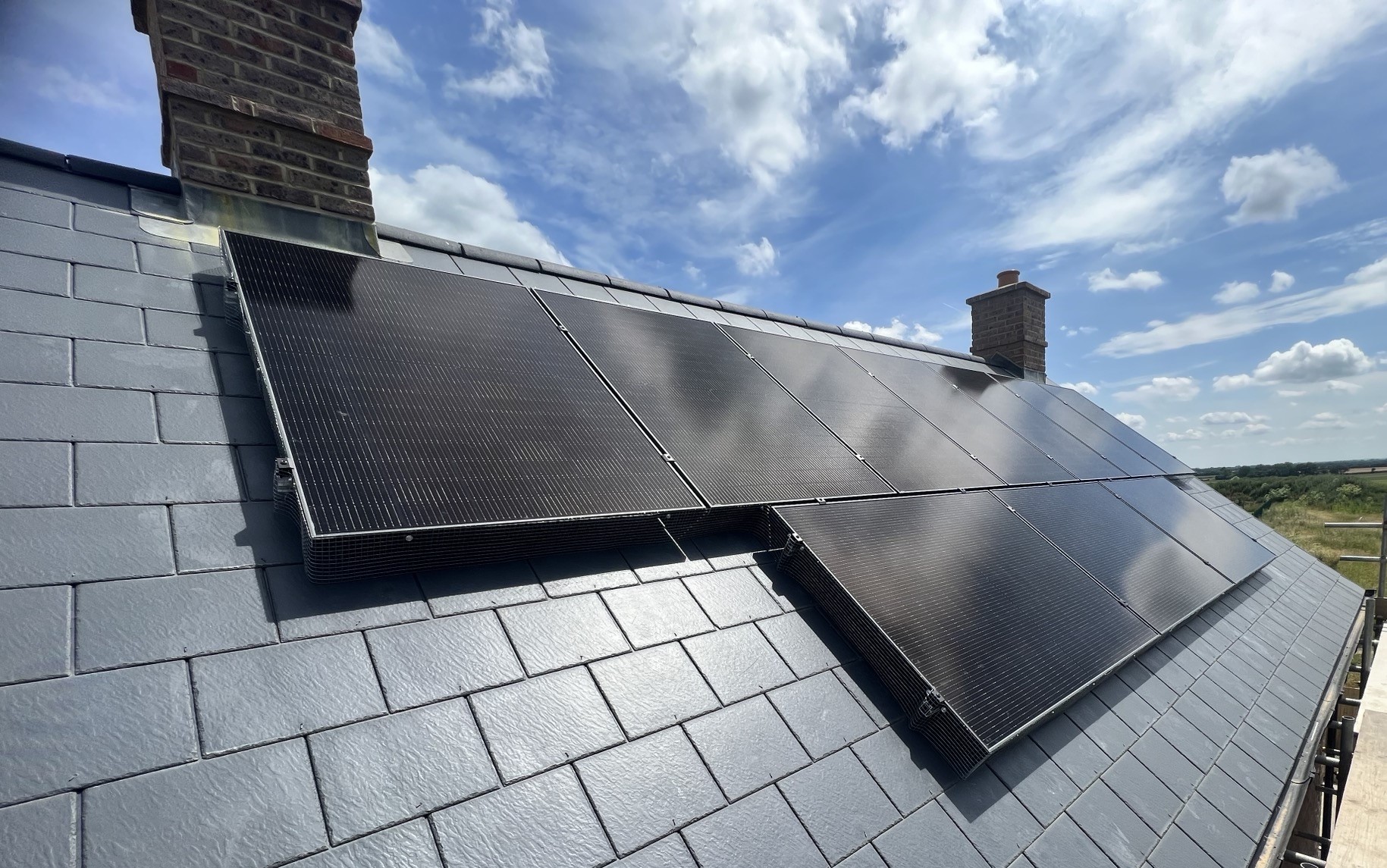
If you’re a homeowner in the South East considering solar panels, one of the first questions you’ll likely ask is:
“Do we actually get enough sunshine to make it worthwhile?”
It’s a fair question – and one we hear often at SolarTherm UK. The good news is that the South East is one of the best performing regions in the UK for solar energy generation.
In this guide, we’ll break down how much sunlight the South East receives, what that means for your home and how much electricity you can realistically expect your system to produce.
How Sunny Is the South East?
The South East of England – including counties like Essex, Kent, Suffolk and Hertfordshire – benefits from some of the highest solar irradiance levels in the UK.
- Average annual sunlight: 1,400-1,600 hours per year
- Solar irradiance: ~950-1,100 kWh per m² annually
- Among the top regions in the UK for solar generation
This means homes in the South East and East Anglia typically produce more electricity from solar panels than most other UK regions, including the North and Scotland.
What this means in practice is that for a typical residential solar panel system around 4kWp, annual generation will be 3,400-4,200 kWh with around 60-80% of typical household usage being covered. This can see savings of up to £1,200 per year on electricity bills for homeowners.
Does the UK Climate Affect Solar Performance?
A common misconception is that solar panels only work in hot, sunny climates. In reality:
- Solar panels generate electricity from daylight, not heat
- They still work on cloudy days
- Cooler temperatures can actually improve panel efficiency
The South East’s climate – moderate temperatures with consistent daylight – creates ideal conditions for solar PV systems.
Seasonal Solar Performance
Solar generation in the UK is seasonal, but still highly effective over the year.
Summer – May-August
- Peak production period
- Long daylight hours (up to 16+ hours per day)
- Can generate 50-60% of annual output
Spring & Autumn
- Strong, consistent generation
- Ideal balance of sunlight and cooler temperatures
Winter – November-January
- Lower output due to shorter days
- Still generates useful electricity during daylight hours
Key takeaway: solar is not just a summer solution – it works year round, with strong annual returns.
How Roof Orientation Impacts Sunlight
Even in a sunny region like the South East, your roof design affects performance. South-facing roofs have the highest output, however, east- and west-facing roofs can still generate a high proportion of your daily electricity needs, especially if you can split your panels over both orientations. At SolarTherm UK, we wouldn’t normally recommend installing solar panels on a north-facing roof as output is less than 50% of that generated by a south-facing roof.
At SolarTherm UK, we carry out detailed site assessments to ensure your system is optimised for maximum generation.
Why the South East Is Ideal for Solar
Homeowners in the South East benefit from:
- Higher than average sunshine levels
- Strong electricity cost savings
- Good return on investment
- Increasing property value with renewable upgrades
Combined with available incentives like the Smart Export Guarantee (SEG), solar has become a financially and environmentally smart choice.
Why Choose SolarTherm UK?
At SolarTherm UK, we specialise in residential solar installations across the South East. We focus on tailored system design based on your home and usage, using high quality components built for long term performance and reliability. Our quotes and estimates are verified by EPVS (Energy Performance Validation Scheme) for accuracy, ensuring our system forecasts are not overinflated.
At SolarTherm UK our inhouse installers are MCS certified, experienced and professional. Unlike National installers, our team are local and provide a personalised service, and in the event of a system fault, can react quickly to reduce system downtime.
Our goal is simple: help homeowners maximise savings while reducing their carbon footprint.
Contact SolarTherm UK today for a free, no obligation quote and design, tailored to your property, usage and future energy needs. No hard sell, just honest, expert advice – and the time you need to make an informed decision.
Your home. Your energy. Your future.
FAQs
Do solar panels work on cloudy days in the UK?
Yes. Solar panels generate electricity from daylight, not direct sunlight. They still produce energy even on overcast days.
Is the South East better for solar than other UK regions?
Yes. The South East receives some of the highest levels of solar irradiance in the UK, making it one of the best regions for solar panels.
How much electricity can I generate each year?
A typical home system in the South East can generate between 3,400 and 4,200 kWh annually, depending on roof size and orientation.
Will solar panels still work in winter?
Yes, although output is lower due to shorter days. Panels continue generating electricity whenever there is daylight.
How do I know if my home is suitable?
The best way is through a professional assessment. SolarTherm UK offers site surveys to evaluate your roof, orientation, and potential savings.