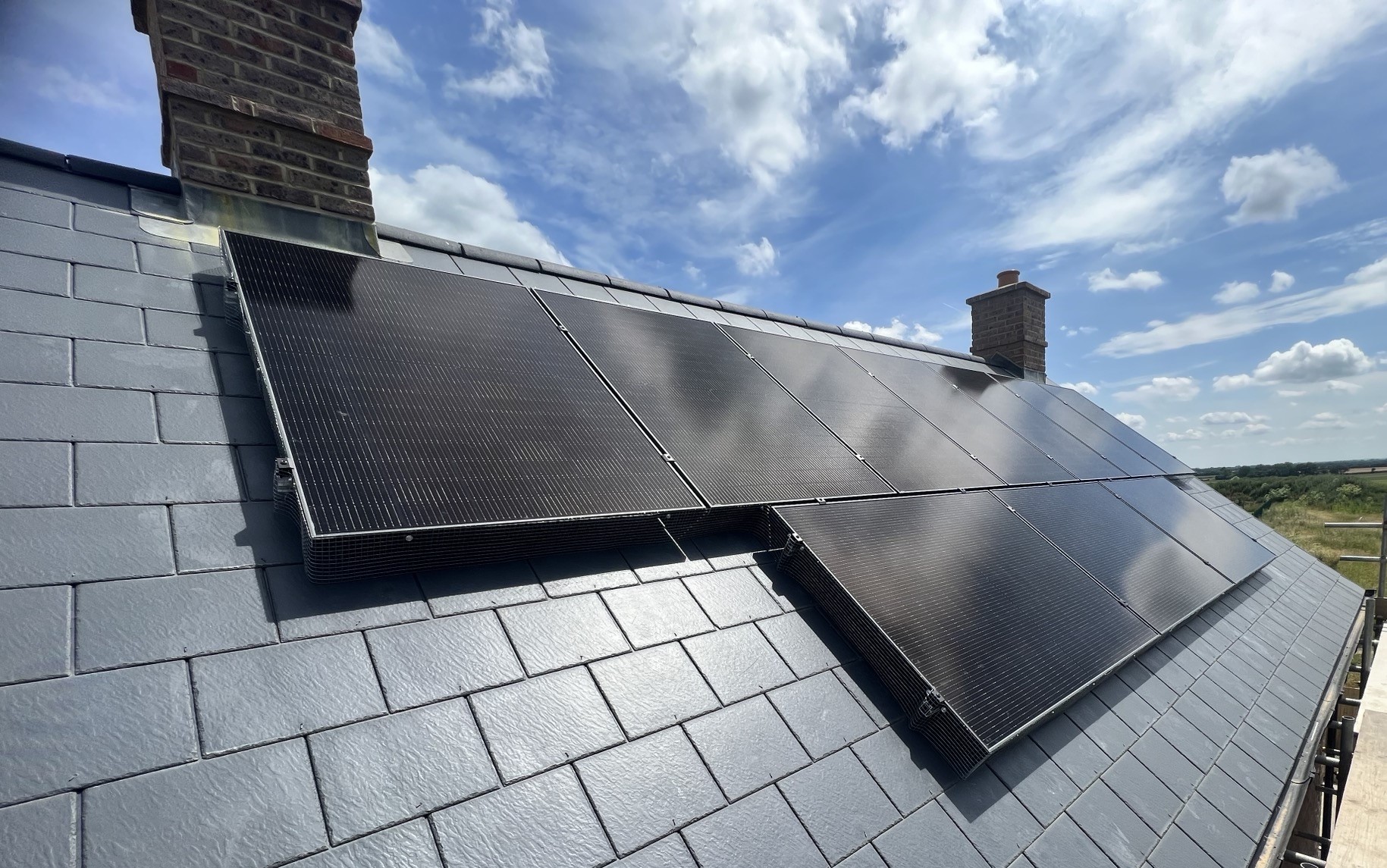
For many schools, businesses and public sector organisations, installing solar panels does not always happen in a single phase. Budget allocations, grant funding and capital expenditure cycles often mean renewable energy projects are delivered over several stages.
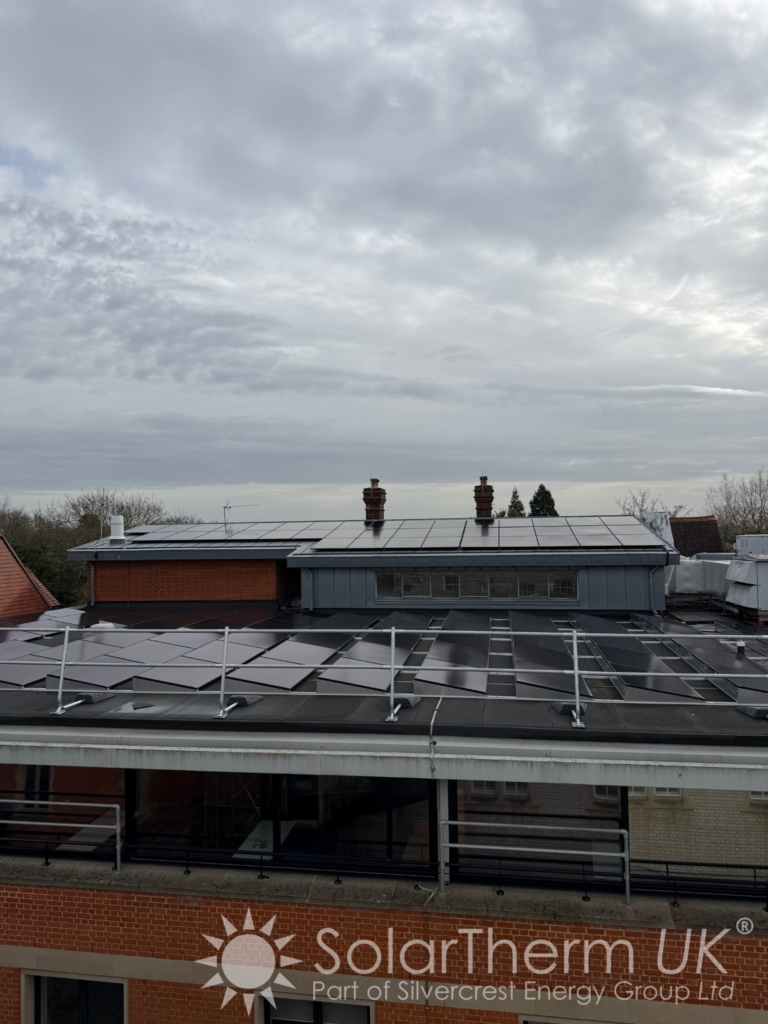
This was exactly the case for a recent project in Essex, where a carefully designed solar PV system installed in 2024 has now been successfully expanded in 2025 and 2026. As the system was originally designed with future solar capacity in mind, additional panels could be installed without major infrastructure changes.
By planning ahead, the school has been able to increase its solar generation while avoiding unnecessary costs and disruption.
Designing a Solar System Ready for Future Expansion
During the first phase of Bancroft’s School’s solar installation in 2024, the available budget had already been allocated across the wider energy project. Rather than installing a system sized only for the immediate funding available, SolarTherm UK designed the system so it could easily be expanded later.
This forward thinking approach included several key elements:
- Oversizing the SolarEdge inverter
- Installing additional DC strings for future panels
- Running communication cabling ready for extra modules
Although the additional solar panels were not installed at that time, the supporting infrastructure was already in place. This meant the system was effectively future proofed, allowing further solar capacity to be added later without redesigning the system.
Returning in 2026 to Increase Solar Capacity
Two years later, additional funding has become available for the school to continue its renewable energy rollout. As the solar PV system had already been designed with expansion in mind, the SolarTherm UK team was able to return to site for the third time and install an additional set of solar panels quickly and efficiently.
Importantly, there was no need to replace major components, including:
- The inverter
- Communication cabling
- Core electrical infrastructure
By completing this preparation during the original installation, the expansion process was straightforward, cost effective and delivered with minimal disruption to the school.
Phased solar installations like this are becoming increasingly common for schools, commercial buildings and public sector sites, where funding is often released over time.
SolarEdge Inverter Oversizing: A Little Known Advantage
One of the key benefits of designing systems using SolarEdge technology is the flexibility it offers when planning future expansion. Many people are unaware that a SolarEdge inverter can often be oversized by up to 200% and in some carefully designed three phase systems the oversizing ration can reach around 330%.
This design flexibility allows solar installers to:
- Install an inverter capable of supporting future capacity
- Add more solar panels later without replacing core equipment
- Expand generation when funding or energy demand increases
By installing scalable infrastructure from the outset, organisations can avoid the need for costly upgrades when expanding their solar PV system in the future.
Why Phased Solar Installations Are Growing in Popularity
Designing solar systems that can grow over time provides several important benefits for schools and businesses.
Greater Budget Flexibility
Solar installations can be completed in stages as funding becomes available, without needing to redesign the system.
Lower Future Installation Costs
Key infrastructure such as inverters, monitoring equipment and cabling can already be installed during the initial phase.
Minimal Operational Disruption
When additional panels are added later, installation work is often faster and requires fewer electrical modifications.
Long Term Energy Planning
Organisations can increase their renewable energy generation as electricity demand grows or sustainability targets evolve.
Tax Benefits for Businesses Installing Solar Panels
For businesses considering solar energy, there are also important tax incentives that can significantly reduce the cost of installation. Solar PV systems can often be claimed through capital allowances, allowing companies to offset installation costs against taxable profits.
In many cases businesses can use the Annual Investment Allowance (AIA) to deduct 100% of the cost of the solar PV system in the first year. Depending on the project and eligibility criteria, some installations may also qualify for a 50% First Year Allowance (FYA). These incentives can make solar investment even more attractive for commercial organisations looking to reduce long term energy costs.
Designing Solar Systems That Grow with Your Organisation
If your building has available roof space but budget limitations prevent installing a full solar system immediately, a future ready design strategy can make expansion simple later.
By installing scalable infrastructure at the beginning of the project, additional solar panels can be integrated easily when funding becomes available.
This approach allows organisations to plan long term energy strategies, increase renewable generation over time and maximise the value of their solar investment.
At SolarTherm UK, we specialise in designing solar PV systems that not only meet today’s requirements but are also ready for tomorrow’s expansion.
Contact SolarTherm UK today for a free, no obligation quote and design, tailored to your property, energy usage profile and future energy goals. No hard sell, just honest, expert advice.
For more information on how SolarTherm UK can help your school with a solar PV system, visit our dedicated Commercial website Silvercrest Energy Group.