Installing solar panels on a roof is a long-term investment, so the condition, construction and suitability of your roof should be considered before any panels are fitted. While solar PV installation involves specialist electrical equipment, the work also requires a good understanding of roofing materials, fixings and weatherproofing.
From tiled and slate roofs to flat roofs and older properties, different roof types require different installation methods. Poorly planned or incorrectly carried out work can potentially cause problems such as damaged tiles, water ingress or issues with the roof structure.
That is why choosing a solar installer with genuine roofing experience matters. A professional installation should not only maximise the performance of your solar panels but also protect the integrity of your roof for years to come. In this guide, we explain what homeowners should consider when installing solar panels on a roof and why roofing expertise is an important part of a quality solar installation.
At SolarTherm UK, we understand that solar is not just an electrical installation – it’s a structural integration with your roof. That’s why our close partnership with Silvercrest Energy Group ensures every installation is completed with both technical precision and roofing integrity in mind.
What Type of Roof Can Have Solar Panels?
Solar panels can be installed on most common roof types, but the installation method will depend on the construction, materials, pitch and condition of the roof. A suitable roof should be structurally sound, weatherproof and capable of supporting the solar panel system and its mounting equipment.
Tiled roofs
Tiled roofs are one of the most common roof types for residential solar panel installations. Solar panels can generally be fitted to concrete, clay and other suitable tiles using specialist roof hooks and mounting rails. Care needs to be taken when working around the tiles to avoid cracking or damaging them.
Slate roofs
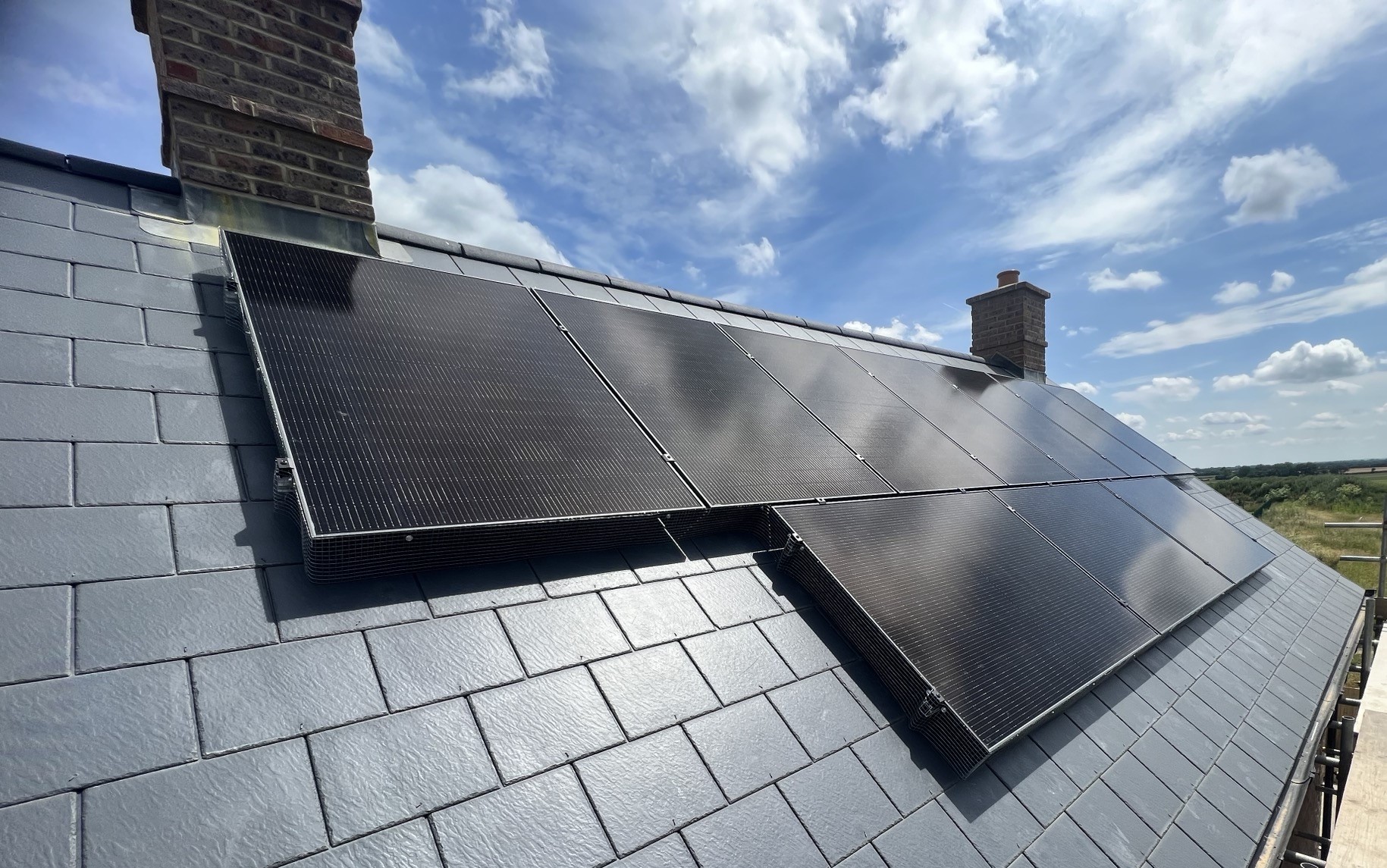
Solar panels can also be installed on slate roofs, although they require particular care and specialist fixing methods. Slate can be more fragile than some other roofing materials, so an installer needs to understand how to work with the roof without causing unnecessary damage.
Flat roofs
Flat roofs can be suitable for solar panels too. Rather than fixing panels directly through the roof covering in every case, installers may use appropriate mounting systems designed for flat roofs. The system needs to take account of factors such as panel angle, wind loading, roof construction and waterproofing.
Older roofs
The age and condition of a roof are important considerations before installing solar panels. If a roof is approaching the end of its useful life, it may make more sense to carry out necessary repairs or replacement before installing a solar PV system. Removing and reinstalling panels later can add unnecessary cost and disruption.
New or recently renovated roofs
A new or recently renovated roof can be an excellent opportunity to consider solar panels, particularly if the roof structure and covering have been designed with the installation in mind. Planning the position of the panels and mounting system in advance can help ensure the installation is both secure and aesthetically appropriate.
The condition of your roof matters
The most important question is not simply whether your roof type can accommodate solar panels, but whether the roof is suitable for installation. Before fitting a system, the installer should consider the condition of the roof covering, its structure, existing damage, access requirements and the appropriate method of fixing the panels.
A good solar installation should work with your roof rather than compromise it. This is why choosing an installer with experience of both solar PV and roofing is so important.
Why Roofing Experience Matters When Installing Solar Panels
Solar panels are designed to sit on your roof for decades, so the condition, structure and construction of your roof are important considerations before installation.
An installer without sufficient roofing knowledge may focus primarily on the electrical aspects of the system, without fully considering the condition and construction of the roof – including leaks, damaged tiles and reduced roof lifespan. Roofing experience ensures your solar PV system works with your property, not against it.
The Risks of Choosing a Non-Roofing Specialist
Choosing an installer without roofing expertise can lead to costly issues.
Water Ingress & Leaks – improper flashing or poorly sealed mounting points can allow water to penetrate your roof.
Broken or Displaced Tiles – incorrect handling of tiles – especially on older or clay roofs, which are common in the South East – can cause long term damage.
Structural Weak Points – without understanding rafters and load distribution, fixings may compromise roof strength.
Voided Roof Warranties – some roofing warranties become invalid if penetrations are not completed by qualified professionals.
Why Roofing Knowledge Improves Solar Performance
Roofing expertise isn’t just about avoiding problems – it actively improves solar outcomes:
- Optimised panel placement based on roof structure
- Correct mounting systems for tile, slate or flat roofs
- Improved ventilation, reducing overheating and increasing efficiency
- Longer system lifespan, protecting your return on investment
In short, better roofing = better solar performance.
The SolarTherm UK Approach
At SolarTherm UK, we combine renewable energy expertise with professional roofing knowledge through our collaboration with Silvercrest Energy Group. This means:
Fully Integrated Installations – your roof and solar system are treated as one unified project – not two separate trades.
Roofing Grade Workmanship – every penetration, bracket and fixing is installed using industry approved roofing methods.
Safe and Efficient Access – through professional scaffolding solutions, provided by our sister company Silvercrest Scaffolding, installations are completed safely and with minimal disruption.
Pre-Installation Roof Assessments – we evaluate your roof condition before installation, identifying any repairs needed upfront.
Suitable for Homes and Commercial Properties
Whether you own a home, warehouse, office or hospitality venue in the South East, roofing expertise is essential.
Residential Benefits
- Protects your home from leaks
- Maintains property value
- Ensures a clean, visually appealing finish
Commercial Benefits
- Reduces risk of operational disruption
- Protects large scale roofing assets
- Ensures compliance with building and safety standards
Why This Matters in the South East
Properties across Essex, Kent, Suffolk, Hertfordshire and the wider South East and East Anglia often feature pitched tile roofs, older housing stock and coastal weather exposure. These factors make correct installation even more critical. Roofing expertise ensures your solar system is built to handle local conditions – not just generic installation standards.
Why You Can Trust SolarTherm UK
We install solar PV and battery storage systems for residential and commercial properties across the South East. With over 15 years experience in the solar industry, and even longer in the roofing and scaffolding industries through Silvercrest Energy Group, SolarTherm UK has developed a wide range of industry knowledge, developing our own systems and working to industry best practice standards.
At SolarTherm UK we provide transparent, clear and detailed assessments and recommendations, that are independently verified by EPVS (Energy Performance Validation Scheme) for accuracy, to ensure estimates aren’t overinflated.
At SolarTherm UK we pride ourselves on providing high quality systems that are built for long term reliability.
Final Thoughts
Solar panels are a long term investment – and your roof is the foundation that supports it. Choosing an installer with roofing expertise is not just a bonus; it’s essential. At SolarTherm UK, we ensure your system is installed safely, performs efficiently and protects your property for decades to come.
Contact SolarTherm UK today for a free, no obligation quote and design, tailored to your property, usage and future energy needs. No hard sell, just honest, expert advice – and the time you need to make an informed decision.
Your home. Your energy. Your future.
Frequently Asked Questions
Solar panels can be installed on most common roof types, including tiled, slate and flat roofs. However, the roof must be structurally sound and suitable for the proposed mounting system. An installer should assess the roof’s condition, construction, pitch and covering before installation.
Yes. Tiled roofs are one of the most common roof types for solar panel installations. Specialist roof hooks and mounting rails are used to secure the panels while maintaining the integrity of the roof. Care should be taken when working with tiles to minimise the risk of cracking or damage.
Yes, solar panels can be installed on slate roofs, but the installation requires additional care because slate can be more fragile than some other roofing materials. An experienced installer will use appropriate fixing methods and take care when working around the existing slates.
Yes. Flat roofs can be suitable for solar panels, although a different mounting system may be required. The installation needs to consider factors such as the roof construction, waterproofing, wind loading and the angle at which the panels should be mounted.
There is no specific maximum age for a roof to have solar panels installed. What matters is the roof’s condition and expected remaining lifespan. If a roof is already showing signs of deterioration or is likely to need replacing soon, it may be more cost-effective to address the roofing work before installing solar panels.
Solar panels should not damage roof tiles when they are installed correctly using the appropriate mounting system. However, poor installation techniques or unsuitable fixings can cause damage. Using an installer with experience working with roofing materials can help reduce the risk.
If your roof requires significant repairs, it is generally sensible to address these before installing solar panels. Solar panels can remain on a roof for decades, and having to remove and reinstall them to carry out major roofing work later can add unnecessary cost and disruption.
Roofing experience is an important consideration when choosing a solar installer because installing panels involves working directly with the roof covering, fixings and weatherproofing. An experienced installer should understand how different roof types need to be handled and how to install the mounting system without compromising the roof.
Solar panels are designed to provide electricity for decades, with most modern panels expected to perform for 25 years or more. However, the condition of the roof underneath them is also important. If a roof is likely to require major repairs or replacement, it is usually better to address this before installing solar panels.