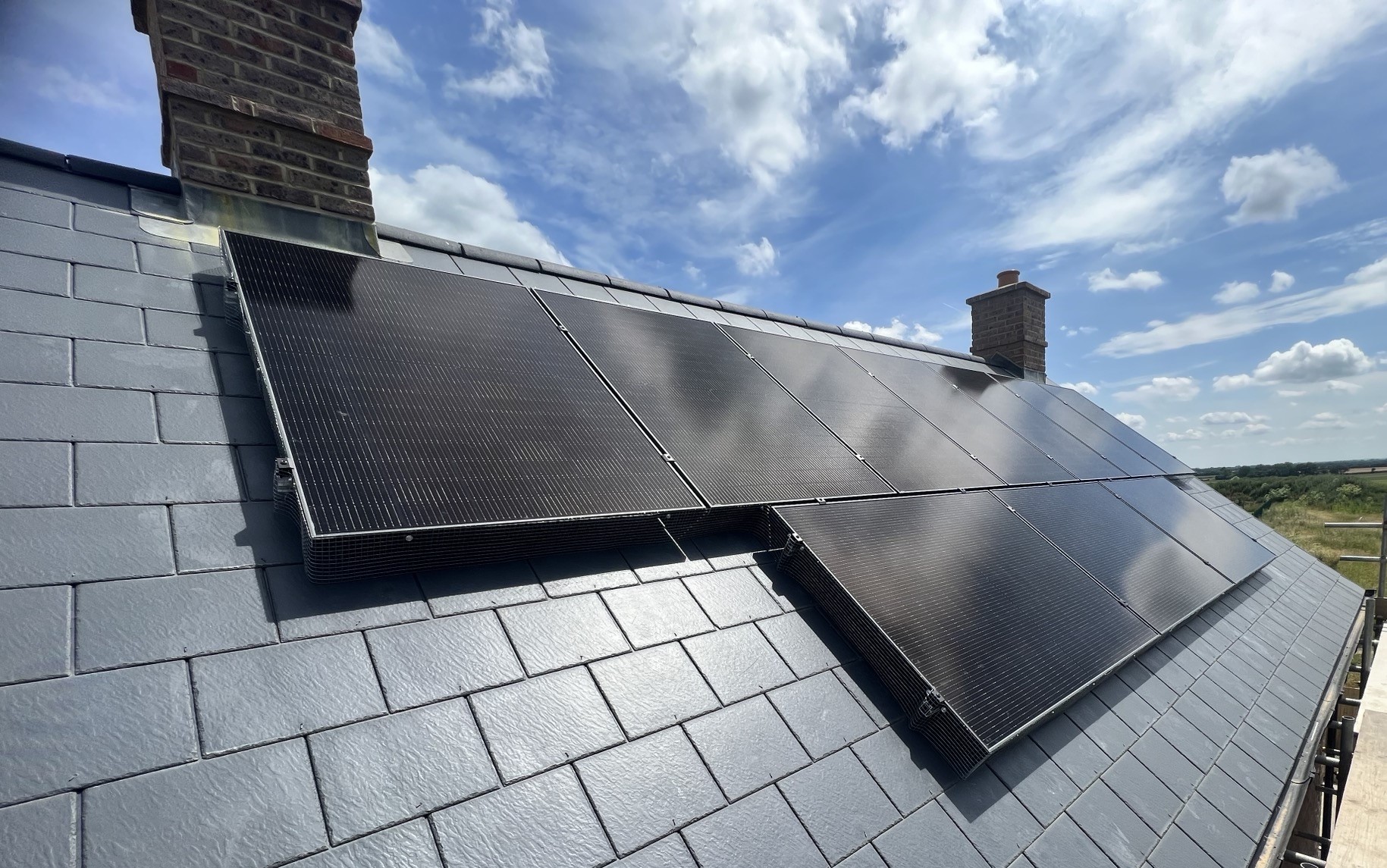
When a Cheap Solar Installation Becomes and Expensive Problem
Buying solar panels is a long term investment. A well designed, professionally installed solar PV system can continue generating clean electricity for 30 years or more, helping homeowners to reduce energy bills and increase their energy independence.
Unfortunately, not every installation is carried out to the same standard.
At SolarTherm UK, we regularly receive calls from homeowners whose systems have stopped working, are producing far less electricity than expected or have developed faults shortly after installation. In many cases, these issues stem from poor workmanship, low quality components or installers who have disappeared once the job was complete.
It’s a reminder of the old saying:
Buy cheap, pay twice.
A Real Example from One Business Owner
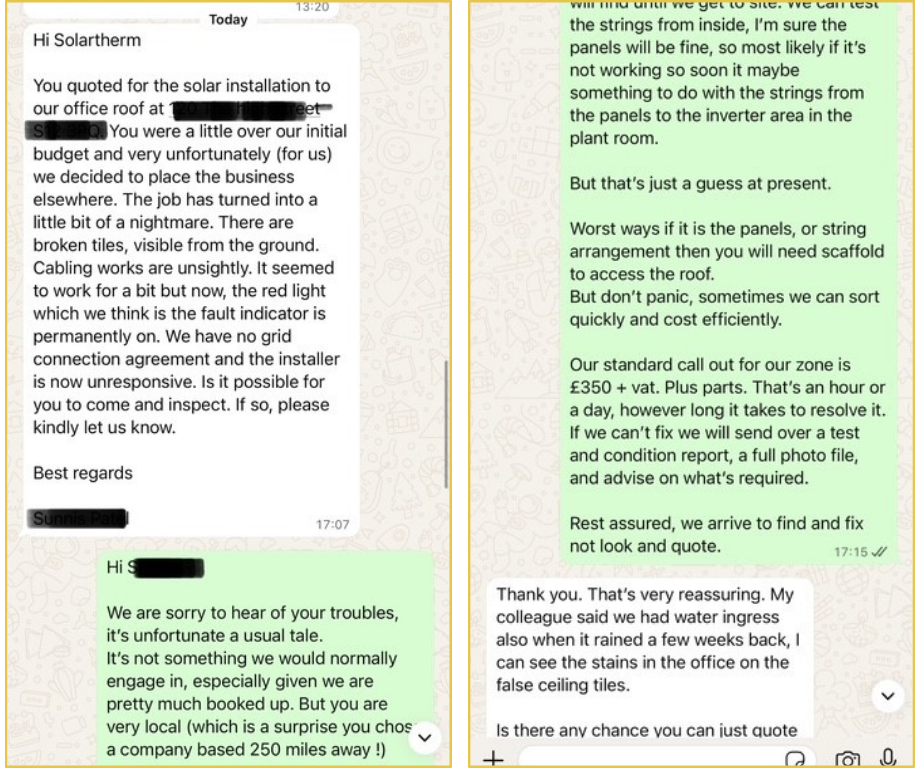
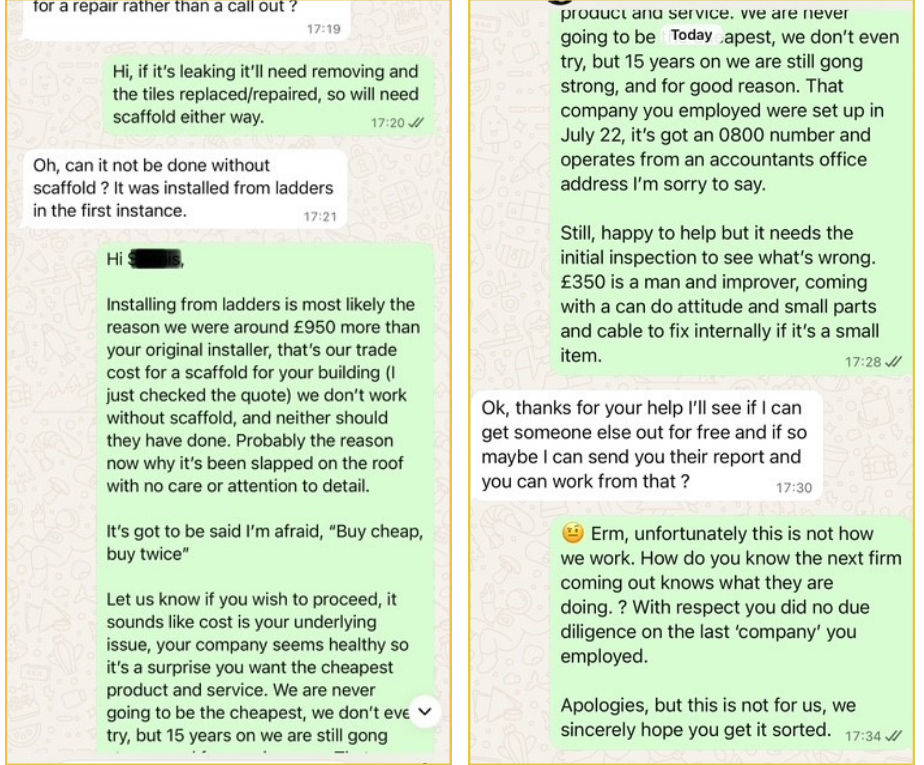
Unfortunately, situations like this are becoming increasingly common. Many homeowners and businesses are attracted by unusually low quotes, only to discover later that corners have been cut during installation. Once problems arise, they often struggle to contact the original installer or find themselves paying another company to put things right.
Why Cheap Solar Quotes Can End Up Costing More
The cheapest quote isn’t always the best value. A lower price can sometimes mean compromises in areas such as:
- Lower quality solar panels with reduced efficiency
- Budget inverters with shorter lifespans
- Inferior roof mounting systems
- Poor cable management
- Incorrect system design
- Inexperienced installation teams
- Limited or non-existent aftercare
While not every affordable quote is poor quality, significantly cheaper prices should always be investigated carefully.
The Hidden Cost of Poor Installation
Even premium solar panels can underperform if they are installed incorrectly. Common issues include:
- Poor panel positioning
- Incorrect strong design
- Loose roof fixings
- Water ingress
- Damaged roof tiles
- Faulty electrical connections
- Inverter configuration errors
These problems can reduce energy generation, shorten equipment lifespan and, in some cases, create safety concerns.
Repairing Other Companies’ Installations
Around 30% of the work carried out by SolarTherm UK involves repairing or correcting installations completed by other companies. Some systems fail within months of being installed.
Our experienced, in-house engineers carry out detailed inspections using scaffolding where required, allowing us to safely assess:
- Roof mounting systems
- Solar panels
- DC cabling
- Inverters
- Battery storage (where fitted)
- Overall system performance
Once we’ve identified the issue, we provide honest recommendations to get your system generating efficiently again.
Choosing a Solar Installer Isn’t Just About Price
When comparing quotes, ask:
- Are they MCS certified?
- Do they have NICEIC approved electricians?
- How long have they been installing solar?
- What warranties are included?
- Who provides aftercare?
- What equipment are they installing?
- Do they design systems specifically for your property?
A quality installer should be happy to answer every one of these questions.
Why Homeowners Across the South East Choose SolarTherm UK
Since 2010, SolarTherm UK has installed thousands of solar PV systems across Essex, Kent, Suffolk, Hertfordshire and the wider South East and East Anglia. We combine high quality equipment with experienced in-house installation teams to deliver systems designed for long term performance.
Our credentials include:
- MCS certified
- NICEIC approved
- EPVS Gold Standard membership
- HIES insurance backed guarantees
- Thousands of successful installations across the South East and East Anglia
Our focus isn’t on offering the cheapest quote. It’s on providing the best long term value.
Investing Once Is Better Than Paying Twice
Solar panels should provide decades of reliable performance. Choosing an experienced installer with quality products and ongoing aftercare may cost slightly more initially, but it can save thousands of pounds in future repairs, lost generation and replacement costs.
When it comes to solar, value isn’t measured by the cheapest quote – it’s measured by the performance of your system over the next 25 to 30 years.
If you’re considering solar panels, or need help with an existing installation, SolarTherm UK can help. Contact us today for a free, no obligation quote and design, tailored to your property, usage and future energy needs. No hard sell, just honest, expert advice – and the time you need to make an informed decision.
Your home. Your energy. Your future.
Frequently Asked Questions
Yes. Many installers, including SolarTherm UK, can diagnose and repair systems installed by other companies, although some faults may require replacement parts depending on the manufacturer.
Lower prices can reflect differences in equipment quality, installation standards, warranty cover or aftercare. Always compare what’s included rather than looking at price alone.
Quality solar panels are typically designed to last 25–30 years or more. Inverters generally have shorter lifespans and may need replacing after 10–15 years, depending on the model.
Look for MCS certification, NICEIC accreditation, positive customer reviews, transparent quotations and evidence of previous installations.
In many cases, yes. The solution depends on the nature of the fault, but experienced installers can often rectify wiring issues, replace faulty components and improve system performance.