As pressure grows on UK farms to reduce costs, diversify income and improve sustainability, a growing number of agricultural businesses are turning to agrivoltaics – the practice of combining farming and solar energy generation on the same land.
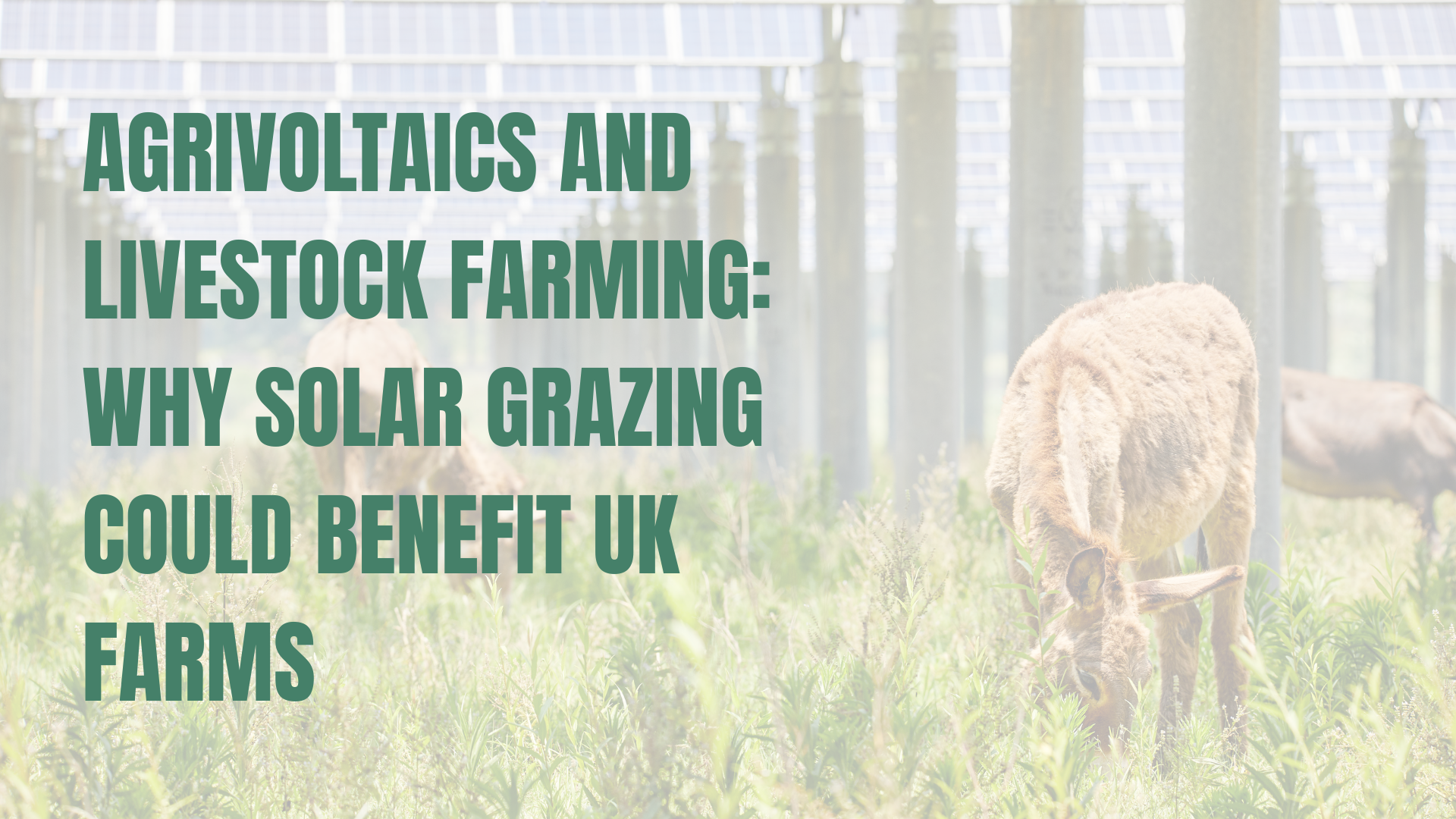
A recent project in Tennessee has attracted international attention after cattle successfully grazed beneath elevated solar panels on a working solar farm. The development highlights how solar technology and livestock farming can operate side by side without removing land from agricultural use.
For farmers across the South East and East Anglia, where rising energy costs, volatile commodity prices and climate pressures continue to impact profitability, dual use solar systems could offer a practical long term opportunity.
What Is Agrivoltaics?
Agrivoltaics – sometimes called dual use solar farming – combines solar PV systems with active agricultural use. This can include:
- Sheep grazing beneath solar arrays
- Cattle grazing on solar pasture
- Crop production between panel rows
- Wildflower and biodiversity schemes around solar sites
The approach allows farms to continue producing food while generating renewable electricity from the same land area. Research suggests agrivoltaics systems can improve land use efficiency while supporting energy generation and farm resilience.
Quick Summary: Why Farmers Are Combining Solar and Grazing
Key Benefits of Agrivoltaic Solar Farming
- Generates an additional long term farm income stream
- Allows continued livestock grazing on solar land
- Reduces exposure to volatile electricity prices
- Provides shade for livestock during hotter summers
- Helps improve soil moisture retention in dry periods
- Supports biodiversity and regenerative farming goals
- Helps farms meet sustainability targets and future regulations
Why Solar Grazing Is Growing in Popularity
Traditionally, solar farms were viewed as taking land out of agricultural production. However, modern solar designs increasingly support continued farming activity.
In the Tennessee project, cattle grazed underneath specially designed solar arrays while the site simultaneously generated electricity for the local grid. Researchers found the shaded pasture retained more moisture and reduced heat stress for livestock.
These findings are particularly relevant for UK agriculture. Farmers in Essex, Suffolk, Kent and the wider South East and East Anglia are already experiencing drier summers, increased heat stress on livestock, higher irrigation pressures and rising operational costs.
Well designed solar grazing systems may help mitigate some of these challenges while creating a more financially resilient farming operation.
Why Agivoltaics Could Work Well in the South East and East Anglia
The South East and East Anglia are among the strongest solar generation regions in the UK due to:
- Higher than average annual sunshine levels
- Large areas of agricultural land
- Strong grid infrastructure in many rural locations
- Increasing demand for low carbon electricity
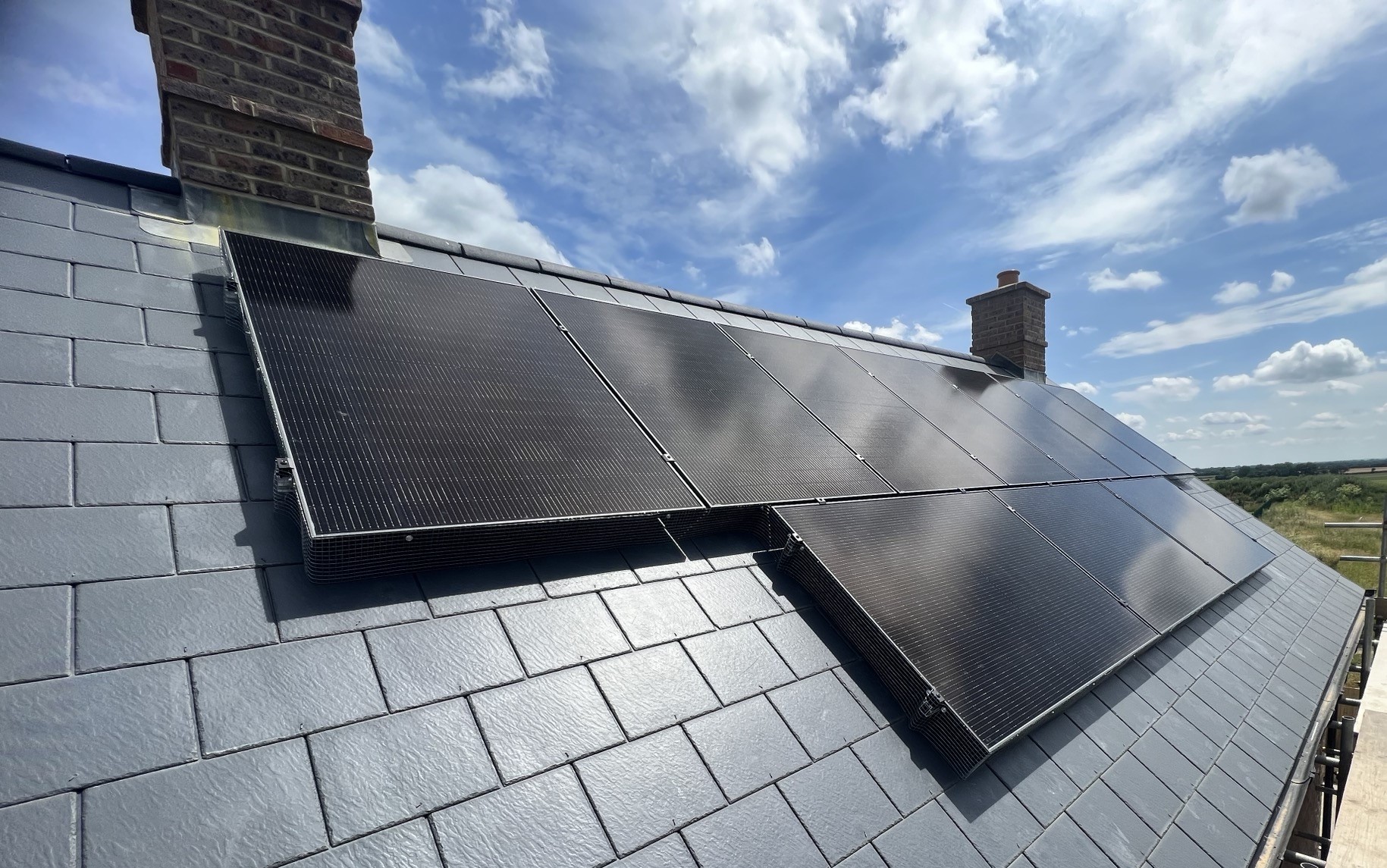
These regions also contain significant livestock and mixed use farms that may be suitable for dual use solar projects. For many farms, rooftop and ground mounted solar can reduce electricity bills linked to grain drying, refrigeration, dairy operations, workshop and machinery use and machinery charging. Where land availability allows grazing compatible solar systems can create an additional income source without fully removing agricultural activity.
The Financial Case for Agricultural Solar
Farm businesses across the UK continue to face rising energy costs and pressure on margins. Solar PV can help stabilise operational expenditure by reducing reliance on imported electricity.
Potential financial advantages include:
- Lower electricity costs
- Protection against future energy price rises
- Export income from surplus electricity
- Long term asset value improvement
- Diversified farm revenue
Depending on system size and energy usage, many agricultural solar installations can achieve strong long term returns while supporting net zero objectives.
Can Livestock Safely Graze Around Solar Panels?
Yes – when systems are properly designed. Sheep grazing beneath solar panels is already widely established across parts of the UK and internationally. Cattle grazing is more technically challenging because of animal size and equipment protection requirements, but newer system designs are improving viability.
Successful agrivoltaics livestock systems typically include:
- Reinforced mounting systems
- Appropriate panel clearance heights
- Rotational grazing plans
- Secure cable management
- Dedicated livestock safe fencing
- Careful site design and maintenance planning
At SolarTherm UK, all agricultural solar projects are assessed individually to ensure systems are suitable for operational farm requirements and livestock management.
Environmental Benefits of Dual Use Solar Farms
Beyond energy savings, agrivoltaic systems can contribute to wider environmental goals. Studies suggest solar grazing sites may help improve biodiversity, reduce soil erosion, retain ground moisture, lower carbon emissions and improve land resilience during drought conditions. Shaded grazing areas may also improve livestock welfare during periods of extreme heat.
As sustainability standars tighten across food supply chains, renewable energy adoption is becoming increasingly important for agricultural businesses supplying supermarkets, processors and commercial buyers.
Is Agrivoltaics the Future of UK Farming?
While agrivoltaics is still developing in the UK, momentum is growing rapidly.
With pressure on land use increasing, dual purpose solar systems may become an important part of modern farm diversification strategies – especially in regions such as East Anglia and the South East where solar conditions are favourable.
For many farms, the question is no longer whether solar has a role in agriculture, but how to integrate it effectively without compromising farming operations.
Why Farmers Choose SolarTherm UK
SolarTherm UK works with agricultural and commercial clients across the South East to deliver tailored renewable energy solutions designed around operational performance, long term reliability and return on investment.
Our team understands the practical challenges faced by modern farms, including:
- Seasonal energy demand
- Grid constraints
- Land use considerations
- Agricultural operations
- Long term system performance
We provide honest technical guidance, site specific recommendations and high quality solar installations designed for long term agricultural use.
If you’re ready to see what solar can do for your farm, contact SolarTherm UK today for a free, no obligation feasibility assessment. No hard sell, just honest, expert advice.
Your farm. Your energy. Your future.
FAQs
Can sheep graze under solar panels?
Yes. Sheep grazing is one of the most established forms of agrivoltaics and is commonly used to manage vegetation naturally on solar sites.
Can cattle graze around solar farms?
Yes, although systems require specialist design considerations due to cattle size and movement. New agrivoltaic projects are demonstrating successful cattle integration.
Does solar farming reduce agricultural productivity?
Not necessarily. Many agrivoltaic systems allow continued farming activity while generating renewable electricity from the same land.
Is solar suitable for farms in East Anglia?
Yes. East Anglia benefits from strong solar irradiation levels, making it one of the UK’s strongest regions for agricultural solar generation.
What are the benefits of farm solar panels?
Benefits can include lower electricity costs, additional revenue streams, improved sustainability credentials and reduced exposure to energy price volatility.