How Inverters and Solar Apps Help You Track Generation
If you’ve invested in solar panels, monitoring your solar performance is essential to know what is happening with your system. Solar panel monitoring allows you to track how much electricity your system is generating, how much you’re using and whether your system is operating efficiently.
For South East homeowners, solar monitoring is not just a “nice to have” feature – it is critical for protecting your investment, maximising savings and ensuring long term system performance.
In this guide, we explain why solar monitoring matters, how solar inverters track generation and how solar monitoring apps work. We’ll also help you eith what to do if your monitoring shows your system underperforming and how to use your monitoring app to maximise your return on investment.
What Is Solar Panel Monitoring?
Solar panel monitoring is the process of tracking your system’s electricity generation and performance in real time. Modern systems use smart solar inverters, online monitoring portals and mobile apps. Battery monitoring platforms and your generation meter can also be used to see the performance of your system.
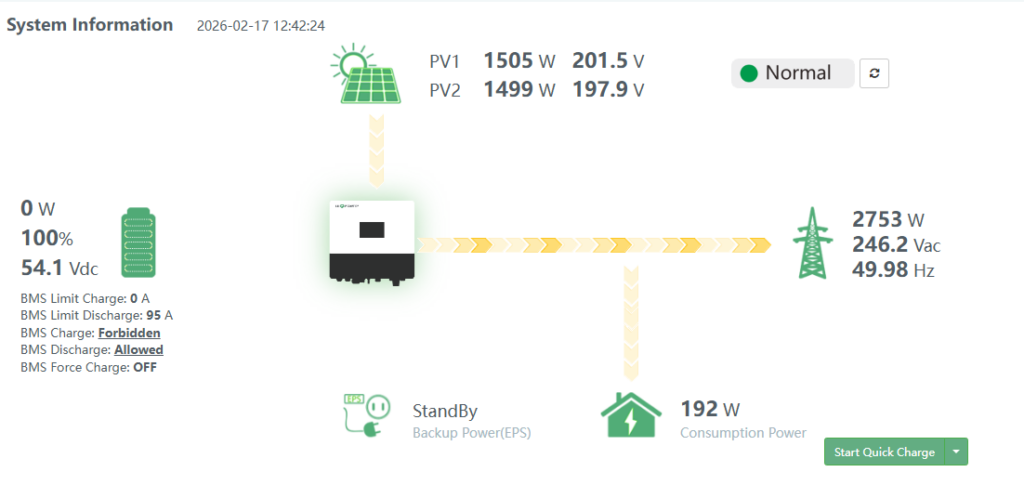
Your inverter records how much DC electricity your panels produce and converts it into usable AC electricity. That data is then transmitted to an app or online portal so you can monitor performance daily, monthly and annually.
Why Is Monitoring Solar Performance Important?
Protect Your Investment
A domestic solar installation in the UK typically costs thousands of pounds. Without monitoring, you may not notice a faulty panel, a disconnected string, an inverter error or shading issues.
Many homeowners, who don’t check their monitoring app, only discover issues months later – often when savings are lower than expected. Real time solar monitoring ensures problems are identified quickly, protecting system output and return on investment.
Maximise Energy Savings
Monitoring helps you track how much solar you’re producing, allowing you to adjust your usage to when your solar PV system is generating the most. This reduces grid dependency and helps you increase self-consumption. By reviewing your solar app, you can schedule high load appliances (washing machine, dishwasher, EV charging) during peak generation periods. This optimisation can significantly reduce electricity bills.
Identify Performance Drops Early
Solar panels degrade very slowly – typically around 0.3-0.5% per year. Sudden drops in generation may indicate inverter faults or cabling issues, panel damage, excessive shading or a buildup of dirt and debris. Without monitoring, these issues can go unnoticed, usually until your electricity bill arrives showing higher grid imports than normal. Solar performance tracking provides immediate visibility into underperformance.
Verify System Output Against Expectations
Before installation, you should receive estimated annual generation figures based on roof orientation, pitch angle, system size (kWp) and UK irradiance data. Monitoring allows you to compare actual output with projected performance. If your system consistently underperforms, further investigation may be required.
How Do Solar Inverters Track Generation?
Your solar inverter is the central component of the monitoring system. Popular inverter manufacturers have built in monitoring as standard. These measure DC input from the panels, convert DC to AC electricity, record total generation and then transmit the performance data via Wi-Fi or Ethernet.
What Do Solar Monitoring Apps Show?
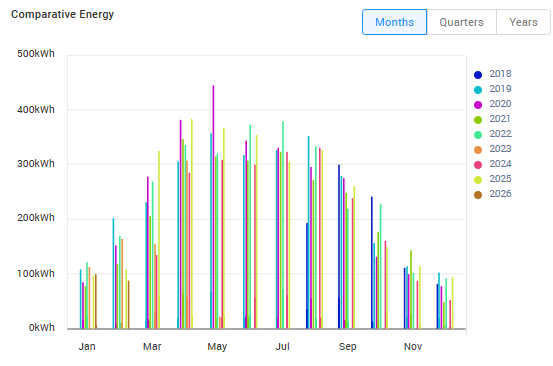
Most solar apps provide live generation (kW), daily output and monthly/annual generation totals. Historical performance graphs can be used to compare live generation to previous levels. Most monitoring apps also show the environmental impact (CO₂ savings), battery charge level and the amount of electricity exported to the grid.
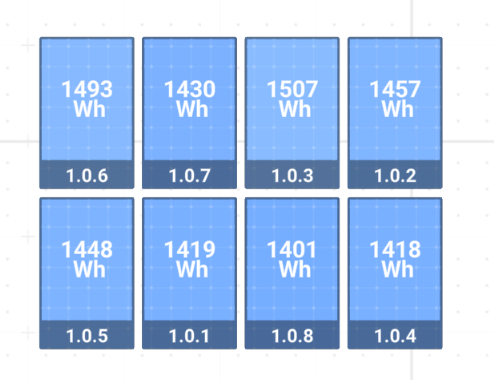
Some systems provide panel level monitoring – like the SolarEdge power optimised system – allowing you to identify performance issues with individual panels.
What If My Solar Output Is Low?
If your monitoring app shows unexpected reduced performance:
- Check your inverter for error codes
- Confirm the Wi-Fi connection
- Visually inspect your panels for shading or debris
- Compare to similar weather days
- Contact your installer if concerns persist
Early intervention prevents long term energy loss and system down time.
Do I Need Monitoring If I Have Battery Storage?
Yes – possibly even more so. Battery monitoring platforms allow you to track charge and discharge cycles, depth of discharge, state of charge and import/export behaviour. Your battery monitoring platform also allows you to schedule grid charging if needed that can align with time of use, cheaper import tariffs. This ensures your battery system is operating efficiently and extending its lifespan.
How Monitoring Improves Long Term Return on Investment
Solar monitoring improves:
- Financial transparency
- System reliability
- Energy behaviour optimisation
- Maintenance planning
- Warranty compliance
Without performance tracking, savings may quietly erode over time. With monitoring, you maintain control over your energy generation and consumption.
Is Solar Monitoring Included With Installation?
At SolarTherm UK, modern inverter based monitoring is included without installations as standard. We ensure your app is setup and working during commissioning of your system. Our electrician will show you how to work your app, how to use your inverter to monitor your system and show you how to set your system up for maximum efficiency. Ongoing, our Customer Support Helpdesk are always on hand to help with any queries that may arise.
We believe transparency and performance tracking are essential parts of any professional solar installation.
Final Thoughts
Monitoring solar panel performance is not optional – it is essential. Your inverter and monitoring app provide the data you need to protect your investment and maximise electricity savings. Identifying performance issues early is fundamental to ensure your investment is protected.
If you’re considering solar installation and battery storage, check out our Solar Calculator to find out how much you could save.
Smart solar starts with the right advice.
FAQs
Do solar panels need regular monitoring?
Yes. While panels require minimal maintenance, performance monitoring ensures faults are detected quickly.
Can I monitor solar panels remotely?
Yes. Most modern systems offer remote monitoring via smartphone app or web portal.
What happens if my inverter stops communicating?
The system may still generate electricity, but performance data will not update. The issue is usually Wi-Fi related.
Can solar monitoring increase savings?
Yes. Adjusting electricity usage to match solar generation improves self-consumption and reduces grid imports.