With and Without Battery Storage
A question we get asked more and more frequently at SolarTherm UK is:
“Can solar panels power a whole house?”
The short answer is yes – but it depends on system size, electricity usage and whether you install battery storage.
This guide explains how a full home solar system works, what happens without a battery and how South East homeowners can maximise energy independence.
Can Solar Panels Run and Entire House?
Yes, solar panels can power an entire home, provided the system is correctly sized to match you annual electricity consumption. A typical South East household uses 2,700-4,500 kWh per year. A properly designed solar PV system (usually 8-14 panels depending on output and roof space) can generate a similar amount annually.
However, there’s an important distinction between annual energy coverage (over the year) and real time power supply (at any given moment). Solar panels produce electricity during daylight hours. Your home consumes electricity around the clock. That’s where battery storage becomes crucial.
Can Solar Power a House Without Battery?
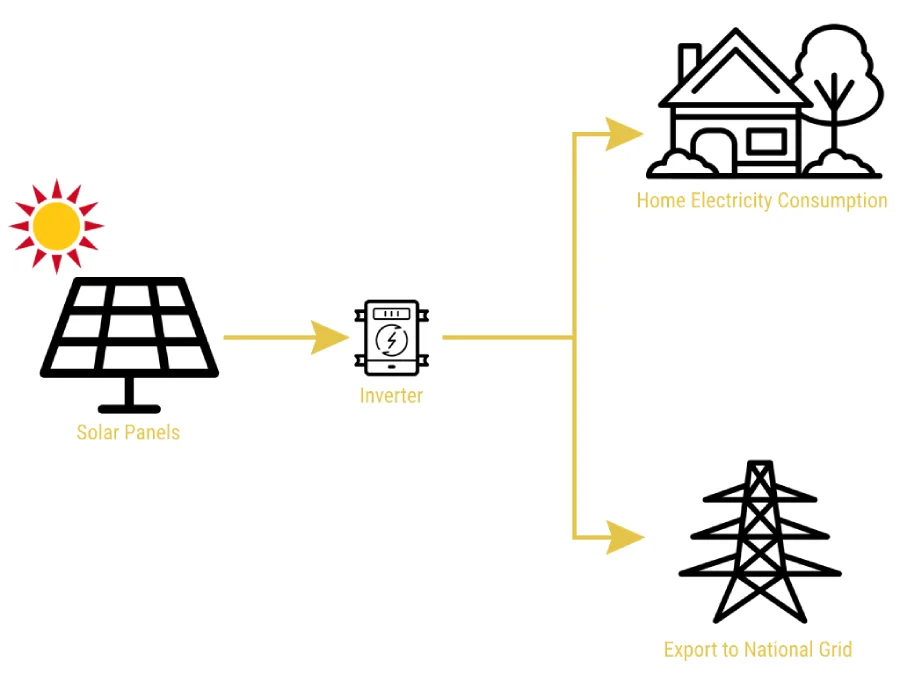
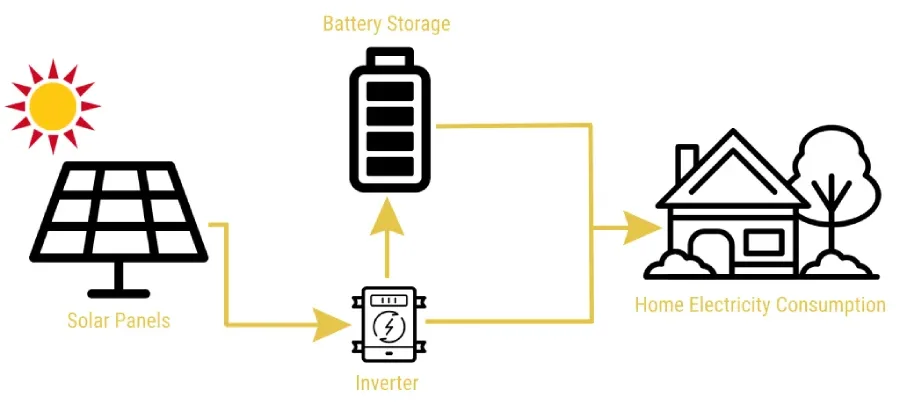
Yes – but only when the sun is shining. Without battery storage solar panels power your home during daylight hours and surplus electricity is exported to the grid. In the evenings and overnight, you import electricity from your energy supplier. Under Ofgem’s Smart Export Guarantee (SEG), homeowners are paid for surplus electricity sent back to the grid.
What This Means in Practice
During sunny afternoons, your solar system may be powering your fridge freezer, washing machine, dishwasher and home office equipment, but after sunset, you will rely on grid electricity unless you have battery storage.
For many South East households, a solar only system offsets 30-50% of annual electricity bills. Add in solar battery storage and you can offset up to 90% of annual electricity bills.
Can Solar Power a Whole House With Battery Storage?
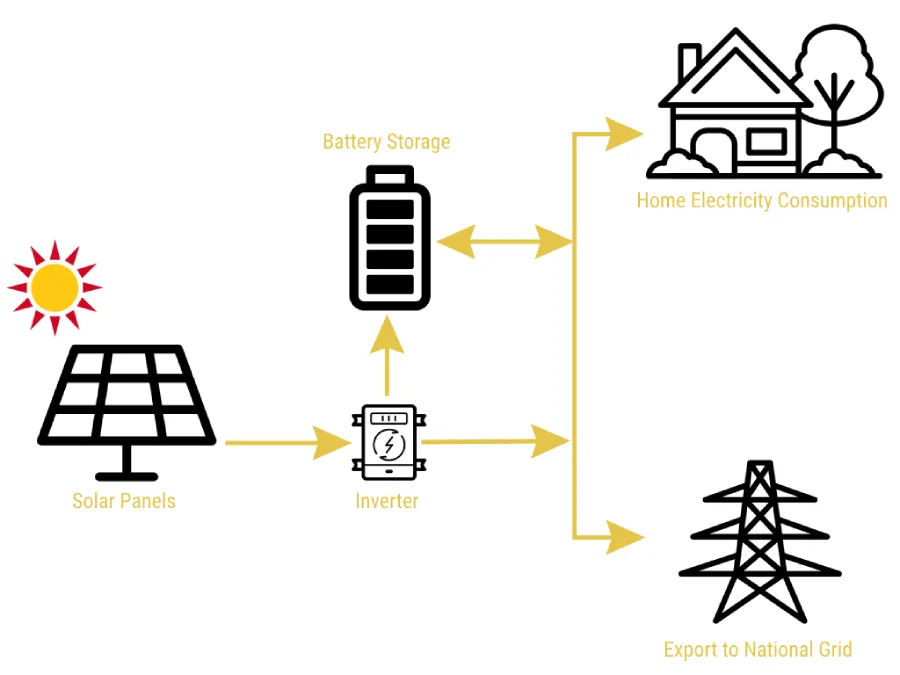
With battery storage, solar becomes significantly more powerful. A solar battery stores surplus electricity generated during the day so you can use it in the evening or overnight. This increases self-consumption – meaning you use more of your own free electricity rather than exporting it for less than you import electricity in during peak periods.
Benefits of Adding Battery Storage
- Greater energy independence
- Lower evening electricity bills
- Protection against future energy price hikes
- Backup capability (if your system is configured for it)
- Increased return on investment
Homes with battery storage often achieve 60-90% energy self-sufficiency, depending on system size and usage habits.
How Many Solar Panels Are Needed to Power a House?
System size depends on annual electricity usage (kWh), roof orientation and pitch, shading levels and panel wattage. If you are including battery storage, and your goal is to power your whole home around the clock, your system needs to cover your average daily usage.
Typical UK System Sizes
| Household Size | Annual Usage | Typical System | Battery Recommended? |
| 1–2 people | 2,000–3,000 kWh | 6–8 panels | Optional |
| 3–4 people | 3,000–4,500 kWh | 8–12 panels | Recommended |
| 4+ / EV / Heat Pump | 4,500–6,000+ kWh | 12–16 panels | Strongly recommended |
A professional design ensures the system matches your load profile for maximum efficiency.
Does Solar Work in Winter in the South East?
Yes – but output is lower. Solar panels generate electricity year round – even in cloudy conditions. However, where winter days are shorter and sun angles are lower, output may drop to around 10-25% of summer levels.
This is where battery storage and smart tariff integration make a major difference. Batteries can be charged overnight on cheaper off peak rates if needed, improving overall system economics.
Can You Go Completely Off Grid in the South East?
Technically, yes – but it requires a large solar array with significant battery storage. A backup generator is also required, especially for winter, if self-generation is low. Off grid systems are also more expensive to install, requiring a full off grid system design. For most homeowners in the South East, staying grid connected while maximising solar and battery usage is more cost effective, practical and gives you the peace of mind that if your system was to fail, you would still have a reliable power source.
How Much Can You Save?
Savings depend on you system size, self-consumption rate and battery usage. Choosing the right import and export tariff will also impact your savings. Typical South East households can save £800-£1,500 per year with a solar PV and battery storage system, reducing grid electricity purchases by up to 80%. Most solar PV systems pay for themselves within 10 years and within 12 years when battery storage is added.
Is Solar Power Enough for High Energy Homes?
Homes with electric vehicles, heat pumps, hot tubs and home offices can absolutely be powered largely by solar, but system sizing becomes critical. Load shifting – using appliances during daylight hours – significantly improves performance.
Final Answer: Can Solar Power a Whole House?
Yes – solar can power an entire home over the course of a year. Without a battery, solar powers your home during daylight hours. With battery storage, solar becomes more powerful, supplying your home day and night for much of the year. In winter, due to shorter days and lower solar yields grid support will usually still be required.
For homeowner in the South East, a professionally designed solar and battery system can dramatically reduce energy bills while increasing property value and energy security.
Find out how much you could save with a solar PV and battery storage system by using out Solar Calculator.
Smart solar starts with the right advice.
FAQs
Can solar panels power a house at night?
Not without battery storage. At night, homes use grid electricity unless stored solar energy is available.
How long can a solar battery power a house?
Most batteries can power essential loads for 4–12 hours depending on capacity and usage.
What happens when solar panels produce more electricity than you use?
Excess electricity is exported to the grid under the Smart Export Guarantee (SEG).
Do I still get an electricity bill with solar panels?
Yes — but it is significantly reduced. Most households remain grid-connected.
Is battery storage worth it in the UK?
For most homes, yes. It increases self-consumption and reduces reliance on peak-rate electricity.