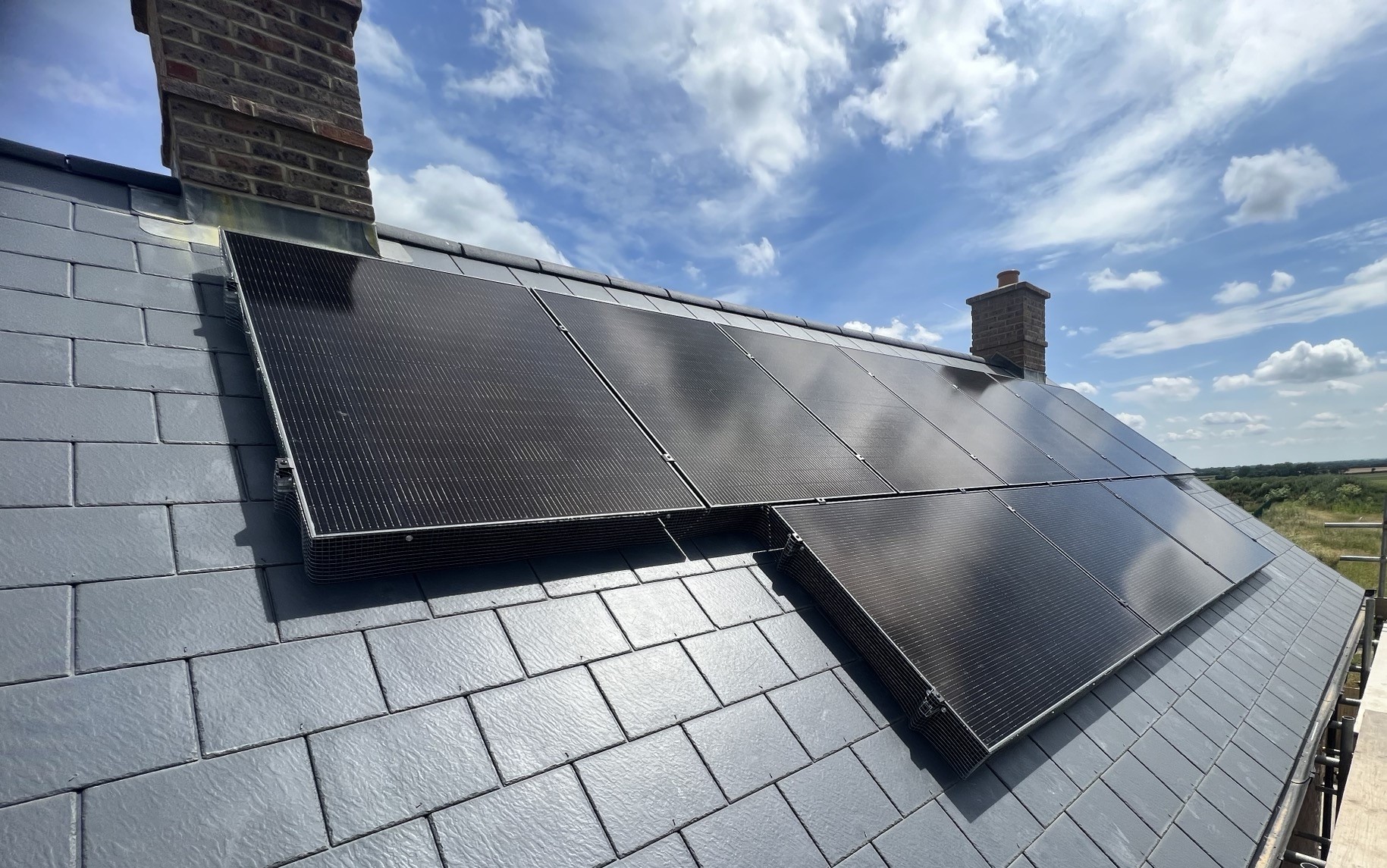
At SolarTherm UK we’re passionate about helping homeowners make sustainable, long term investments that benefit the planet and their pockets. Solar energy is one of the most effective and affordable ways to reduce carbon emissions and achieve energy independence. But how eco-friendly are solar panels?
This in-depth guide will explore the environmental impact of solar panels, from how they’re made to how they’re recycled and explain why they remain one of the greenest energy solutions available.
Are Solar Panels Good for the Environment?
Yes, solar panels are generally good for the environment because they generate electricity without burning fossil fuels during operation. For UK homeowners, installing a solar PV system can reduce reliance on grid electricity and help lower household carbon emissions.
The environmental benefits of solar panels extend beyond reducing carbon emissions:
- Lower operational emissions: Solar panels generate electricity without direct greenhouse gas emissions during normal operation.
- Reduced reliance on fossil fuels: Electricity generated on your roof can replace some of the electricity you would otherwise import from the grid.
- Long service life: Modern solar panels are designed to generate electricity for decades, allowing their initial manufacturing impact to be spread across many years of use.
- Renewable electricity: Solar energy comes from sunlight, rather than a finite fuel source that must be extracted and burned.
- Potential for greater self-sufficiency: Combining solar panels with battery storage can help households use more of their own renewable electricity, including outside daylight hours.
However, solar panels are not completely impact-free. Mining raw materials, manufacturing components, transporting equipment and disposing of panels at the end of their useful life all have environmental consequences.
The important consideration is their overall lifecycle impact. When the emissions associated with producing a solar PV system are compared with the emissions avoided by generating electricity over its lifetime, solar power generally offers substantial climate benefits compared with fossil-fuel-based electricity generation.
The exact benefit depends on the panel technology, where and how it is manufactured, the amount of electricity the system generates and the electricity it displaces.
Understanding the Environmental Impact of Solar Panels
Solar panels are a clean, renewable source of energy. Once installed they generate electricity without burning fossil fuels or releasing climate changing greenhouse gases. Like with any technology, there’s an environmental cost involved in manufacturing and transporting solar panels.
While solar panels are not entirely emission free, their impact is minimal compared to traditional energy sources. Improvements to manufacturing processes are improving year on year and the carbon footprint of manufacturing solar panels continues to decrease.
The International Panel on Climate Change (IPCC) said that the carbon footprint of solar panels is approximately 12 times lower than natural gas and 20 times lower than coal per kilowatt hour (kWh) of energy produced.
What Is the Carbon Footprint of Solar Panels?
The carbon footprint of solar panels includes the greenhouse gas emissions associated with extracting raw materials, manufacturing solar cells and modules, transporting equipment, installing the system and managing it at the end of its useful life.
Although these processes create emissions, solar panels generally have a much lower lifecycle carbon footprint than electricity generated using fossil fuels.
How much CO₂ does solar electricity produce?
The International Energy Agency Photovoltaic Power Systems Programme (IEA PVPS) published a lifecycle assessment fact sheet in 2024 examining the environmental impact of different photovoltaic technologies. Its findings demonstrate that solar electricity has significantly lower lifecycle greenhouse gas emissions than conventional fossil-fuel electricity generation.
The emissions associated with solar power are largely concentrated in the manufacturing stage, whereas fossil-fuel electricity continues to produce emissions when fuel is burned to generate power.
The actual carbon footprint of a solar PV system varies according to its technology, manufacturing energy mix, location, expected electricity generation and operational lifetime. For this reason, there is no single carbon-footprint figure that accurately represents every solar panel or installation.
How quickly do solar panels offset their manufacturing emissions?
Solar panels require energy to manufacture, but they subsequently generate electricity without burning fuel. Over time, the emissions avoided by using solar electricity can outweigh the emissions associated with manufacturing and installing the system.
The time required to compensate for these initial emissions is known as the carbon payback period.
This should not be confused with energy payback time, which measures how long a system takes to generate an amount of energy equivalent to the energy required to produce it. The two measures assess different environmental impacts.
For homeowners, the key point is that a well-designed solar PV system can continue generating lower-carbon electricity for decades after its initial manufacturing impact has been offset.
Source: IEA PVPS – Environmental Life Cycle Assessment of Electricity from PV Systems
How Are Solar Panels Manufactured?
The early stages of solar panel production are energy intensive, purifying silicon and cell formation uses high levels of energy. China currently manfactures around 80% of the world’s solar panels. Most Chinese commercial scale electricity still comes from coal, contributing to the carbon footprint of global panel production.
In recent years, other countries, including the UK and US are expanding their own solar manufacturing capabilities, using cleaner energy sources. Shifting to cleaner energy sources is expected to result in a drastically lower emissions level from solar panel production over the coming decades.
At SolarTherm UK, we work closely with suppliers who prioritise responsible manufacturing and sustainable sourcing, helping every installation we deliver contributes positively to the environment.
Mining and Materials: The Hidden Impact
Raw materials to create components of solar panels, like silicon, copper and tellurium, are mined. While mining has some environmental consequences, such as land disturbance and emissions, new developments are helping to reduce the long term effects. Land used for mining is returned to its natural state when materials are depleted.
Manufacturers are increasingly recycling raw materials and investing in energy efficient production processes. Reducing emissions and lessening the demand for new mining operations, makes solar more sustainable.
Solar Panels and Farmland: Can They Coexist?
A common misconception is that solar panels take away valuable agricultural land. In reality, solar and farming can thrive together, a concept known as agrivoltaics. Solar farms are often built on low-grade or underused land, which many farmers are now combining solar generation with livestock grazing or crop growth. Leafy greens and berries benefit from the shade provided by solar panels and animals grazing enjoy cooler temperatures and improved forage quality.
Co-locating solar energy and agriculture can help strengthen resilience for both industries. Energy companies pay farmers for the use of their land, giving them an additional and reliable annual income that can help stabilise farm finances against fluctuating crop yields or livestock prices.
At the same time, the land continues to serve a productive purpose — supporting livestock grazing, pollinator habitats, or shade-tolerant crops. This dual-purpose use of land not only enhances rural economic security but also contributes to the UK’s renewable energy goals.
At SolarTherm UK, we actively support projects that combine sustainable energy generation and responsible land stewardship, ensuring that solar power works in harmony with nature and local communities.
How Sustainable Are Solar Panels Over Their Lifetime?
Solar panel sustainability involves more than the electricity produced during operation. It also depends on the materials used, manufacturing methods, system longevity, maintenance requirements and what happens to the equipment when it reaches the end of its useful life.
Materials and manufacturing
Most conventional solar panels use silicon cells, glass, aluminium frames and electrical components. Extracting and processing these materials requires energy and natural resources, and manufacturing can generate greenhouse gas emissions.
Manufacturers can reduce these impacts through more efficient production processes, improved material use, longer-lasting products and cleaner electricity supplies for their factories.
Lifespan and long-term performance
Solar panels are designed to generate electricity over a long service life. Although their output gradually declines, they can continue producing electricity beyond their original performance warranty.
A longer operating life allows the environmental impact of manufacturing to be spread across a greater amount of electricity generation. Correct system design, suitable installation and appropriate maintenance can all help support long-term performance.
Can solar panels be recycled in the UK?
Yes. Solar panels contain materials that can be recovered for recycling, including glass, aluminium and certain metals. However, the fact that a material is technically recyclable does not mean that every component is routinely recovered through every recycling process.
In the UK, photovoltaic panels fall within the regulatory framework for waste electrical and electronic equipment. Appropriate collection, treatment and recycling help reduce waste and recover valuable materials.
As the number of installations reaching the end of their service life increases, effective recycling infrastructure will become increasingly important.
How can homeowners make their solar installation more sustainable?
Homeowners can improve the long-term value of their investment by choosing a properly designed system, using a reputable installer, monitoring performance and maintaining the equipment in accordance with manufacturer guidance.
A solar battery may also allow a household to use more of its own generated electricity instead of exporting surplus electricity and importing power later. The environmental benefit depends on how the battery is manufactured, charged and used, so adding storage should be considered as part of the complete system rather than automatically assumed to be greener in every circumstance.
Overall, solar panels are not impact-free, but their ability to generate electricity for many years makes them an important part of the transition to lower-carbon energy.
Environmental Benefits of Solar Energy
Despite the initial energy investment required to manufacture them, solar panels offer significant environmental advantages. Zero emissions during operation and reduced reliance on fossil fuels make solar panels carbon neutral within 3 years in most cases. When compared to other energy sources, the land disturbance is minimal, and is often returned to nature on depletion of raw materials. Fossil fuels are finite and environmentally destructive. Solar energy is renewable and abundant, lasting for billions of years. Once installed, your panels will deliver clean, green electricity with minimal maintenance and no emissions for decades.
How the Industry Is Getting Greener
The solar industry is evolving, exciting breakthroughs are promising to make solar energy even cleaner and more efficient than ever before. The development of perovskite solar cells is a promising new addition to the solar market, the cells are cheaper, lighter and potentially more efficient that silicon panels. While not in mainstream use yet, early results are positive, with perovskite looking to be available on the open market in the very near future. Kesterite panels looks to make solar panels from abundant materials such as copper, tin, zinc and sulphur as an eco-friendly alternative to traditional photovoltaic panels.
Raised panels are now being used more frequently in solar farms, allowing sustainable farming intregration, wildflower and grass is grown to promote biodiversity and pollinators. Livestock such as sheep can benefit from the cooler microclimates beneath solar panels and help maintain the growth of wildflowers or grass.
The Future of Solar and Sustainability
While solar panels do have a small carbon footprint, their overall impact is far less harmful than almost any other form of energy production. As the technology develops, the carbon footprint continues to decrease.
Recycling schemes, better materials, cleaner manufacturing and increased awareness are helping to ensure that solar is not just a renewable solution, but a long term solution that can be recycled and repeated.
At SolarTherm UK we’re proud to be part of the transition to clean energy. Every installation we complete helps a homeowner reduce their carbon footprint, gain energy independence and save money on their energy bills.
Ready to Start Your Solar Journey?
If you’re considering solar panels for your home, there’s never been a better time to switch. With energy prices rising and sustainability taking centre stage, switching to solar is one of the most effective ways to secure your energy future.
Contact SolarTherm UK for a free no obligation quote and design, tailored to your property, usage and future energy needs. No hard sell, just honest, expert advice – and the time you need to make an informed decision.
Your home. Your energy. Your future.
Frequently Asked Questions
Yes. Solar panels generate electricity without producing direct carbon emissions during operation, helping reduce reliance on fossil fuels and lowering a home’s overall carbon footprint.
The amount varies depending on the size of the system, electricity usage and local energy mix. Over their lifetime, solar panels can offset significantly more carbon emissions than are produced during their manufacture.
No. Manufacturing, transporting and installing solar panels requires energy and materials, which creates emissions. However, these initial environmental impacts are generally offset by the clean electricity generated during the panel’s operational life.
Most modern solar panels are designed to operate for around 25–30 years or more. Although their efficiency gradually decreases over time, they can continue generating electricity well beyond their original warranty period.
Yes. Many of the materials used in solar panels, including glass, aluminium and some metals, can be recovered and recycled. Solar panel recycling infrastructure is also continuing to develop as more systems reach the end of their useful lives.
In most circumstances, yes. Solar PV generates electricity without burning fossil fuels, so producing electricity from your own panels can reduce the amount of higher-carbon grid electricity you need to buy.
Yes. Using solar electricity in your home reduces the amount of electricity you need to take from the grid. Adding battery storage can increase the amount of your solar generation that you use yourself, particularly during the evening.
Yes. Solar panels can be particularly useful in the UK because they generate renewable electricity without producing operational emissions. Even though UK sunshine levels vary throughout the year, a well-designed system can generate useful amounts of electricity year-round.