Solar PV systems are designed to provide reliable renewable electricity for many years, but that doesn’t mean they can always be completely forgotten about once they have been installed.
Your solar panels are exposed to changing weather conditions throughout the year, while components such as the inverter, wiring, mounting system and battery storage can experienced wear over time. Small problems can also develop without being immediately obvious, potentially reducing your systems performance or creating a safety concern.
The good news is that there are several signs that can indicate your solar PV system would benefit from a professional maintenance check.
Why Does Solar PV Maintenance Matter?
A well designed solar PV system should operate reliable for many years, but regular checks can help identify potential problems before they become more serious.
Solar PV maintenance can help you:
- Identify issues affecting energy generation
- Check the condition of electrical components
- Spot damaged panels, cables or mounting equipment
- Identify inverter faults or warning messages
- Check battery storage systems where installed
- Maintain the overall safety and performance of your installation
- Protect your long term investment in solar energy
You don’t necessarily need to wait for a problem before having your system checked. A professional inspection can provide useful reassurance, particularly as your system gets older.
Your Solar Panels Are Producing Less Electricity
One of the most obvious signs that something may be wrong is a noticeable reduction in solar generation. If your monitoring system shows that your panels are producing significantly less electricity than expected, it is worth investigating.
You may notice:
- Lower daily generation than usual
- A sudden drop in output
- Generation that appears inconsistent
- Higher electricity bills despite similar household usage
- One or more panels producing noticeably less than the rest of the system
Solar generation naturally changes throughout the year, so a lower output in winter is not necessarily a fault. However, a significant unexplained change compared with previous periods could indicate an issue with the panels, inverter, wiring, shading or another part of the system.
If you have solar monitoring software, comparing your current performance with previous months or the same period in previous years can be particularly useful.
2. Your Inverter Is Showing a Warning or Error
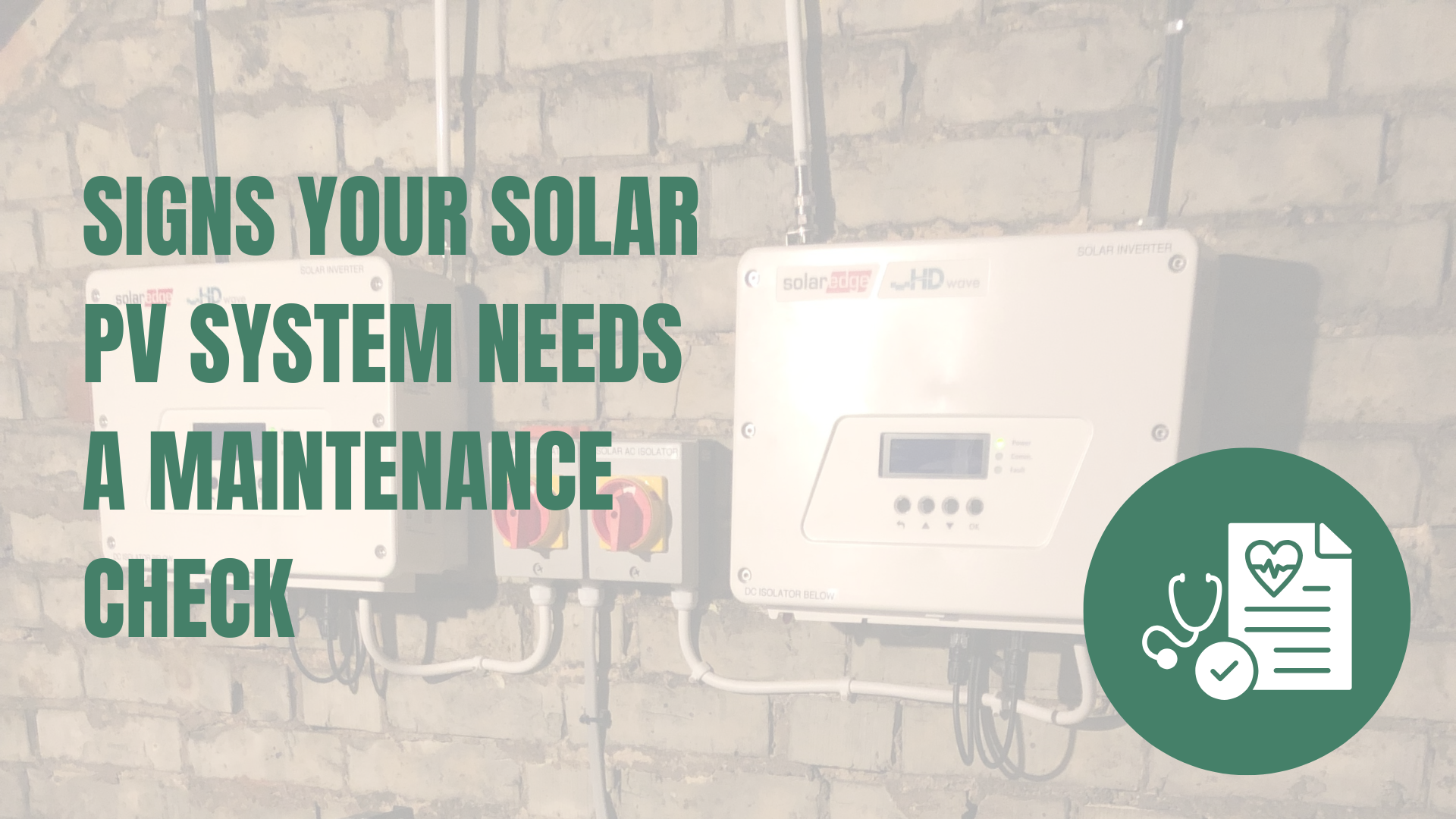
The inverter is one of the most important components in a solar PV system. It converts the electricity generated by your panels into electricity that can be used by your home. If the inverter develops a fault, your solar generation can be reduced or, in some cases, stop altogether.
Look out for:
- Warning or fault lights
- Error messages or fault codes
- Unexpected shutdowns
- Repeated restarts
- Unusual noises
- A monitoring system showing that the inverter is offline
Some inverter warnings can be resolved relatively easily, while others require professional investigation. If your inverter is displaying a persistent fault, don’t attempt to open or repair it yourself. A qualified installer should investigate the problem.
3. Your Solar Panels Look Dirty or Damaged
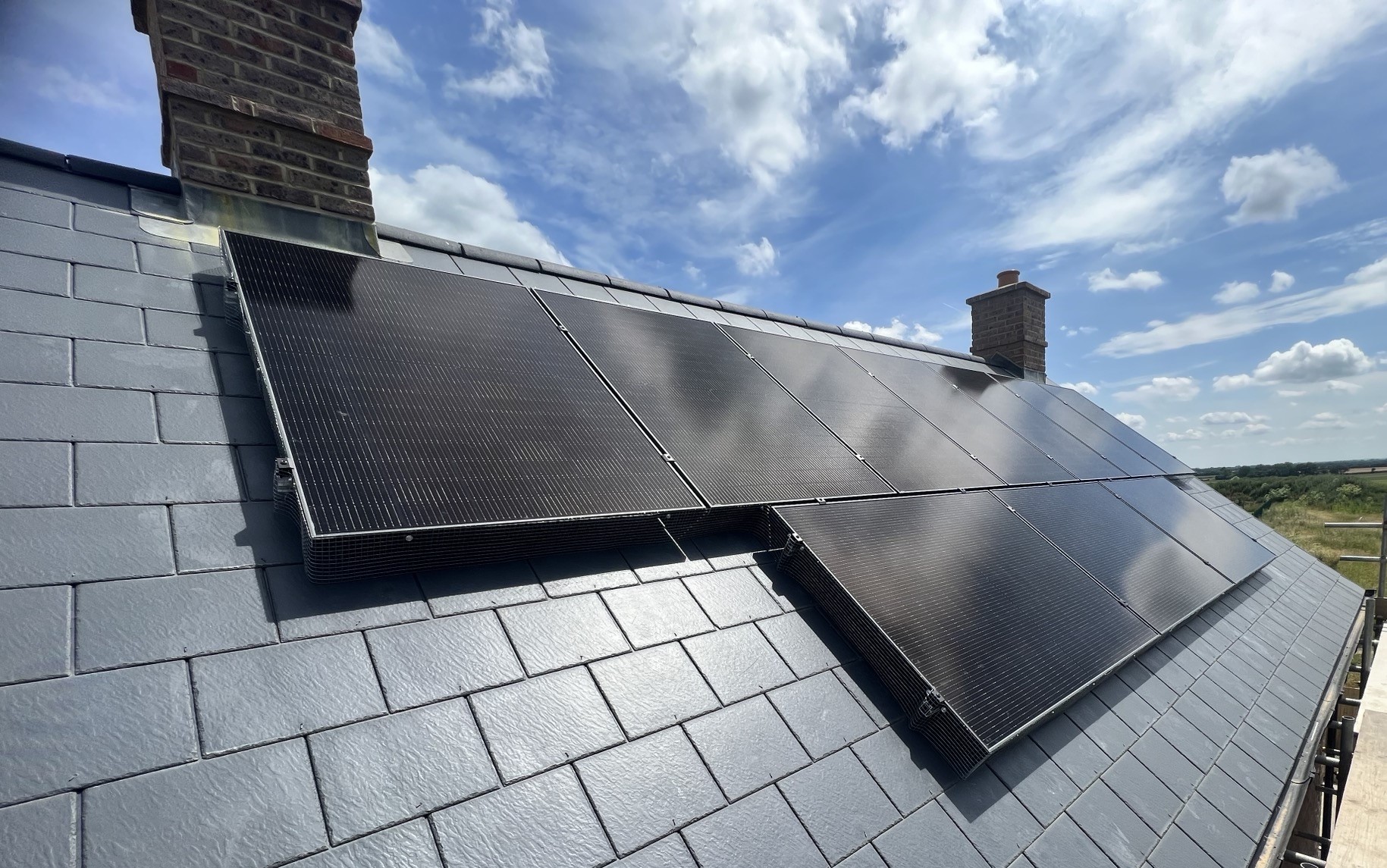
Solar panels are designed to withstand outdoor conditions, but they can still accumulate dirt and debris.
Common causes include:
- Bird droppings
- Leaves
- Dust
- Moss or algae
- Other debris
Rain will naturally clean many panels, so routine cleaning is not always necessary. However, heavy or persistent contamination can affect the amount of sunlight reaching the panel surface and therefore reduce generation.
It is also worth looking out for visible damage such as cracks or chips. Never climb onto your roof to inspect solar panels yourself. If you suspect damage or the panels require inspection, arrange for a suitable qualified professional to assess them.
4. You Notice Loose or Damaged Cables
Solar PV systems contain electrical cabling that connects the panels to the inverter and the rest of your home’s electrical system. Over time, cables can potentially be affected by weather, wildlife, accidental damage or ageing.
During a visual inspection from ground level, look for anything obviously unusual, such as:
- Loose or hanging cables
- Visible damage
- Signs of animal interference
- Damaged cable protection
- Components that appear to have moved
Do not touch damaged or exposed electrical cables.
If you notice anything that looks unsafe, switch off the system only if you have been shown how to do so safely and contact a qualified solar installer for advice.
5. Your Mounting System Shows Signs of Damage
The mounting system secures your solar panels to your roof or other installation surface. Although solar mounting systems are designed to withstand the elements, long term exposure to wind, rain and other weather conditions can eventually cause wear.
A professional maintenance inspection can check for issues such as:
- Loose fixings
- Corrosion
- Damaged mounting components
- Movement of panels
- Deterioration around the installation
Problems with the mounting system should not be ignored. A panel that has moved or become insecure could affect both system performance and safety.
6. Your Solar Battery Isn’t Performing as Expected
If your solar PV system includes battery storage, the battery should also form part of any maintenance or system health check.
You may notice:
- The battery isn’t charging as expected
- The battery is discharging unusually quickly
- Your available battery capacity appears lower than normal
- The battery repeatedly enters a fault state
- Monitoring software shows communication errors
- Your home is importing more electricity than expected
Battery performance can vary depending on your settings, electricity tariff, household consumption and the amount of solar energy available. However, persistent changes in performance or fault messages should be investigated.
Never attempt to open or repair a solar battery yourself. Battery storage systems contain high voltage electrical equipment and should only be inspected by appropriately qualified professionals.
7. Your Electricity Bills Are Increasing
A solar PV system should help reduce the amount of electricity you need to purchase from the grid. If your household usage has remained relatively consistent but your electricity bills have increases, it is worth checking whether your solar system is still generating as expected.
There could be a number of explanations, including:
- Changes in household electricity usage
- Seasonal changes in solar generation
- Changes to your electricity tariff
- Reduced solar generation
- An inverter or system fault
- Changes to battery settings or operation
Checking your solar monitoring data alongside your electricity bills can help identify whether your system’s performance has changed.
8. Your Solar Monitoring Stops Working
Solar monitoring systems can provide valuable information about how your installation is performing. If your monitoring app suddenly stops updating or shows that your system is offline, don’t automatically assume that your panels have stopped working.
The issue could be related to:
- Internet connectivity
- The monitoring platform
- Inverter communication
- System settings
- A fault within the solar installation
If your monitoring has been offline for an extended period, it is worth having the system checked so you can be confident that your solar PV system is still operating correctly.
9. Your System Is Several Years Old and Has Never Been Checked
There is no single maintenance schedule that applies to every solar PV system. The appropriate frequency will depend on the age and design of your installation, the equipment used, environmental conditions and the manufacturer’s recommendations.
However, if your system has been operating for several years and has never received a professional inspection, a system health check can be a sensible way of identifying developing problems.
This can be particularly useful if:
- Your original installer is no longer trading
- You have recently moved into a property with solar panels
- You don’t have the original installation paperwork
- You don’t know when the system was last inspected
- The system has started behaving differently
- You have recently added battery storage or other technology
What Does a Solar Maintenance Check Include?
A professional inspection should consider the complete system rather than simply looking at the panels.
Depending on the installation, this can include checking:
- Solar panels
- Inverter
- Electrical connections
- DC and AC cabling
- Mounting system
- Protection devices
- Monitoring equipment
- Battery storage
- System performance
- Visible signs of damage or deterioration
The exact checks will depend on the type and age of your installation. A professional inspection can also help identify issues that may not be visible from ground level.
Can You Maintain Solar Panels Yourself?
There are some simple things homeowners can monitor themselves. For example, you can check your solar monitoring app, comparing generation with previous periods. Occasional visual checks from ground level and viewing your inverter to check for error codes or warnings can help you identify minor issues before they become expensive problems. Monitor your energy bills, if they start going up with no increase in consumption, it may indicate there’s an issue with your system.
However, solar PV systems contain electrical equipment and should not be opened, dismantled or repaired by homeowners. Roof access should also be left to appropriately trained professionals. If you notice a potential fault, getting it professionally assessed is safer than attempting to diagnose or repair the system yourself.
How Often Should a Solar PV System Be Checked?
There isn’t a universal maintenance interval that applies to every solar PV installation. Your equipment manufacturer’s guidance, system design and installation conditions should all be considered.
Even if your system appears to be working normally, a professional inspection can provide reassurance and identify issues before they have a significant effect on performance. For older systems, properties that have changed ownership or installations where the maintenance history is unknown, a professional system health check can be particularly worthwhile.
Keep Your Solar PV System Performing at Its Best
Solar panels are a long term investment, and keeping the wider system in good condition is an important part of protecting that investment. A drop in generation, inverter warning, damaged panel, unusual battery behaviour or electrical issue shouldn’t be ignored.
At SolarTherm UK, we provide ongoing support for solar PV systems and can help assess the condition and performance of your installation.
If you’re concerted about your solar PV system or simply want reassurance that everything is operating as it should, contact SolarTherm UK to arrange a professional System Health Check.
Your home. Your energy. Your future.
Frequently Asked Questions
A noticeable drop in energy generation, inverter warnings, damaged panels, unusual battery performance or problems with your monitoring system can all indicate that your solar PV system should be checked.
There is no single maintenance schedule for every solar PV system. The appropriate frequency depends on the equipment, installation and manufacturer’s recommendations. A professional inspection can be particularly useful for older systems or installations with an unknown maintenance history.
Not always. Rain naturally cleans many solar panels, but heavy deposits of dirt, bird droppings, leaves or other debris can affect performance. A professional can assess whether cleaning is actually necessary.
Check the error message or code against the manufacturer’s guidance, but don’t attempt to open or repair the inverter yourself. If the warning persists, contact a qualified solar installer for advice.
Solar batteries should be monitored as part of the wider solar PV system. If your battery is not charging or discharging correctly, shows repeated faults or appears to have reduced performance, it should be professionally assessed.
You can monitor your system’s performance and look for obvious problems from ground level, but you should not climb onto your roof or interfere with electrical equipment. Roof and electrical inspections should be carried out by appropriately qualified professionals.