Rising Energy Costs Threaten UK Food Production
Farmers across the UK are facing growing uncertainty as fuel, energy and fertiliser costs continue to rise. Industry leaders are warning that increasing operational expenses could place additional pressure on food production, potentially leading to higher prices for consumers while squeezing already tight margins for agricultural businesses.
Recent discussions within the farming sector have highlighted concerns around energy security, food security and climate related challenges. As global supply chains remain vulnerable to geopolitical events and changing weather patterns, many farms are reassessing how they manage costs and protect their long term profitability.
For agricultural businesses across the South East and East Anglia, reducing reliance on volatile energy markets is becoming increasingly important. One solution that is gaining momentum is farm solar energy.
Why Rising Fuel Costs Matter to Farmers
Modern agriculture relies heavily on fuel and electricity. From grain drying and cold storage to dairy operations, irrigation systems and livestock housing, energy is essential at every stage of food production.
When fuel prices increase, the impact is felt throughout the entire supply chain:
- Higher machinery operating costs
- Increased fertiliser production costs
- More expensive transportation and logistics
- Rising electricity bills for farm buildings and equipment
- Reduced profitability for farms and growers
As these costs rise, food producers often face difficult decisions regarding investments, production volumes and long term business planning.
The Link Between Energy Security and Food Security
Food security and energy security are closely connected. When energy markets become unstable, agricultural businesses can experience significant increases in operating costs almost overnight.
Many farms have already experienced this during recent years of energy market volatility. Electricity prices have fluctuated dramatically, making budgeting and forecasting increasingly difficult. For farms looking to maintain resilience, generating electricity on-site can provide greater control over operating costs and reduce exposure to external market pressures.
How Solar Panels Can Reduce Farm Running Costs
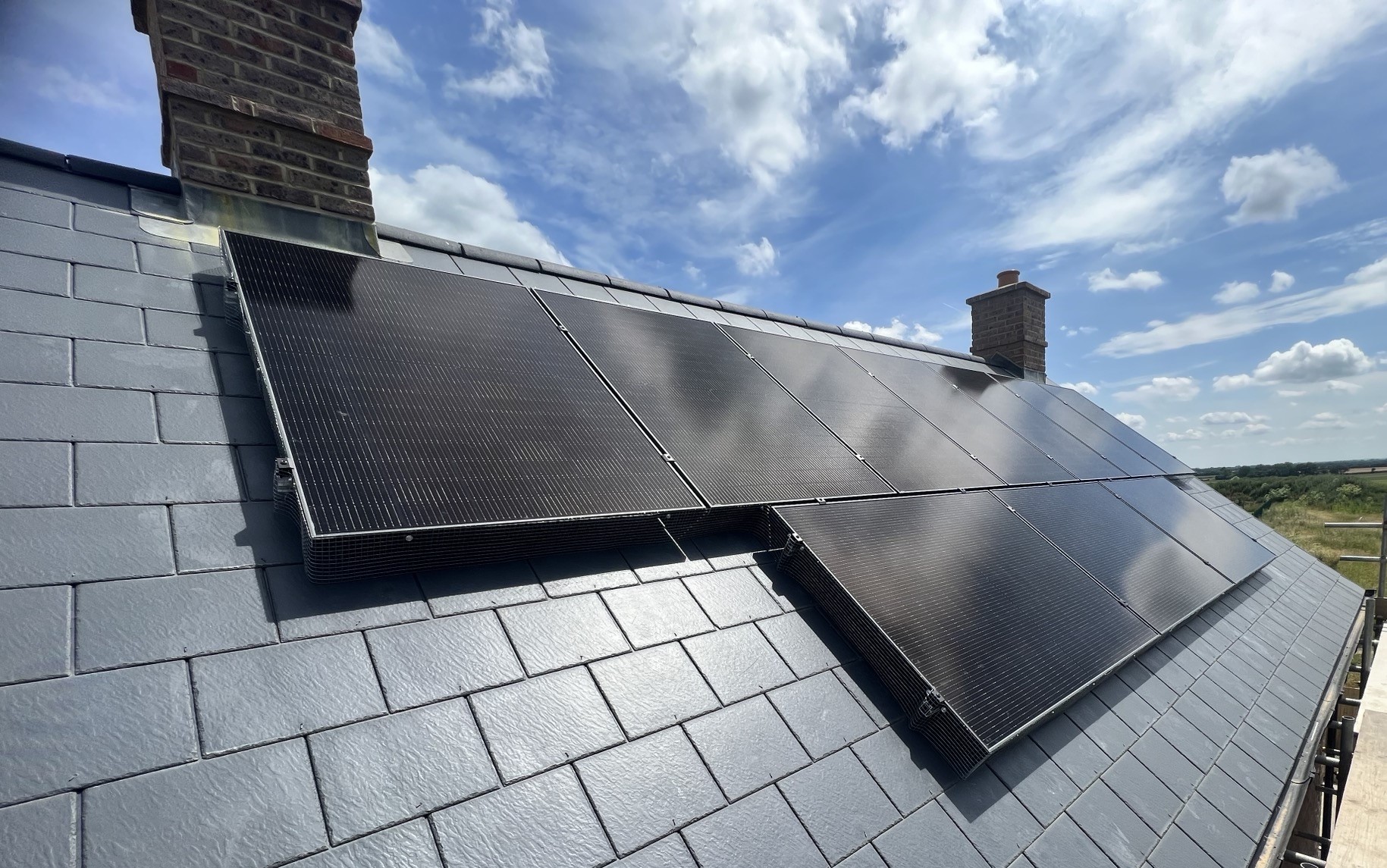
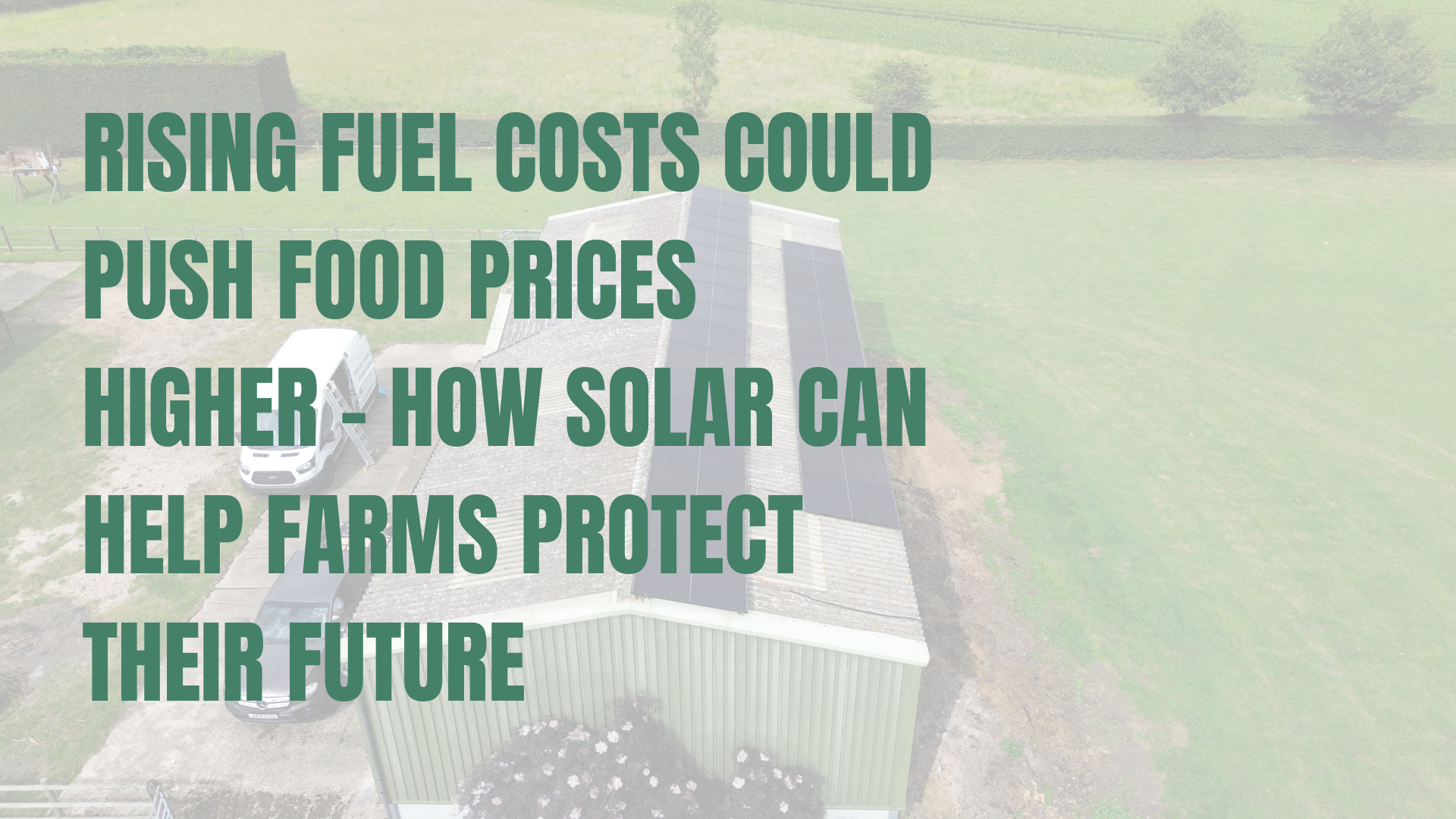
Agricultural businesses are uniquely positioned to benefit from solar energy. Large roof spaces on barns, grain stores, livestock buildings and machinery sheds often provide ideal locations for commercial solar installations.
Solar panels can help farms:
- Lower Electricity Bills: generating electricity on-site allows farms to reduce the amount of energy purchased from the grid. For businesses with high daytime energy consumption, the savings can be substantial.
- Protect Against Future Energy Price Increases: solar provides a predictable source of electricity for decades. While energy markets may fluctuate, solar generation offers greater certainty when planning future operating costs.
- Improve Business Resilience: by producing their own power, farms become less dependent on external energy suppliers and global market conditions.
- Support Sustainability Goals: many agricultural businesses are working towards carbon reduction targets. Solar energy helps reduce greenhouse gas emissions while supporting more sustainable food production.
Battery Storage Maximises Benefits
Many farms now combine solar PV with battery storage systems. Battery storage allows surplus daytime electricity generated to be stored and used later when demand is higher, and grid prices are at their most expensive. This can be particularly valuable for:
- Dairy farms operating milking equipment
- Poultry units with continuous energy demand
- Cold storage facilities
- Irrigation systems
- Agricultural processing operations
The result is greater energy independence and improved returns on solar investment.
Climate Change Is Creating Additional Challenges
Alongside rising energy costs, farmers are also adapting increasingly to unpredictable weather conditions. Longer periods of drought, changing rainfall patterns and more extreme weather events are influencing crop management decisions across the UK.
For many businesses, reducing overheads wherever possible is becoming a key strategy for maintaining profitability during periods of uncertainty. Investing in renewable energy can provide one of the most effective ways to lower fixed operating costs while improving long term financial stability.
Why More Farms in East Anglia and the South East Are Investing in Solar
East Anglia and the South East are among the UK’s strongest regions for solar generation, benefiting from some of the highest levels of solar irradiation in the country. Agricultural businesses throughout Essex, Suffolk, Kent, Hertfordshire and the surrounding areas are increasingly adopting solar technology to:
- Reduce energy expenditure
- Improve cash flow
- Future proof operations
- Increase farm sustainability
- Generate additional income opportunities
With energy costs expected to remain a significant concern for the agricultural sector, solar is becoming an increasingly attractive investment for forward thinking farms.
How SolarTherm UK Supports Agricultural Businesses
At SolarTherm UK, we work with farms and agricultural businesses across the South East and East Anglia to design and install commercial solar solutions tailored to operational requirements.
Our expert team understands the energy demands of modern farming operations and can advise on:
- Farm solar panel installations
- Agricultural solar systems
- Battery storage solutions
- Commercial solar energy strategies
- Long term energy cost reduction
Every farm is different, which is why we take the time to assess energy usage, site suitability and future growth plans before recommending a solution.
The Future of Farming May Depend on Energy Independence
As fuel costs, electricity prices and climate pressures continue to challenge the agricultural sector, controlling energy expenditure is becoming a critical business priority.
While no business can control global energy markets, farms can take practical steps to reduce their reliance on them. For many agricultural businesses, solar energy is proving to be one of the most effective ways to improve resilience, lower running costs and protect profitability for years to come.
Final Thoughts: Can Solar Help Protect Farms from Rising Costs?
The challenges facing UK agriculture are unlikely to disappear anytime soon. Rising fuel prices, increasing energy costs, climate uncertainty and pressure on food production are all creating a more complex operating environment for farms across the South East and East Anglia.
While farmers cannot control global energy markets or geopolitical events, they can take steps to reduce their exposure to them. Investing in solar panels and battery storage allows agricultural businesses to generate their own electricity, lower running costs and improve long term financial resilience.
As food security and energy security become increasingly linked, renewable energy is no longer just an environmental consideration – it is a practical business decision. By reducing reliance on expensive grid electricity and volatile fuel markets, farms can gain greater control over their operating costs and focus on what matters most: producing food efficiently and sustainably.
At SolarTherm UK, we believe that helping farms become more energy independent is one of the most effective ways to support the future of British agriculture. Whether you’re running a dairy farm, arable operation, poultry unit or mixed agricultural business, investing in solar today could help protect your farm’s profitability for decades to come.
Contact SolarTherm UK today for a free, no obligation quote and design, tailored to your operations, energy usage patterns and future energy needs. No hard sell, just honest, expert advice – and the time you need to make an informed decision.
Your farm. Your energy. Your future.
Frequently Asked Questions
Are solar panels suitable for farms?
Yes. Farms often have large roof spaces and high daytime electricity usage, making them ideal candidates for solar PV installations.
How much can a farm save with solar panels?
Savings vary depending on energy consumption and system size, but many farms can significantly reduce their electricity bills by generating power on-site.
Can solar panels power agricultural equipment?
Solar energy can support a wide range of farm operations, including lighting, ventilation systems, milking equipment, refrigeration, irrigation and processing equipment.
Is battery storage worth considering for farms?
Battery storage can increase self-consumption of solar energy and provide greater flexibility, particularly for farms with energy demand outside daylight hours.
Does SolarTherm UK install solar systems for agricultural businesses?
Yes. SolarTherm UK provides commercial solar installations and battery storage solutions for farms and agricultural businesses throughout the South East and East Anglia.