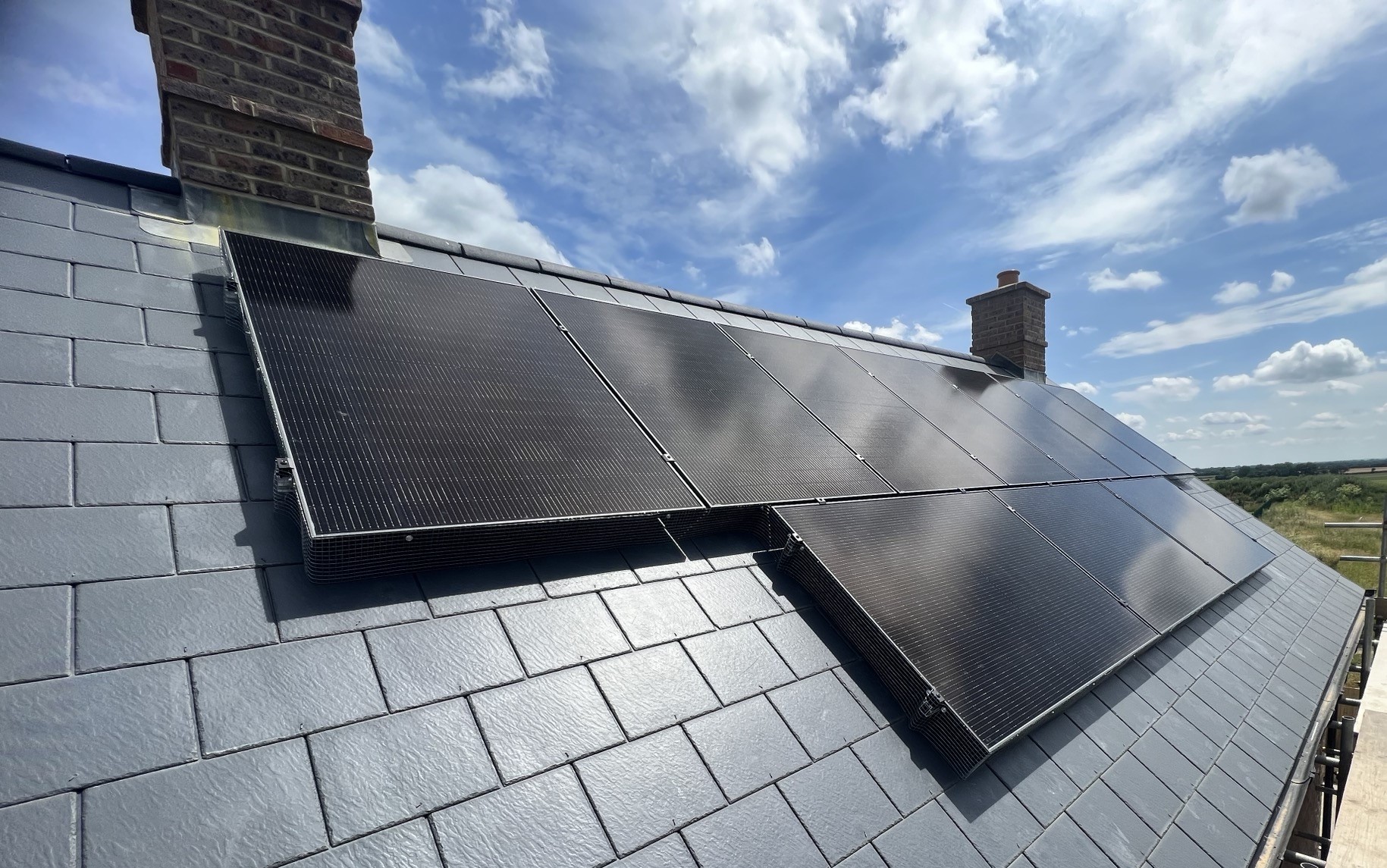
As energy bills continue to rise, the UK is pushing towards a cleaner, greener living and increasingly homeowners are considering solar panels. Before you make the investment, it’s important to understand whether your home is truly ready for solar. From roof suitability to current energy usage, several factors influence how much value you can get from a solar installation.
Here’s a practical guide to help you determine if your property is primed for solar panels.
Your Roof Is in Good Condition
Solar panels typically last a minimum of 25 years, with most modern solar panels continuing to generate power efficiently for up to 40 years. The condition of your roof really matters, if you are installing solar panels that could potentially be on your roof for the next 40 years, you need your roof to be in top condition. Ask yourself:
- Is your roof structurally sound? It must be strong enough to support the weight of the panels and mounting kit.
- Does your roof need repairs? If it’s ageing or damaged, it’s best to have it repaired before installation to avoid having to remove and reinstall the panels in the future.
You Have the Right Roof Position and Angle
To generate the highest amount of solar energy, the panels need good access to sunlight. South facing roofs at a 30° to 40° roof pitch is generally considered optimal for UK solar generation. That being said, east- or west-facing roofs still perform well and are usually worth installing solar panels onto them. North-facing roofs produce significantly less energy and are usually not recommended.
Minimal Shading on Your Roof
Shade from chimneys, tall trees or nearby buildings can dramatically reduce solar panel output. Even partial shading can affect the entire system if the wrong system is installed. Before installing check:
- Are there any trees that cast shadows during peak sunlight hours?
- Are nearby buildings tall enough to block sunlight seasonally?
- Does your chimney or skylight create shading?
A professional survey will use tools to measure shading accurately and calculate expected performance, but it may be worth arranging for overhanging trees to be cut back in preparation.
You Have Enough Roof Space
The more roof space you have available, the more panels you can install and I turn the more electricity you can generate. A typical UK home needs between 8-12 panels, requiring around 15-25m² of roof space. Even if your roof is smaller, modern high efficiency panels may still offer a strong performance enough to drastically reduce your energy bills.
Your Energy Bills Are High Enough to Benefit
If your household uses a lot of electricity, especially during the day (or you can shift your usage towards daytime use using smart plugs and timers), you’ll see the greatest cost savings from solar. If you run home offices, electric heating and have multiple high energy appliances you’re home is likely to be a good candidate. If you are planning to add a heat pump or EV charging to your home (or already have them), you can reduce your energy bills significantly due to the high usage.
Even low usage households can benefit from solar panels, but the financial return improves with higher consumption.
You Want to Maximise Savings with a Battery
While solar panels alone can cut your bills, adding in solar battery storage can increase your savings by storing surplus electricity for use in the evenings. Your home is especially ready for solar if:
- Your peak usage happens at night
- You want backup power during grid failures
- You’d like to reduce reliance on the grid
Your Local Planning and DNO Requirements Are Simple
The good news is that most solar installations don’t require planning permission as they come under permitted development rights. If you live in a conservation area or a listed building, Listed Building Consent or planning permission may be required.
Additionally, your installer must register the system with the Distribution Network Operator (DNO). This process is routine but necessary to ensure your system can be safely connected to the grid, allowing you to export surplus energy. Permission is granted on all systems 3.6kW and under automatically, and anything above requires prior approval before install.
Your Budget Aligns with the Investment
Solar panels are more affordable than ever and with energy prices rising, payback periods are shortening. Still, it’s worth ensuring that:
- You understand the upfront costs
- You assess long term savings and return on investment
- You compare product warranties
Many UK homeowners now break even in 6-10 years, depending on usage and system size. At SolarTherm UK as part of your quote and design package you will receive accurate returns estimates, calculated from your system and energy usage history. All our quotes are verified by the independent third party EPVS (Energy Performance Validation Scheme) to ensure we are not over-inflating figures like many other companies do.
Final Thoughts
Determining whether your home is ready for solar doesn’t have to be complicated. By examining your roof, energy usage, shading and budget, you can get a clear picture of solar’s suitability for your property. For most UK properties, the answer is an outstanding yes, especially with modern advances in solar technology and rising grid prices.
If you’re still unsure, the next best step to take is a feasibility study. So, if you’re ready to start your solar journey, contact SolarTherm UK today for a free, no obligation quote and design, tailored to your property, usage and future energy needs. No hard sell, just honest, expert advice.
Your home. Your energy. Your future.