The long awaited Future Homes Standard (FHS) has finally been confirmed – and it marks a decisive shift in how home across England will be powered and heated.
After years of delays and consultation, the government has made one thing clear: renewable energy is no longer optional.
For homeowners across the South East – especially in Essex, Kent and Suffolk – this isn’t just about new builds. It’s a strong signal of where the entire housing market is heading.
A Major Turning Point for UK Homes
From 2027 (with full enforcement by 2028), all new homes in England must:
- Generate on site renewable electricity
- Use low carbon heating systems (primarily heat pumps)
- Eliminate reliance on gas boilers
In practical terms, this means solar panels and heat pumps will become standard in every new home. Currently, only around 5% of UK homes have solar installated – but that number is set to rise rapidly.
Solar Panels Are Now Mandatory
While the regulation doesn’t explicitly say “solar panels required”, it effectively mandates them. New homes must generate renewable electricity equivalent to solar PV covering around 40% of the home’s ground floor area.
What Does This Mean in Real Terms?
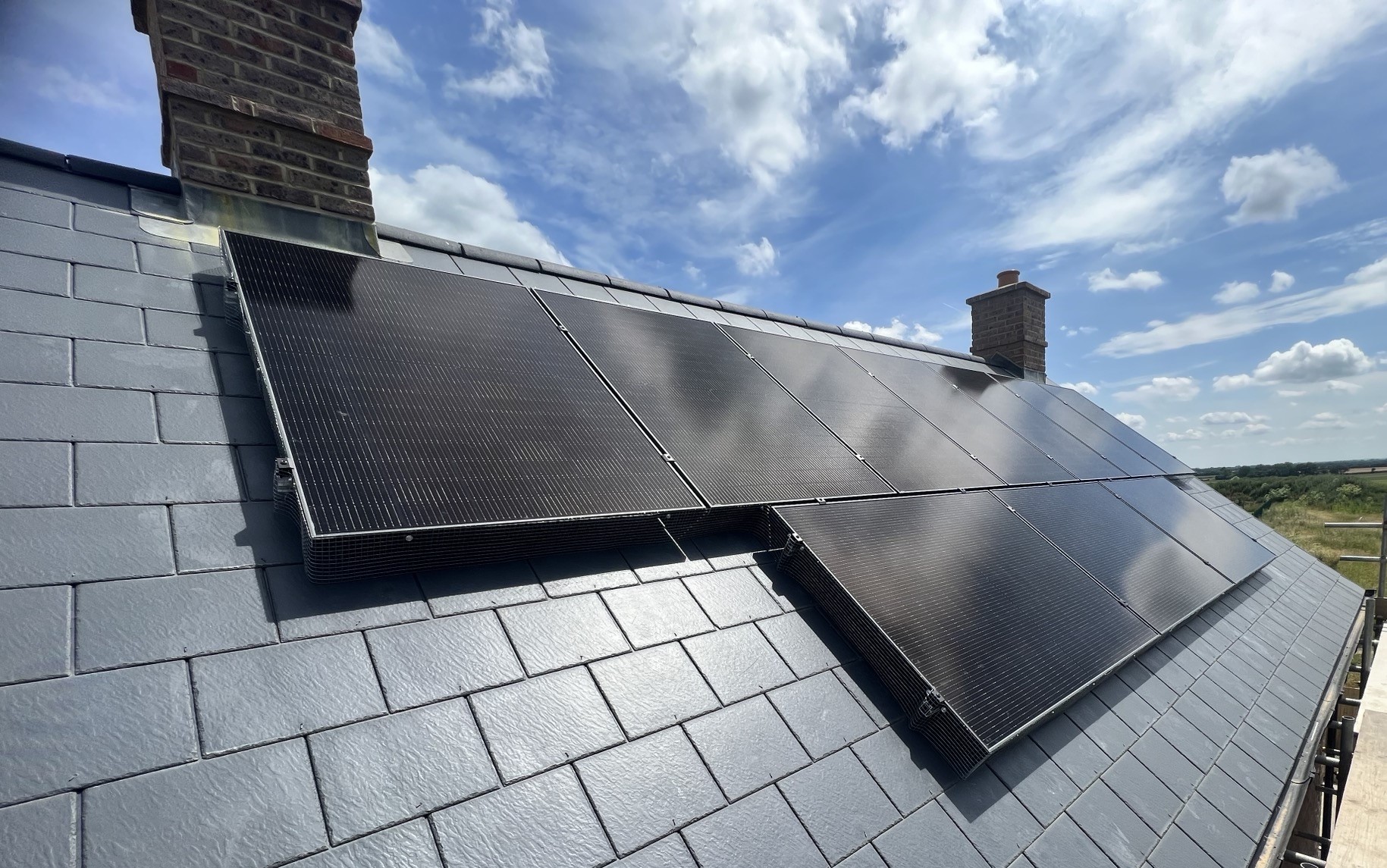
A typical 3-bed home requires a 4-5kWp solar PV system, which is roughly 8-10 panels per property. This is significantly larger than the systems currently required on new builds. It is a huge shift. Solar is no longer a “nice to have” – it’s now a baseline expectation.
What This Means for Existing Homeowners
If you already own a home in the South East, you are now competing in a future market where solar will come as standard. Without solar, you are potentially missing out on bill savings and property value uplift. With rising expectations from buyers, solar is a simple, cost effective way to improve your EPC rating, energy cost outgoings and property value.
Heat Pumps Replace Gas Boilers
The FHS sets carbon targets so strict that gas boilers are effectively obsolete in new homes. Instead, heat pumps will become the default heating system.
Why This Matters
- Lower carbon emissions
- Reduced reliance on volatile gas prices
- Alignment with long term UK energy policy
For homeowners, this signals where heating technology is heading – early adoption now can future proof your property.
The Missing Piece: Battery Storage
One of the biggest talking points is what the FHS doesn’t include.
Battery storage is not mandatory.
While homes must generate electricity, they are not required to store it.
Why This is a Missed Opportunity
Without a battery, surplus solar energy is exported to the grid, usually at a lower rate than what it is imported in at, leaving homeowners relying on the grid during peak evening tariffs. Battery storage also increases overall system efficiency, allowing you to consume more of your self-generated solar energy.
At SolarTherm UK, we consistently recommend solar + battery systems together – not because regulations demand it, but because it maximises savings, increases energy independence and delivers a faster return on investment.
A solar only system is effective.
A solar + battery system is fully optimised.
What This Means for Homeowners in Essex, Kent and Suffolk
Even though these rules apply to new builds, they will impact every homeowner across the South East.
- Property Value Expectations Are Changing – homes without solar may soon be seen as outdated compared to new builds
- Energy Costs Will Continue to Rise – generating your own electricity protects you from future price volatility.
- Retrofitting Will Become More Common – existing homeowners will increasingly install solar to stay competitive and reduce bills.
Why Now Is the Smart Time to Go Solar
Waiting for regulations to “force” change isn’t the best strategy. By installing solar now, you can:
- Start saving immediately on electricity bills
- Increase your property’s appeal and value
- Reduce reliance on energy suppliers
- Take advantage of current incentives and pricing
In contrast, delaying could mean:
- Higher installation costs due to demand
- Longer wait times as adoption accelerates
Industry Insight: The Direction is Locked In
The Future Homes Standard sets the minimum requirement, not the ceiling. Forward thinking homeowners are already going beyond this by installing larger solar systems with battery storage. Homeowners can go one step further by future proofing their homes for electric vehicles and smart tariffs. This is exactly the approach we take at SolarTherm UK – designing systems that aren’t just compliant, but future ready.
Why Choose SolarTherm UK?
As a trusted solar installer serving Essex, Kent, Suffolk and the surrounding South East, SolarTherm UK focuses on:
- MCS certified installations, ensuring quality and compliance
- Bespoke system design based on your property and energy usage profile
- Transparent savings projections verified by third party EPVS (Energy Performance Validation Scheme) for accuracy
- Ongoing customer support and aftercare services
We don’t just install solar – we help homeowners take back control of their energy future.
Final Thoughts
The Future Homes Standard marks a turning point in UK housing. Solar panels and heat pumps are no longer “green upgrades” – they are becoming the new normal.
For homeowners in Essex, Kent and Suffolk, the question is no longer if you should go solar – but when.
Contact SolarTherm UK today for a free, no obligation quote and design, tailored to your property, usage and future energy needs. No hard sell, just honest, expert advice – and the time you need to make an informed decision.
Your home. Your energy. Your future.
FAQs
Will solar panels be mandatory on all homes?
No—only new builds. However, market expectations will likely push existing homeowners toward solar adoption.
How many solar panels does a typical home need?
Under the FHS, a typical 3-bed home may require around 8–10 panels (4–5kWp system).
Are heat pumps better than gas boilers?
They are more energy-efficient and future-proof, especially as the UK moves away from fossil fuels.
Do I need a battery with solar panels?
It’s not required—but strongly recommended to maximise savings and energy independence.
Will solar panels increase my property value?
Yes—homes with solar are increasingly attractive to buyers due to lower running costs.