The UK energy market is no longer predictable. Rising electricity costs, grid uncertainty and increasing pressure to meet sustainability targets are forcing businesses to rethink how they power their operations.
For commercial property owners, landlords and business operators across the South East, solar energy is no longer a “nice to have” – it’s a strategic asset.
At SolarTherm UK, we design and install high performance commercial solar PV systems that help businesses reduce costs, improve resilience and strengthen long term asset value.
Why Businesses in the South East Are Switching to Solar
Commercial solar installations are growing rapidly across Essex, Kent, Suffolk, Hertfordshire and the wider South East and East Anglia – and for good reason.
Solar enables your business to reduce electricity bills immediately, giving you protection against energy price volatility and generating long term return on investment (ROI). Installing solar can increase property value and tenant appeal, with enhance ESG and sustainability credentials.
With electricity prices remaining volatile, generating your own power gives you control – and predictability.
Commercial Solar Systems Explained
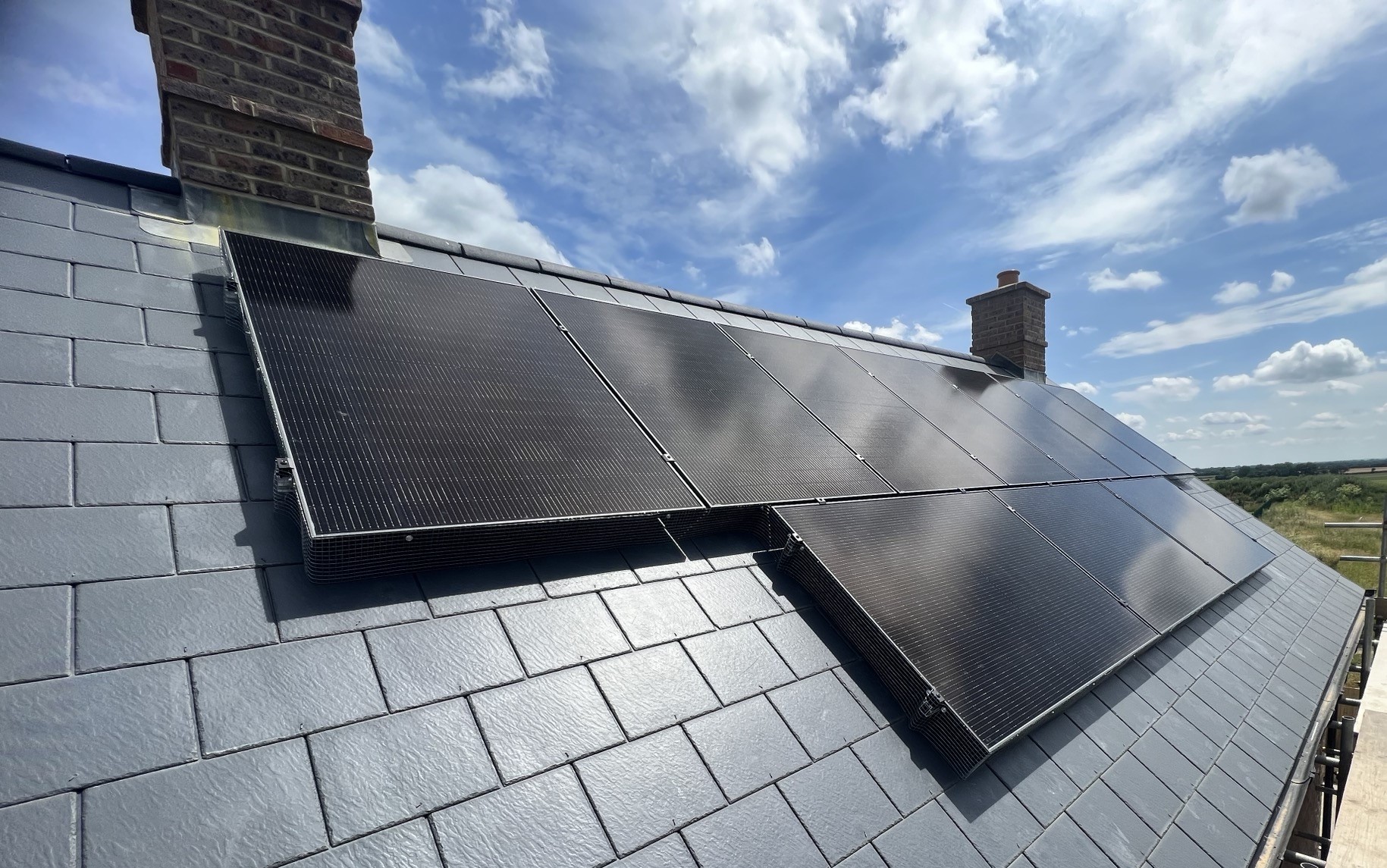
Commercial solar PV systems convert daylight into usable electricity for your business. Unlike domestic systems, they are designed at scale – often tailored to match your operational load profile.
Rooftop Solar Systems
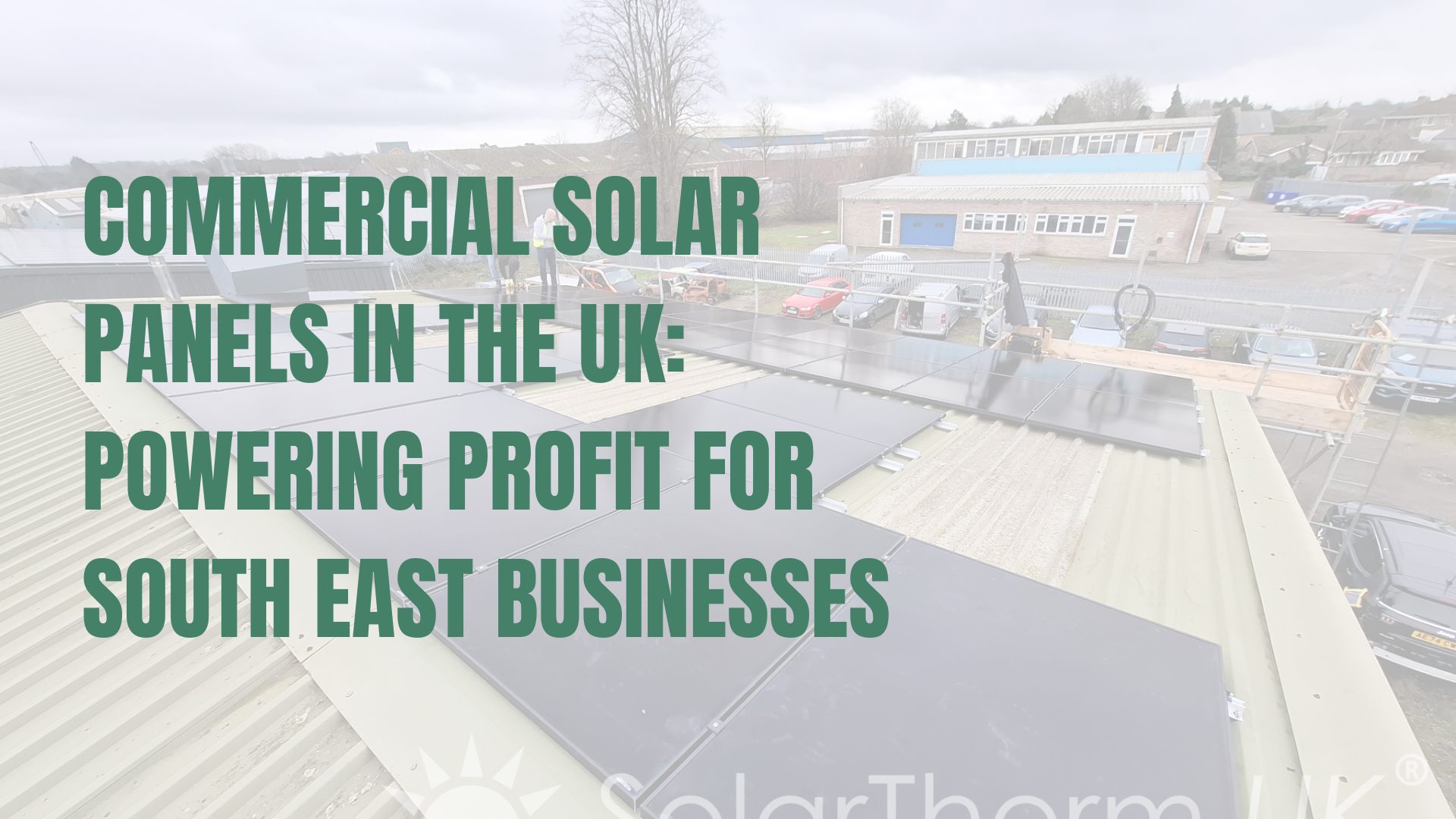
Rooftop solar is the most common solution for UK businesses, making use of unused and wasted roof space. They require no additional land and are best suited for warehouses, factories, office buildings and retail units, all who typically have large flat roofs which are perfect for solar. Solar gives you direct use of the energy generated, resulting in a fast ROI due to the high self-consumption rates.
Ground Mounted Solar Systems
These are more suited to businesses with available land and high energy demands, like farms and agricultural properties. Ground mounted systems allow for maximum energy generation, can usually be larger systems and are scalable for future expansion.
Solar Carports and Canopies
A dual purpose solution – generate energy while improving your site. These are perfect for car parks, sports and leisure facilities, schools and community groups. They bring additional value where EV charging can be integrated, they enhance site aesthetics and show a visible commitment to sustainability.
The Financial Case: ROI, Savings and Payback
Most UK commercial solar systems deliver strong ROI over 30 years, with a payback period of 3-6 years (depending on usage and system size). The key driver is self-consumption – using the electricity generated onsite instead of buying from the grid.
Your savings will depend on daytime energy usage. Businesses operating during daytime hours will benefit the most, but those running 24/7 can include battery storage giving them access to their self-generated electricity around the clock.
Smart Export Guarantee (SEG)
Through the Smart Export Guarantee, your business can earn revenue for any surplus electricity that is exported to the grid. However, the highest financial return always comes from using as much of your own solar energy as you can.
Tax Benefits and Capital Allowances
Commercial solar systems qualify for:
- Full expensing (capital allowances)
- Corporation tax relief
- Potential local grants depending on council
These incentives significantly improve project viability and shorten payback periods.
Installation: What to Expect
At SolarTherm UK, we follow a structured, compliant process:
- Site survey and feasibility study
- System design tailored to your business needs and usage profile
- DNO grid application and approvals
- Planning guidance (if required)
- Professional installation and commissioning
We handle the technical and regulatory complexity – so you don’t have to.
Strategic Business Benefits Beyond Savings
Energy Security – reduce reliance on the grid and stabilise operations.
Sustainability and Net Zero – solar directly lowers carbon emissions, helping meet ESG targets and compliance requirements.
Increased Property Value – although not guaranteed, a solar PV system can help you achieve better EPC ratings, attract higher quality tenants and command strong long term value, which in term can increase your property value.
Potential Challenges (And How We Solve Them)
| Challenge | SolarTherm UK Approach |
| Upfront cost | Flexible financing options |
| Planning & DNO approvals | Fully managed by our team |
| System performance concerns | Premium components + monitoring |
| Technical complexity | End-to-end project delivery |
Why Choose SolarTherm UK?
SolarTherm UK is a specialist commercial solar installer serving Essex, Kent, Suffolk, Hertfordshire and the wider South East and East Anglia. We provide:
- Bespoke system design (not off the shelf packages)
- Experienced commercial installation teams
- Full compliance with UK regulations and grid requirements
- Ongoing support, monitoring and maintenance
Our focus is simple: deliver systems that maximise ROI and long term performance for your business.
Start Reducing Your Energy Costs Today
Commercial solar is no longer a future investment – it’s a competitive advantage available now.
If you’re a business owner or commercial landlord in the South East, SolarTherm UK can help you turn unused space into a high performing energy asset.
Your business. Your energy. Your future.
Frequently Asked Questions
How much can my business save with solar?
Most businesses reduce electricity costs by 40–80%, depending on system size and usage patterns.
Do I need planning permission for commercial solar?
Often no—but it depends on system size, building type, and location. We handle this for you.
How long does installation take?
Typically 2–8 weeks from initial enquiry to commissioning, depending on project scale and approvals.
Can tenants benefit from solar?
Yes. Solar can reduce service charges and improve building attractiveness for tenants.
What happens if I generate more energy than I use?
Excess energy can be exported via the Smart Export Guarantee.
Is solar still effective in the UK climate?
Yes. Modern panels generate electricity from daylight—not just direct sunlight—making them highly effective across the South East.
For more information about our Commercial Services, visit our Commercial website Silvercrest Energy Group.