A top searched query on Google for homeowners looking into solar panels is:
“Does my roof need to face south for solar panels to work efficiently?”
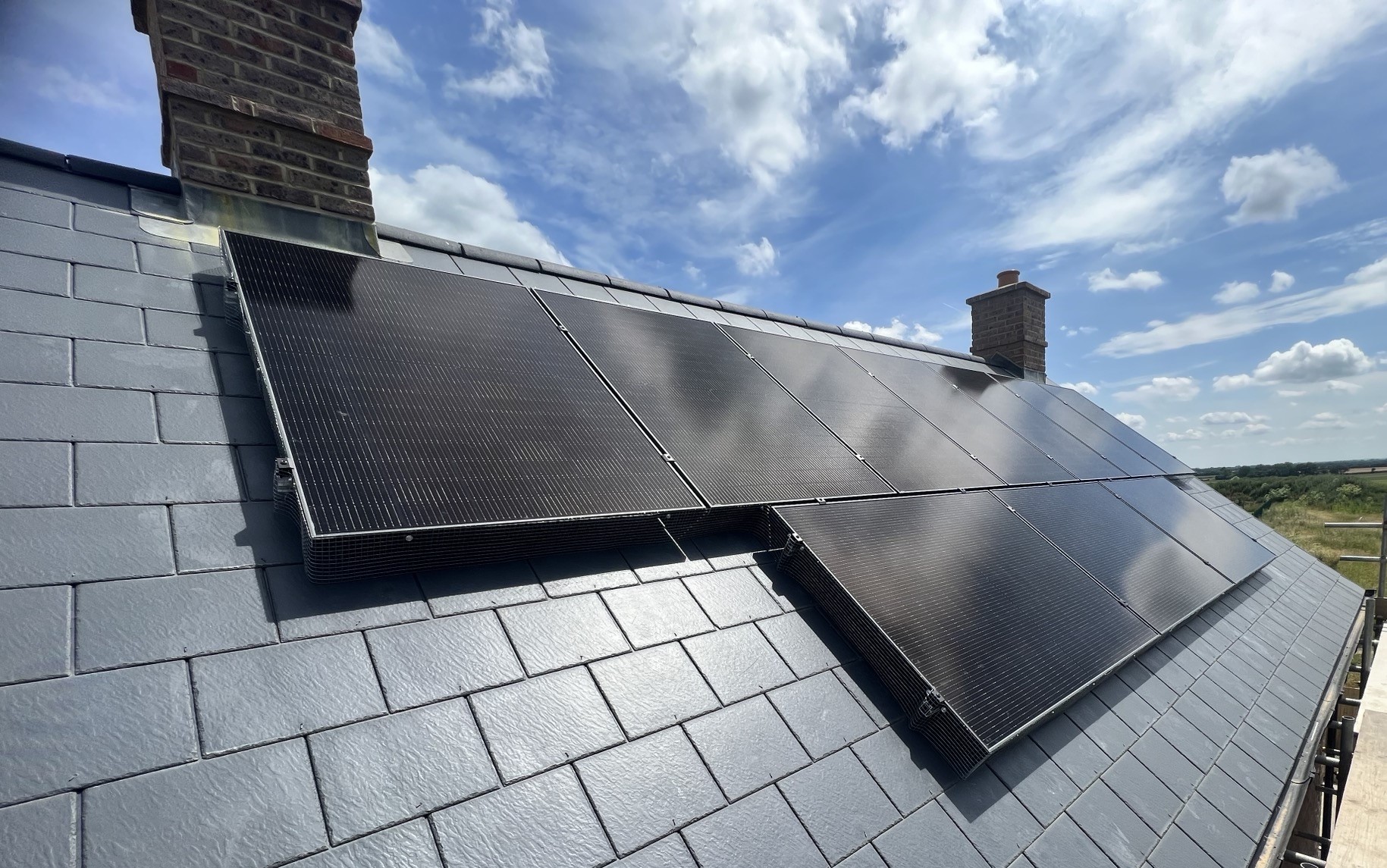
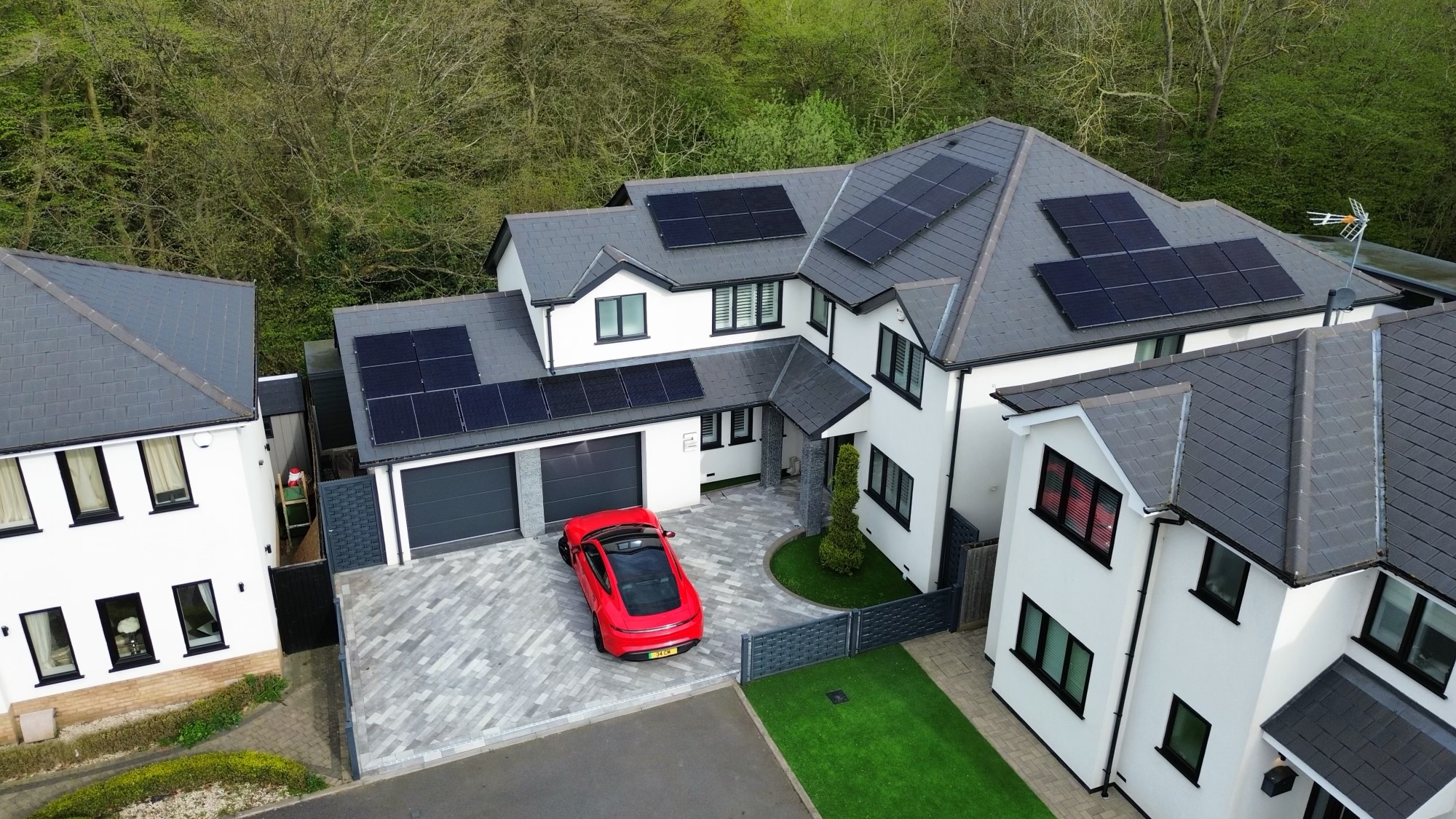
The short answer is no – while a south-facing roof is considered optimal in the South East, solar panels can still generate strong, cost effective electricity on east- and west-facing roofs.
If you’re considering installing solar panels in the UK, understanding how roof orientation affects solar panel performance will help you maximise generation and return on investment.
Why South-Facing Roofs Are Considered Ideal
In the Northern Hemisphere, the sun travels across the southern part of the sky. This means south-facing solar panels receive the most consistent sunlight throughout the day. They typically deliver the highest annual generation and often achieve the fastest solar panel payback period.
For a standard UK domestic system (around 4kWp), a perfectly south-facing roof at a 30-40° pitch will usually produce the maximum possible annual output. However, “optimal” does not mean “essential”.
East- and West-Facing Solar Panels in the UK
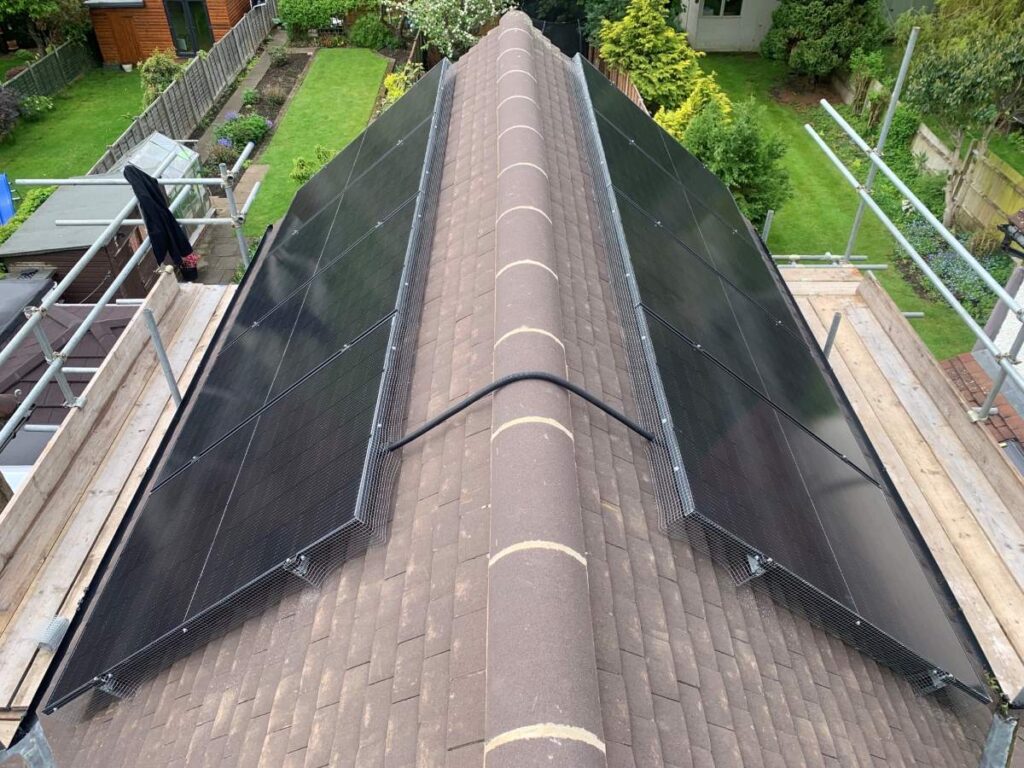
Many South East homes have east- or west-facing roofs. The good news is these can also generate electricity efficiently and offset a large proportion of your annual electricity usage. East-facing panels generate more electricity while west-facing panels generate more in the afternoon and early evenings. Combined east-west systems can produce a broader generation curve across the day.
While an east- or west-facing system may generate around 10-20% less annually than a south-facing system, it can actually improve self-consumption, especially if you’re home during peak morning or early evening hours.
For homeowners adding battery storage, orientation becomes even less restrictive, as surplus energy can be stored and used later.
What About North-Facing Roofs?
North-facing solar panels are generally less efficient in the UK because they receive minimal direct sunlight. However, installation may still be viable if:
- The roof pitch is shallow
- There is no shading
- Electricity prices are high
- You are prioritising environmental impact over maximum ROI
A professional solar survey is essential to assess feasibility.
Other Factors That Matter More Than Orientation
While roof direction impacts generation, it is only one part of system performance. Other critical factors include:
Roof Pitch
The optimal tilt for solar panels in the UK is typically between 30° and 40°. Most UK homes have a pitch that falls between 30° and 50°.
Shading
Trees, chimneys, neighbouring properties or dormers can significantly reduce solar output.
System Size
The number of panels you install (kWp capacity) directly affects total generation.
Battery Storage
Adding a solar battery increases usable energy, improves self-consumption and enhances return on investment.
Smart Export Guarantee (SEG)
Through the UK’s Smart Export Guarantee, you can sell surplus electricity back to the grid, improving overall financial performance.
How Much Does Orientation Affect Solar Panel Savings?
Here’s a simplified comparison for a typical 4kWp system in the South East:
- South-facing: 100% generation baseline
- East/West-facing: ~80-90% of south-facing output
- North-facing: significantly lower, case by case viability
Even at 85% efficiency compared to south-facing, most South East solar panel installations still deliver strong bill savings and long term energy security. With rising electricity prices, orientation differences often have less impact on financial viability than people expect.
Can Solar Panels Work on Flat Roofs?
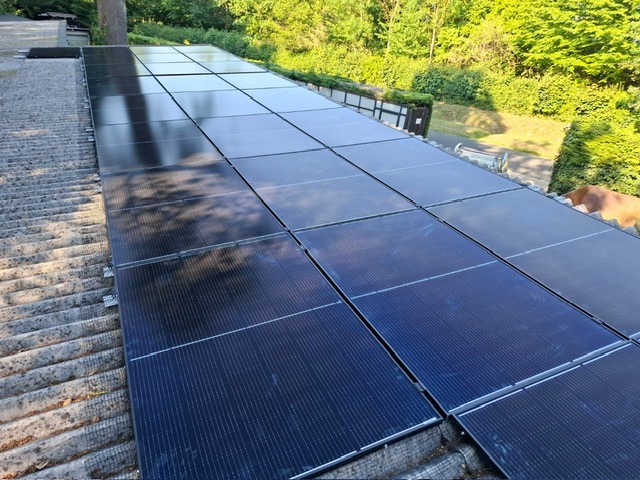
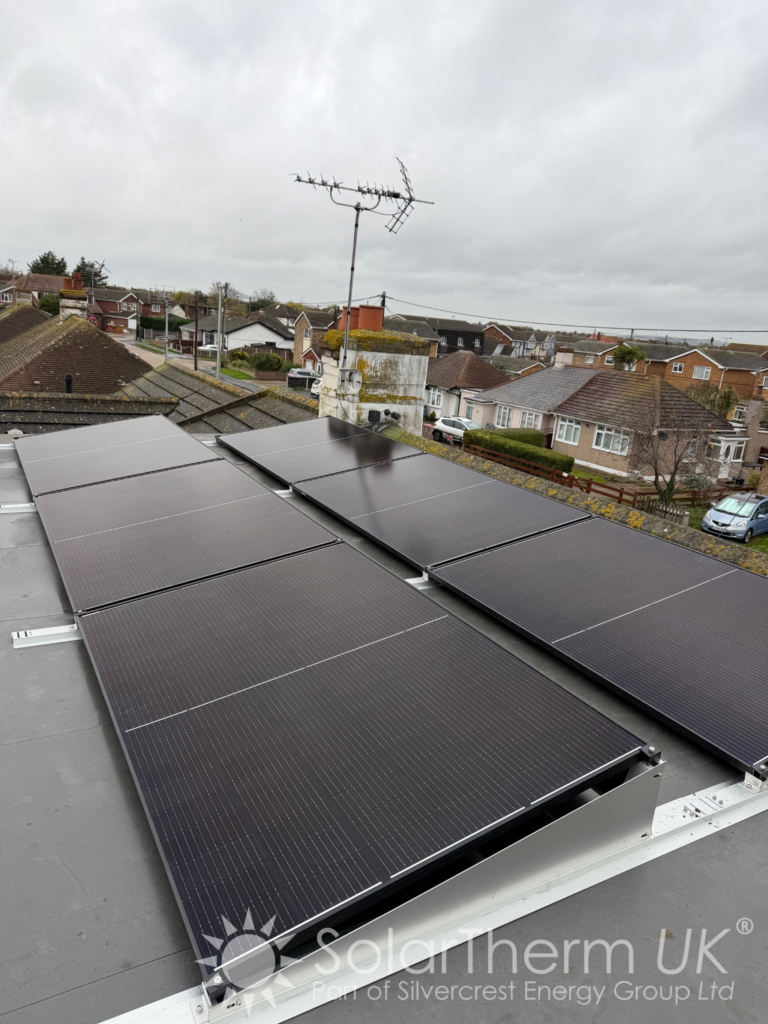
Yes. On flat roofs, mounting systems can angle panels toward the south to optimise output. This allows flexibility regardless of roof direction.
The Bottom Line: Does Your Roof Need to Face South?
No – your roof does not need to face south to benefit from solar panels in the South East. While south-facing roofs provide the highest theoretical generation, east- and west-facing systems remain highly efficient, financially viable and environmentally impactful.
The most important step is a professional site assessment to calculate:
- Expected annual generation
- Projected bill savings
- Smart Export Guarantee income
- Estimated payback period
Every property is different and solar panel performance should always be modelled using real data rather than assumptions.
Try our Solar Calculator to find out how much your roof could be saving you.
Smart solar starts with the right advice.
FAQs
Do solar panels have to face south in the UK?
No. Solar panels do not have to face south to work efficiently in the UK. While south-facing roofs generate the highest annual output, east- and west-facing systems still produce strong performance — typically around 80–90% of a south-facing system’s generation.
How much less electricity do east- or west-facing solar panels produce?
East- or west-facing solar panels generally produce 10–20% less electricity annually compared to south-facing panels. However, they can improve self-consumption by generating power when households are most likely to use it (morning and evening).
Are north-facing solar panels worth it in the UK?
North-facing solar panels are usually less efficient because they receive limited direct sunlight. They may still be viable if the roof pitch is shallow, shading is minimal, and electricity costs are high. A professional solar assessment is recommended to confirm suitability.
What is the best roof angle for solar panels in the UK?
The optimal roof pitch for solar panels in the UK is typically between 30° and 40°. However, panels can still perform well outside this range with only minor reductions in output.
Can solar panels be installed on flat roofs?
Yes. Solar panels can be installed on flat roofs using mounting systems that angle the panels toward the south to maximise generation. Flat roofs often provide excellent flexibility for optimising orientation.
Is roof orientation more important than shading?
No. Shading has a greater negative impact on solar panel performance than roof direction. Even partial shading from chimneys, trees, or neighbouring buildings can significantly reduce output if not properly managed.
Does roof direction affect solar panel payback time?
Yes, but not dramatically. While south-facing systems typically offer the fastest payback, east- and west-facing systems in the UK still deliver strong long-term savings, especially when paired with battery storage and the Smart Export Guarantee.
How do I know if my roof is suitable for solar panels?
The only accurate way to determine suitability is through a professional solar survey. This includes:
- Roof orientation and pitch analysis
- Shading assessment
- Estimated annual generation
- Projected bill savings
- Export income calculations
Every property is different, so performance should always be modelled using real consumption data.