One of the most common Google searches around solar energy in the UK is:
“Do solar panels work in winter?”
“Do solar panels generate electricity in low light?”
The short answer is yes – solar panels absolutely work in winter and low light conditions. However, seasonal performance varies and understanding why helps you make an informed investment decision.
This guide explains exactly how solar panels perform in UK winter conditions, how low light generation works and what homeowners can realistically expect from a system installed by SolarTherm UK.
How Solar Panels Generate Electricity in Low Light
Solar panels use photovoltaic (PV) cells to convert daylight into electricity – not just direct sunlight. Even on cloudy days, daylight contains photons. When these photons hit the silicon cells inside a panel, they create an electric current. This process works in:
- Overcast weather
- Diffused light
- Cold temperatures
- Short winter days
In fact, solar panels can operate more efficiently in cooler temperatures. Unlike many electrical systems, excessive heat can slightly reduce panel efficiency.
Key point: solar panels need light, not heat.
What Happens to Solar Panel Output in Winter?
In the UK, solar panel generation follows a predictable seasonal pattern. Spring and summer have the highest generation, with long daylight hours and preferential weather conditions. Autumn generally performs well, just at a slightly lower level than summer months as the days start getting shorter, however, crisp, cool mornings provide optimal conditions to generate electricity effectively. Winter brings shorter days and lower sun angles reducing output to between 10-25% of summer levels.
On average, a solar PV system in the South East will usually produce 60-75% of its annual generation between April and September and around 25-40% between October and March.
This does not mean panels stop working – it simply means output is reduced due to fewer daylight hours.
Why Solar Panels Still Make Sense in Winter
Modern Panels Are Designed for UK Conditions
High efficiency monocrystalline panels are optimised for diffuse light, making them ideal for UK weather patterns.
Cold Weather Can Improve Efficiency
Panel voltage increases slightly in cooler temperatures, offsetting some seasonal daylight reduction.
Annual Yield Is What Matters
Solar systems are designed based on annual generation (kWh per year) – not just winter output. Your savings are calculated over a 12 month cycle.
What About Snow on Solar Panels?
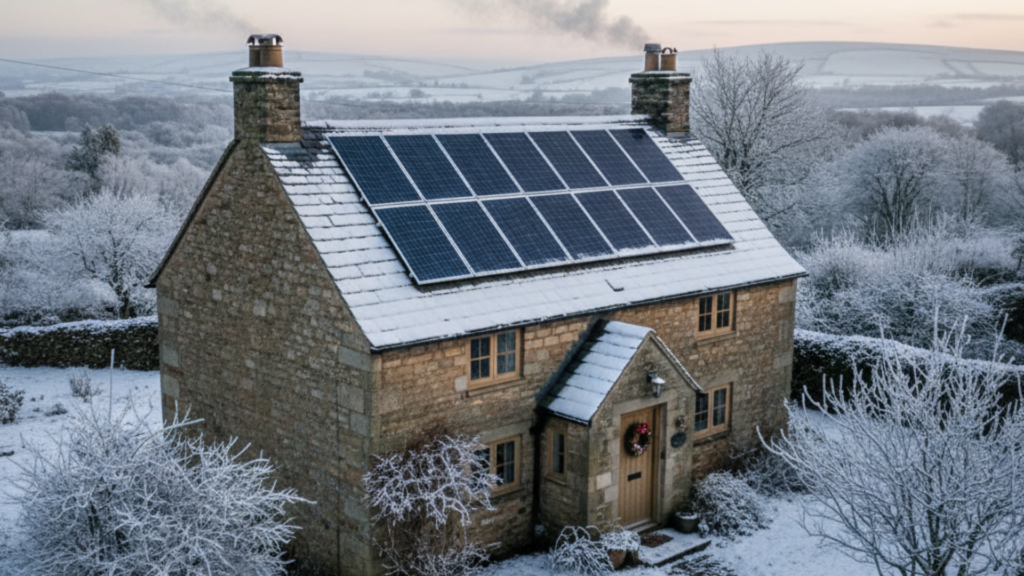
In the South East, snow coverage is usually light, temporary and self-clearing. Heavy snow may temporarily reduce output if the panels are fully covered, but this is rare and short lived. Snow will clear quickly from most solar PV panels as they are installed at an angle, taking with them dirt and debris.
Do Solar Panels Work on Cloudy Days?
Yes, the South East has high levels of diffused solar irradiation, which photovoltaic systems can convert into electricity. Germany – with similar solar conditions – is one of the world’s largest solar energy producers. Cloud cover reduces output, but it does not stop generation.
Winter Solar + Battery Storage: A Smart Combination
Pairing solar panels with battery storage improves winter performance by storing surplus daytime electricity, reducing your reliance on expensive peak evening grid energy. Battery storage increases self-consumption rates resulting in a shorter payback period and higher return on investment.
Even in winter, homes can still offset a meaningful portion of electricity use, especially when systems are properly sized.
Realistic Winter Expectations for South East Homes
A typical 4kW residential solar PV system in the UK may generate:
- Summer peak day: 15-20 kWh
- Winter average day: 2-6 kWh
The difference is driven by daylight hours, not system failure. When evaluated annually, most homeowners stills ee strong returns on investment – typically within 6-10 years depending on system size, usage patterns and whether you include battery storage or not.
Are Solar Panels Worth It in Winter?
Yes – because:
- They still generate electricity in low light
- They reduce annual electricity bills
- They provide energy security
- They contribute to lower carbon emissions
- They increase property appeal and EPC performance
Solar is not a “summer-only” technology. It is a year round energy solution designed around total annual yield.
The Bottom Line
Solar panels in the South East are engineered for variable weather, seasonal daylight changes and low light conditions. Winter performance is lower than summer, but annual generation – not seasonal peaks – determines long term savings and return on investment.
Find out how much you could save with a solar PV and battery storage system with our Solar Calculator.
Smart solar starts with the right advice.
FAQs
Do solar panels stop working in winter?
No. Output is reduced but generation continues.
Do solar panels work in cloudy weather?
Yes. They generate electricity from diffused daylight.
Are solar panels efficient in cold temperatures?
Yes. Cooler conditions can slightly improve panel efficiency.
Is winter a bad time to install solar panels?
No. Systems generate immediately and are ready for peak spring and summer production.