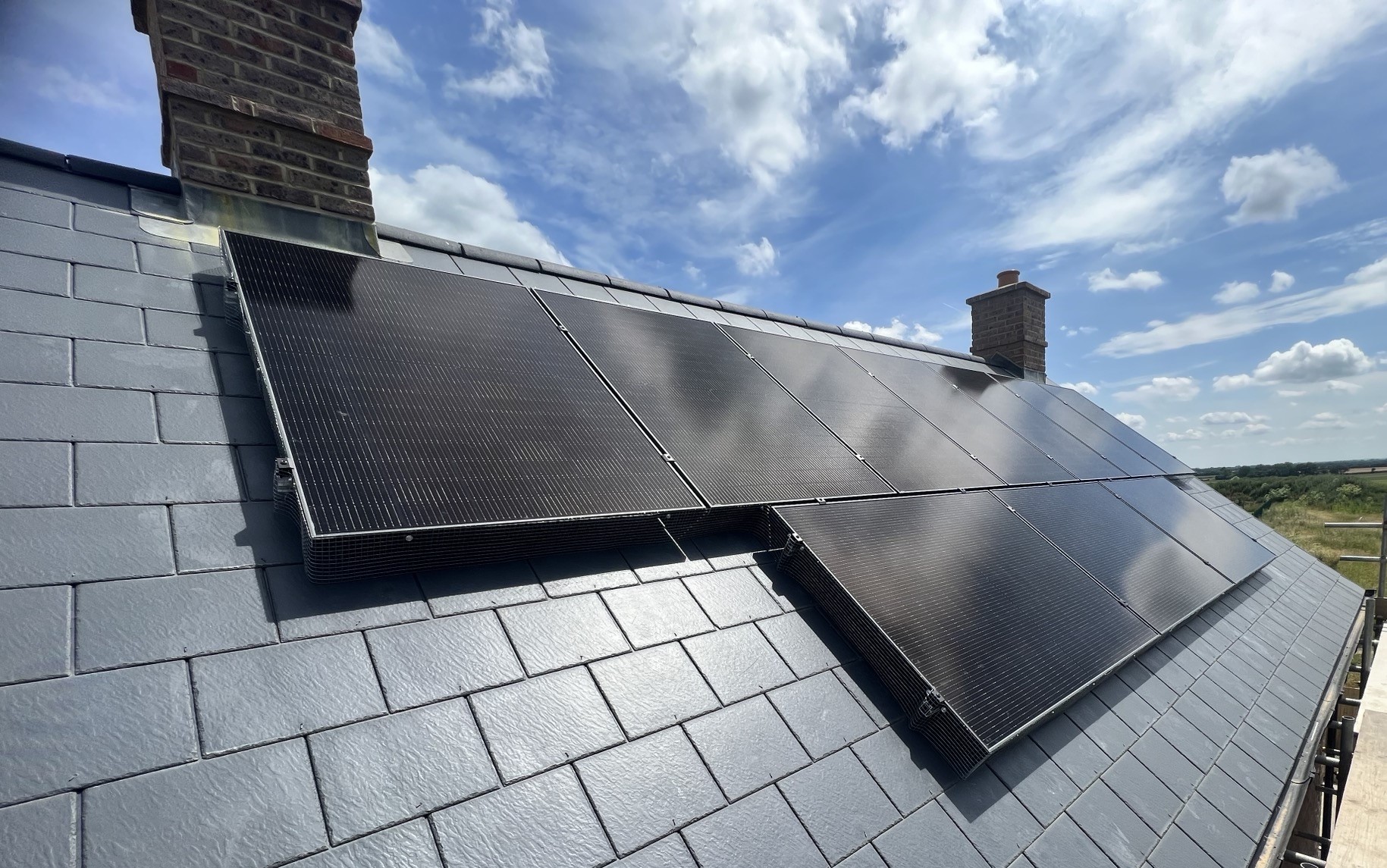
When considering solar panels for your home or business, one of the most important factors is the orientation of your roof and the roof type. In the South East, both flat roofs and pitched roofs can deliver excellent solar performance when designed with expertise. However, each option comes with distinct advantages and considerations.
At SolarTherm UK we design bespoke systems that maximise generation regardless of roof type. This guide explains the pros and cons of flat roof and pitched roof solar installations, helping you make an informed decision.
Solar Panels on a Pitched Roof
Pitched roofs are the most common roof type for residential properties across the South East.
Pros of Pitched Roof Solar
Natural orientation and angle
Many pitched roofs already have an angle close to the optimal tilt for solar panels in the UK. South-facing roofs in particular can achieve strong annual yields with minimal adjustment. East- and west-facing roofs can also generate efficiently, covering a high proportion of daily energy requirements.
Lower installation costs
As panels are mounted directly to roof rafters, pitched roof systems typically require less mounting hardware than flat roof systems.
Clean, low profile appearance
Solar panels often sit flush with the roofline, maintaining the visual aesthetics of the property. You can also install integrated solar panels which replace your roof tiles if you would prefer a seamless system.
Reduced wind loading
Pitched roof systems are less exposed to wind uplift compared to flat roof frames, reducing structural stress.
Cons of Pitched Roof Solar
Limited control over orientation of roof
If your roof faces east or west rather than south, generation may be slightly reduced. However, modern systems still perform very well on non-south-facing roofs.
Fixed angle
Unlike flat roofs, the panel angle cannot be adjusted after installation. The angle of the roof, is the angle the panels are installed at.
Roof condition matters
Older roofs may need maintenance or reinforcement before solar panels can be safely installed. As solar panels can last upwards of 30 years, it is imperative to ensure your roof is in good condition before installation to avoid costly repairs and removals in the future.
Solar Panels on a Flat Roof
Flat roof solar is common on commercial buildings, extensions and modern homes throughout the South East.
Pros of Flat Roof Solar
Full control over panel orientation
Flat roof systems use angled mounting frames, allowing panels to be positioned at the ideal tilt and orientation for maximum energy generation.
Flexible system design
Panels can be arranged to avoid shading from nearby buildings, parapets or rooftop equipment.
Ideal for larger systems
Flat roofs often provide large, unobstructed areas, making them well suited for higher capacity solar installations.
Easy access for maintenance
Flat roofs generally offer safer and easier access for inspections, cleaning and maintenance.
Cons of Flat Roof Solar
Higher installation costs
Mounting frames and ballast systems add to the overall cost compared to pitched roof systems.
Increased wind exposure
Flat roof systems must be carefully engineered to withstand wind uplift, particularly in exposed locations.
Potential roof loading considerations
Structural assessments may be required to ensure the roof can support the additional weight of panels and ballast.
How Roof Orientation Affects Solar Performance
The orientation of your roof plays a critical role in solar output, regardless of whether it is flat or pitched. South-facing roofs provide the highest annual generation, while east- and west-facing roofs spread generation more evenly throughout the day. North-facing roofs are generally unsuitable, though flat roofs can overcome this with adjustable mounting frames.
In the South East, a east-west system can deliver strong financial returns when designed by an experienced and accredited installer.
Flat Roof vs Pitched Roof: Which is Better?
At SolarTherm UK, we believe there is no “one size fits all” answer. The best option for you depends on your property and the following considerations need to be taken into account:
- Roof orientation and available space
- Structural condition of the building and roof
- Budget and system size
- Aesthetic preferences
- Future plans, such as battery storage or EV charging
A professionally designed systems, customised to your property will ensure your solar panels perform efficiently for your needs, regardless of roof type.
Expert Solar Advice for South East Homes and Businesses
At SolarTherm UK we assess every project individually, factoring in roof type, orientation, shading and energy use. Whether you have a flat roof or a pitched roof, our customised approach to solar will ensure you have a system that works for your property, with long term reliability and maximised returns.
Contact SolarTherm UK today for a free, no obligation quote and design, tailored to your property, usage and future energy needs. No hard sell, just honest, expert advice – and the time you need to make an informed decision.
Your home. Your energy. Your future.
Frequently Asked Questions
Yes. Solar panels can be installed on flat roofs using mounting frames that position the panels at a suitable angle and orientation. The roof structure and wind loading will need to be assessed before installation.
Not necessarily. Pitched roofs can offer a simple, low-profile installation, while flat roofs provide greater flexibility over panel angle and orientation. The best option depends on the property, roof condition, available space and energy requirements.
Flat roof installations can cost more than pitched roof systems because they typically require additional mounting frames and, in some cases, ballast. However, the final cost will depend on the size and design of the system.
North-facing pitched roofs are generally less suitable for solar, as they receive less direct sunlight. However, flat roofs can use mounting systems to position panels in a more favourable direction, potentially making better use of the available roof space.
Neither roof type automatically produces more energy. Solar generation depends on factors including orientation, tilt, shading, roof space and the overall system design. A professionally designed system can perform well on both flat and pitched roofs.